August 9, 2026
LATEST
New EU Gas Market Rules Take Effect With Consumer SafeguardsDeforestation Regulation Holds Its December Deadline Despite CutsDigital Omnibus Delays Europe’s High-Risk AI Deadline to 2027Europe’s Schools Confront a Widening Basic Skills GapRule of Law Report Finds Progress but Trust Still LagsIRIS2 Gains 66 Satellites as Brussels Signs the Rollout DealNature Restoration Plans Come Due as Member States Race a DeadlineECB Rates Hold at 2.25 Percent as Frankfurt Waits on the DataEU Budget Talks Turn to Cohesion as Ireland Takes OverWildfire Response Stretches Europe’s Emergency Fleet ThinCan Europe’s Quantum Plan Match Its Big Ambitions?Armenia Edges West as Moscow’s Grip Slips AwayEurope Inherits the World’s Aid Bill It Cannot Fully PayAir Passenger Rights Get Their First Overhaul in Two DecadesErasmus Opens a 5 Billion Euro Round for Skills and MobilityCeuta Crisis Pushes the EU Toward Faster Migrant ReturnsBulky Parcels Face a Packaging Crackdown From August 12Can Europe Build Its Drone Wall Before 2030 Arrives?Indonesia’s Trade Deal With Europe Nears Its Final SignatureEurope Leans on Beijing to Keep Climate Talks Alive Before AntalyaNew EU Gas Market Rules Take Effect With Consumer SafeguardsDeforestation Regulation Holds Its December Deadline Despite CutsDigital Omnibus Delays Europe’s High-Risk AI Deadline to 2027Europe’s Schools Confront a Widening Basic Skills GapRule of Law Report Finds Progress but Trust Still LagsIRIS2 Gains 66 Satellites as Brussels Signs the Rollout DealNature Restoration Plans Come Due as Member States Race a DeadlineECB Rates Hold at 2.25 Percent as Frankfurt Waits on the DataEU Budget Talks Turn to Cohesion as Ireland Takes OverWildfire Response Stretches Europe’s Emergency Fleet ThinCan Europe’s Quantum Plan Match Its Big Ambitions?Armenia Edges West as Moscow’s Grip Slips AwayEurope Inherits the World’s Aid Bill It Cannot Fully PayAir Passenger Rights Get Their First Overhaul in Two DecadesErasmus Opens a 5 Billion Euro Round for Skills and MobilityCeuta Crisis Pushes the EU Toward Faster Migrant ReturnsBulky Parcels Face a Packaging Crackdown From August 12Can Europe Build Its Drone Wall Before 2030 Arrives?Indonesia’s Trade Deal With Europe Nears Its Final SignatureEurope Leans on Beijing to Keep Climate Talks Alive Before Antalya
August 9, 2026
LATEST
New EU Gas Market Rules Take Effect With Consumer SafeguardsDeforestation Regulation Holds Its December Deadline Despite CutsDigital Omnibus Delays Europe’s High-Risk AI Deadline to 2027Europe’s Schools Confront a Widening Basic Skills GapRule of Law Report Finds Progress but Trust Still LagsIRIS2 Gains 66 Satellites as Brussels Signs the Rollout DealNature Restoration Plans Come Due as Member States Race a DeadlineECB Rates Hold at 2.25 Percent as Frankfurt Waits on the DataEU Budget Talks Turn to Cohesion as Ireland Takes OverWildfire Response Stretches Europe’s Emergency Fleet ThinCan Europe’s Quantum Plan Match Its Big Ambitions?Armenia Edges West as Moscow’s Grip Slips AwayEurope Inherits the World’s Aid Bill It Cannot Fully PayAir Passenger Rights Get Their First Overhaul in Two DecadesErasmus Opens a 5 Billion Euro Round for Skills and MobilityCeuta Crisis Pushes the EU Toward Faster Migrant ReturnsBulky Parcels Face a Packaging Crackdown From August 12Can Europe Build Its Drone Wall Before 2030 Arrives?Indonesia’s Trade Deal With Europe Nears Its Final SignatureEurope Leans on Beijing to Keep Climate Talks Alive Before AntalyaNew EU Gas Market Rules Take Effect With Consumer SafeguardsDeforestation Regulation Holds Its December Deadline Despite CutsDigital Omnibus Delays Europe’s High-Risk AI Deadline to 2027Europe’s Schools Confront a Widening Basic Skills GapRule of Law Report Finds Progress but Trust Still LagsIRIS2 Gains 66 Satellites as Brussels Signs the Rollout DealNature Restoration Plans Come Due as Member States Race a DeadlineECB Rates Hold at 2.25 Percent as Frankfurt Waits on the DataEU Budget Talks Turn to Cohesion as Ireland Takes OverWildfire Response Stretches Europe’s Emergency Fleet ThinCan Europe’s Quantum Plan Match Its Big Ambitions?Armenia Edges West as Moscow’s Grip Slips AwayEurope Inherits the World’s Aid Bill It Cannot Fully PayAir Passenger Rights Get Their First Overhaul in Two DecadesErasmus Opens a 5 Billion Euro Round for Skills and MobilityCeuta Crisis Pushes the EU Toward Faster Migrant ReturnsBulky Parcels Face a Packaging Crackdown From August 12Can Europe Build Its Drone Wall Before 2030 Arrives?Indonesia’s Trade Deal With Europe Nears Its Final SignatureEurope Leans on Beijing to Keep Climate Talks Alive Before Antalya

Mercosur Deal Survives A Knife-Edge Parliament Revolt

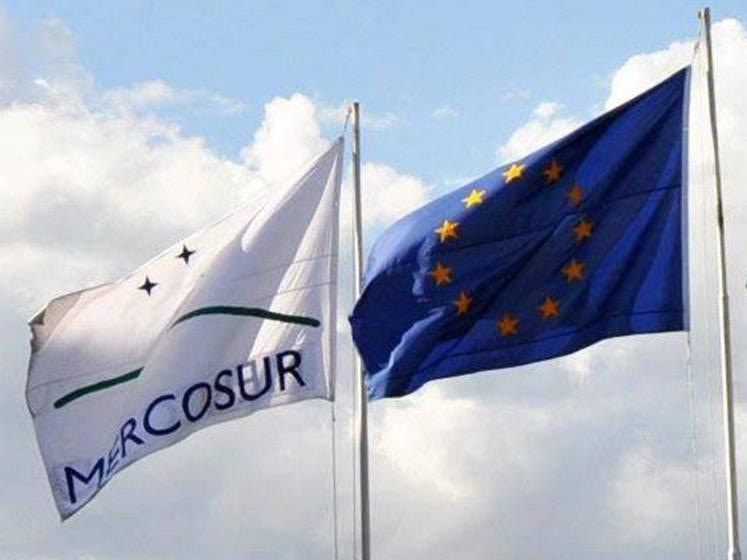
Montevideo: A quarter of a century in the making, the trade agreement between the European Union and the Mercosur bloc has survived its most dangerous moment yet, though survival has come at the price of a long delay and a lingering question about its legality. The deal that would bind two markets of some seven hundred million people together is now being applied in part, even as its ultimate fate rests with judges rather than diplomats.

The drama played out in the European Parliament early this year. By a margin of just ten votes, members adopted a resolution asking the Court of Justice whether the agreement was being handled lawfully, in effect pulling the emergency brake on ratification. The referral posed two narrow but consequential questions: whether it was legitimate to split the package into separate instruments, a manoeuvre designed to let the trade portion proceed without the unanimous approval of every national parliament, and whether a rebalancing mechanism built into the deal would tie the Union’s hands on future environmental legislation.

The vote exposed the fault lines that have always run through this agreement. Farming lobbies, especially in France, fear a flood of South American beef, poultry and sugar produced to standards their own producers are forbidden to use. Environmental campaigners warn that opening European markets to agricultural exports will accelerate the clearing of forests to make way for cattle and soy. Ranged against them are exporters of cars, machinery and chemicals who see in Mercosur a rare chance to win preferential access to a large and growing market at a moment when trade elsewhere is turning protectionist.

Tellingly, many who voted for the referral insist they support the deal itself. Their objection is to the procedure, the splitting and the speed, rather than the substance, and a good number expect to vote in favour when ratification finally returns to the floor. That nuance matters, because it means the agreement is more likely delayed than doomed. But delay has its own costs: the legal referral could suspend the parliamentary timetable for the better part of two years, an eternity in a trading environment that can shift with a single election.

While the lawyers deliberate, the Commission has pressed ahead where it can. The interim trade agreement began to apply provisionally in the spring, allowing tariff reductions and market openings to take effect before MEPs have given their final blessing. Provisional application is a familiar device, but here it carries an unusual charge, because it means the deal is shaping commerce on the ground even as its legal architecture is being challenged in court. Should the judges rule that the structure was flawed, the Union would face the awkward task of unpicking arrangements already in force.

The episode is a study in how the Union now does trade. Gone are the days when a deal concluded by negotiators could be waved through by acclamation. Today every agreement must run a gauntlet of national sensitivities, environmental scrutiny, agricultural anxiety and institutional rivalry, and the result is a process so encumbered that partners on the other side of the table have learned to doubt whether Brussels can deliver what its envoys promise. For Mercosur’s governments, who have watched this agreement edge toward completion and away from it for a generation, the latest twist will feel wearily familiar.

What is at stake is larger than beef quotas or car tariffs. The Union has staked much of its economic strategy on the claim that it can knit together a network of trusted partners as a hedge against dependence on rivals. An agreement that takes twenty-five years to negotiate and then stalls on a procedural technicality tests that claim. The deal will probably survive; whether the credibility of the Union as a dealmaker survives intact is the more interesting question.