August 9, 2026
LATEST
New EU Gas Market Rules Take Effect With Consumer SafeguardsDeforestation Regulation Holds Its December Deadline Despite CutsDigital Omnibus Delays Europe’s High-Risk AI Deadline to 2027Europe’s Schools Confront a Widening Basic Skills GapRule of Law Report Finds Progress but Trust Still LagsIRIS2 Gains 66 Satellites as Brussels Signs the Rollout DealNature Restoration Plans Come Due as Member States Race a DeadlineECB Rates Hold at 2.25 Percent as Frankfurt Waits on the DataEU Budget Talks Turn to Cohesion as Ireland Takes OverWildfire Response Stretches Europe’s Emergency Fleet ThinCan Europe’s Quantum Plan Match Its Big Ambitions?Armenia Edges West as Moscow’s Grip Slips AwayEurope Inherits the World’s Aid Bill It Cannot Fully PayAir Passenger Rights Get Their First Overhaul in Two DecadesErasmus Opens a 5 Billion Euro Round for Skills and MobilityCeuta Crisis Pushes the EU Toward Faster Migrant ReturnsBulky Parcels Face a Packaging Crackdown From August 12Can Europe Build Its Drone Wall Before 2030 Arrives?Indonesia’s Trade Deal With Europe Nears Its Final SignatureEurope Leans on Beijing to Keep Climate Talks Alive Before AntalyaNew EU Gas Market Rules Take Effect With Consumer SafeguardsDeforestation Regulation Holds Its December Deadline Despite CutsDigital Omnibus Delays Europe’s High-Risk AI Deadline to 2027Europe’s Schools Confront a Widening Basic Skills GapRule of Law Report Finds Progress but Trust Still LagsIRIS2 Gains 66 Satellites as Brussels Signs the Rollout DealNature Restoration Plans Come Due as Member States Race a DeadlineECB Rates Hold at 2.25 Percent as Frankfurt Waits on the DataEU Budget Talks Turn to Cohesion as Ireland Takes OverWildfire Response Stretches Europe’s Emergency Fleet ThinCan Europe’s Quantum Plan Match Its Big Ambitions?Armenia Edges West as Moscow’s Grip Slips AwayEurope Inherits the World’s Aid Bill It Cannot Fully PayAir Passenger Rights Get Their First Overhaul in Two DecadesErasmus Opens a 5 Billion Euro Round for Skills and MobilityCeuta Crisis Pushes the EU Toward Faster Migrant ReturnsBulky Parcels Face a Packaging Crackdown From August 12Can Europe Build Its Drone Wall Before 2030 Arrives?Indonesia’s Trade Deal With Europe Nears Its Final SignatureEurope Leans on Beijing to Keep Climate Talks Alive Before Antalya
August 9, 2026
LATEST
New EU Gas Market Rules Take Effect With Consumer SafeguardsDeforestation Regulation Holds Its December Deadline Despite CutsDigital Omnibus Delays Europe’s High-Risk AI Deadline to 2027Europe’s Schools Confront a Widening Basic Skills GapRule of Law Report Finds Progress but Trust Still LagsIRIS2 Gains 66 Satellites as Brussels Signs the Rollout DealNature Restoration Plans Come Due as Member States Race a DeadlineECB Rates Hold at 2.25 Percent as Frankfurt Waits on the DataEU Budget Talks Turn to Cohesion as Ireland Takes OverWildfire Response Stretches Europe’s Emergency Fleet ThinCan Europe’s Quantum Plan Match Its Big Ambitions?Armenia Edges West as Moscow’s Grip Slips AwayEurope Inherits the World’s Aid Bill It Cannot Fully PayAir Passenger Rights Get Their First Overhaul in Two DecadesErasmus Opens a 5 Billion Euro Round for Skills and MobilityCeuta Crisis Pushes the EU Toward Faster Migrant ReturnsBulky Parcels Face a Packaging Crackdown From August 12Can Europe Build Its Drone Wall Before 2030 Arrives?Indonesia’s Trade Deal With Europe Nears Its Final SignatureEurope Leans on Beijing to Keep Climate Talks Alive Before AntalyaNew EU Gas Market Rules Take Effect With Consumer SafeguardsDeforestation Regulation Holds Its December Deadline Despite CutsDigital Omnibus Delays Europe’s High-Risk AI Deadline to 2027Europe’s Schools Confront a Widening Basic Skills GapRule of Law Report Finds Progress but Trust Still LagsIRIS2 Gains 66 Satellites as Brussels Signs the Rollout DealNature Restoration Plans Come Due as Member States Race a DeadlineECB Rates Hold at 2.25 Percent as Frankfurt Waits on the DataEU Budget Talks Turn to Cohesion as Ireland Takes OverWildfire Response Stretches Europe’s Emergency Fleet ThinCan Europe’s Quantum Plan Match Its Big Ambitions?Armenia Edges West as Moscow’s Grip Slips AwayEurope Inherits the World’s Aid Bill It Cannot Fully PayAir Passenger Rights Get Their First Overhaul in Two DecadesErasmus Opens a 5 Billion Euro Round for Skills and MobilityCeuta Crisis Pushes the EU Toward Faster Migrant ReturnsBulky Parcels Face a Packaging Crackdown From August 12Can Europe Build Its Drone Wall Before 2030 Arrives?Indonesia’s Trade Deal With Europe Nears Its Final SignatureEurope Leans on Beijing to Keep Climate Talks Alive Before Antalya

Poland Takes The Lion’s Share Of Europe’s Defence Loans

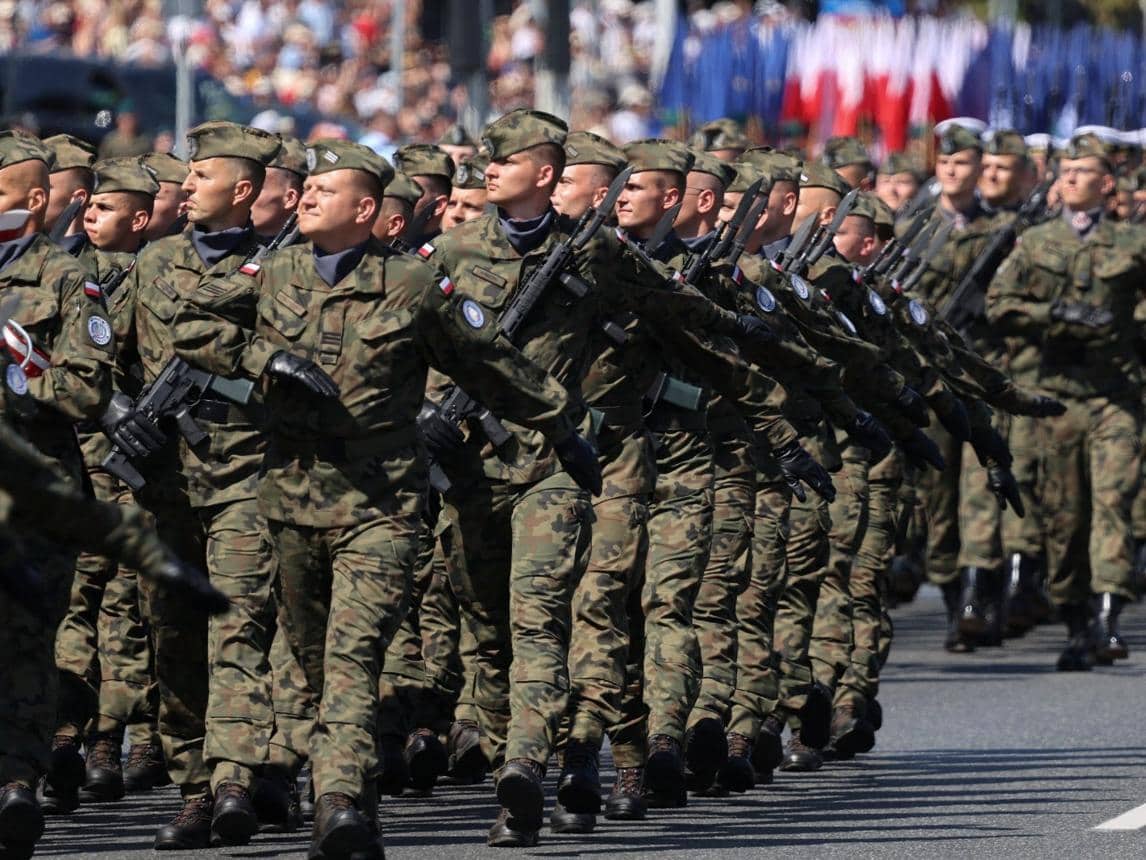
Warsaw: The first money is finally moving through Europe’s largest joint defence experiment, and the early ledger reveals as much about the continent’s anxieties as about its ambitions. Under the Security Action for Europe instrument, known as SAFE, the Council has cleared defence funding for eighteen member states between February and April of this year, converting a 150 billion euro envelope of cheap, long-maturity loans into concrete national investment plans. The instrument was adopted in May 2025 as the bloc’s answer to a hard question: how to rearm quickly without waiting for a treaty change or a federal defence budget that no capital is willing to fund.

The geography of demand tells the story. Poland alone has been allocated roughly 43.7 billion euros, a figure that exceeds the requests of every large Western European state in several categories. Romania follows at around 16.7 billion, with France and Hungary each near 16.2 billion and Italy close to 14.9 billion. The pattern is not accidental. SAFE is demand-driven, meaning the loans flow to whoever asks for them and can present a credible procurement plan, rather than being distributed by population, output or any fixed key. The result is that exposure to the eastern frontier maps almost perfectly onto borrowing appetite. States that feel the proximity of the war in Ukraine are reaching for the cheapest capital on offer, while several wealthier members further west have so far treated the instrument with caution.

That asymmetry is the most important finding for anyone trying to read where European defence is heading. A common pool of borrowing has not produced a common pattern of spending. Instead it has accelerated a divergence that already existed, allowing frontline states to compress years of procurement into a single budgetary window. The advantage of competitively priced loans is real for governments whose own sovereign borrowing costs are higher than the Commission’s, and for smaller economies the savings on interest alone can fund additional capability. The catch, rarely stated plainly, is that SAFE is debt rather than transfer. Every euro disbursed must be repaid by the beneficiary state, which means the instrument widens fiscal commitments precisely in the countries already carrying the heaviest security burden.

There is also a structural condition that gives SAFE its strategic logic. Funding is weighted toward joint procurement, encouraging clusters of states to buy the same systems together rather than each commissioning bespoke national variants. In principle this attacks the chronic fragmentation of European defence markets, where dozens of incompatible platforms inflate costs and complicate maintenance. Whether the incentive is strong enough to overcome national industrial preferences is the open question. Governments under domestic pressure to support local manufacturers may find ways to route demand homeward, and the first wave of plans will be scrutinised closely for evidence of genuine pooling rather than parallel national shopping lists dressed in collective language.

The numbers are large enough to reshape order books across the continent’s defence sector over the next several years, yet they sit beside a quieter constraint. Cheap loans do not by themselves create factory capacity, skilled labour or secure supplies of ammunition and components. If demand surges faster than the industrial base can respond, the main effect could be longer waiting lists and higher prices rather than faster delivery. SAFE solves a financing problem with notable speed. It does not yet solve the production problem behind it, and the credibility of Europe’s rearmament will ultimately be judged on what rolls off the lines, not on what clears the Council.

For now the instrument has done something the bloc has long struggled to achieve. It has moved real money toward defence in under a year, without a new treaty and without unanimity on a shared budget. The early disbursements show a Europe willing to borrow collectively for security while still spending according to deeply national fears. That combination is the instrument’s strength and its limitation in equal measure.