Brussels: The Commission has confirmed that the second selection round under the Critical Raw Materials Act drew more than 160 applications, a sharp uptick from the inflow that produced last year’s first list of 47 strategic projects inside the Union plus 13 in third countries. The simple read is that strategic project status now carries real currency in the minerals business, where permitting timelines and access to public-adjacent finance often decide which projects move and which sit. The deeper read is that Brussels is converting the CRMA from a list-making exercise into a working portfolio with cumulative weight, and the metrics inside that portfolio will start to matter more than the headline count.
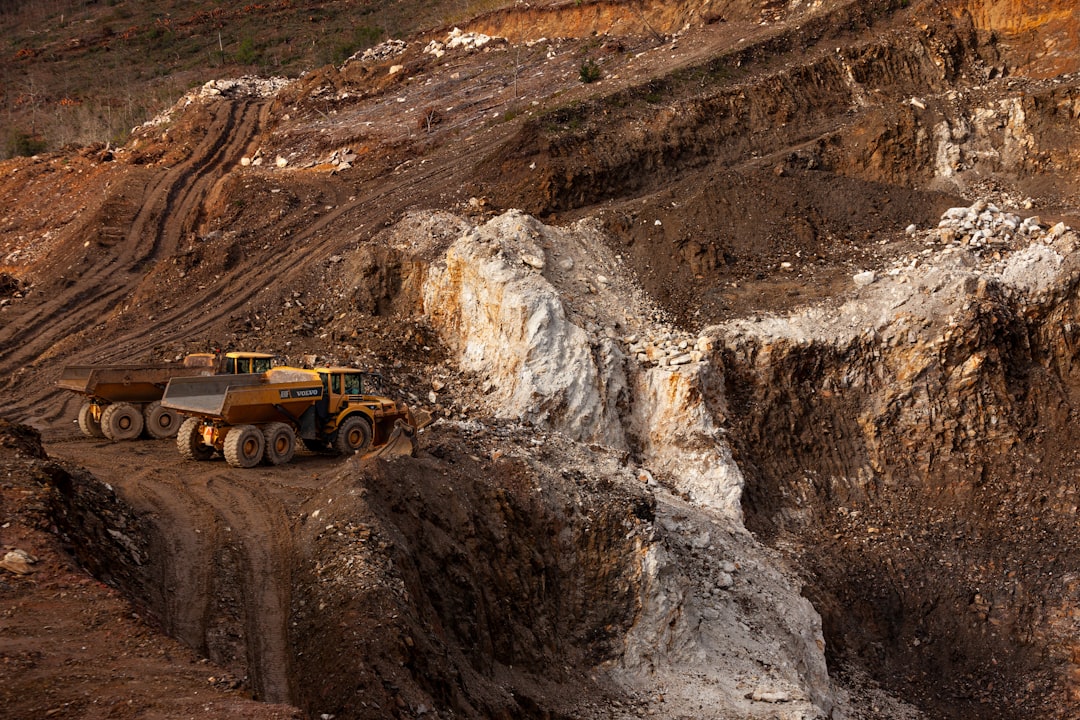
The first round, adopted in March 2025, was deliberately spread across the value chain: extraction, processing, recycling and substitutes for the seventeen strategic raw materials identified in Annex II of the Act. That spread reflected a political choice — Brussels wanted to test demand across links rather than over-concentrate in any one. The bid pattern coming into the second round suggests that signal landed: applications cluster around midstream processing for battery-grade lithium and nickel, rare earth separation, and recycling of permanent magnets and EV battery cells. Those are precisely the segments where the Commission’s own 2030 benchmarks of ten percent extraction, forty percent processing and twenty-five percent recycling inside the Union face the steepest gradients, and where private capital has been most reluctant without policy scaffolding.
The scaffolding itself is changing. RESourceEU, the action plan rolled out in late 2025, knits together the Innovation Fund, InvestEU and the EIB’s expanded minerals envelope so that strategic-project promoters land at a single financing window rather than chase parallel mandates. That is the operational point. A strategic project tag is not a grant, but it is a signal that public-adjacent finance will read more permissively, and that national permitting authorities are bound by faster statutory clocks of twenty-seven months for extraction and fifteen months for processing. The sixty projects already designated have begun feeding back data on whether those clocks are holding. Early returns are mixed. Permitting is moving faster than baseline, but environmental impact assessments and local objections still stretch some files past the statutory ceiling, and the Commission has so far avoided the politically charged step of invoking override clauses.
A second-round portfolio of even forty to sixty new files would push the cumulative count past one hundred, which begins to matter in a different way. Aggregate offtake commitments, capex pledges and projected processing capacity become a single Union-level number that can be benchmarked against the 2030 targets. The European Court of Auditors flagged in its Special Report 04/2026 that data on those benchmarks has lagged the policy timeline, with no consolidated baseline yet for how much of EU demand the current pipeline can actually displace. A larger portfolio narrows that gap, but only if the projects move from designation into construction. That is the variable to watch through the second half of 2026.
Geography matters too. The first list weighted toward southern and central Member States that already host historical minerals infrastructure or fast-track mining codes. Round two is expected to broaden into the Nordics and the Baltics, where deposits of graphite, rare earths and battery metals have been mapped but not commercialised at scale. Each new geography brings its own social licence test. Sweden’s Norra Kärr decision and Portugal’s Barroso lithium delay are case studies in how a strategic-project tag does not, on its own, override local opposition. The Commission’s quiet bet is that early certainty on permits plus credible offtake reduces the political cost at the receiving end. Whether that bet pays will depend on how many round-two files in Nordic geographies actually clear local hurdles before the year’s end.
For the thirteen third-country projects already selected, the second round will also test whether the Commission can stretch its instruments beyond classical aid. The CRMA’s external dimension still relies heavily on strategic partnerships and Global Gateway pull-through. A wider third-country bench may sharpen the question of how much of Europe’s industrial demand can be backed by Union-tagged supply contracts in jurisdictions where European tools are advisory rather than statutory. The next list, due later in 2026, will be the first real measure of whether the CRMA has shifted from aspiration to architecture.