Brussels: Poland’s decision to formalise a €43.7 billion loan agreement under the European Union’s Security Action for Europe instrument confirms what defence economists have argued since the programme’s adoption in 2025. The geography of European rearmament is shifting decisively eastward. The Polish allocation, the largest single tranche so far disbursed under the €150 billion SAFE envelope, signals not only the political weight that Warsaw is willing to attach to military modernisation but also a maturing of the Union’s collective approach to defence financing. SAFE was conceived as a competitive, long-maturity lending mechanism designed to insulate participating member states from the higher sovereign borrowing costs that have constrained defence spending in lower-rated economies. With Lithuania expected to sign next and additional agreements in advanced preparation, the programme is moving from political declaration to operational reality at a pace that few observers anticipated when the Council approved it.
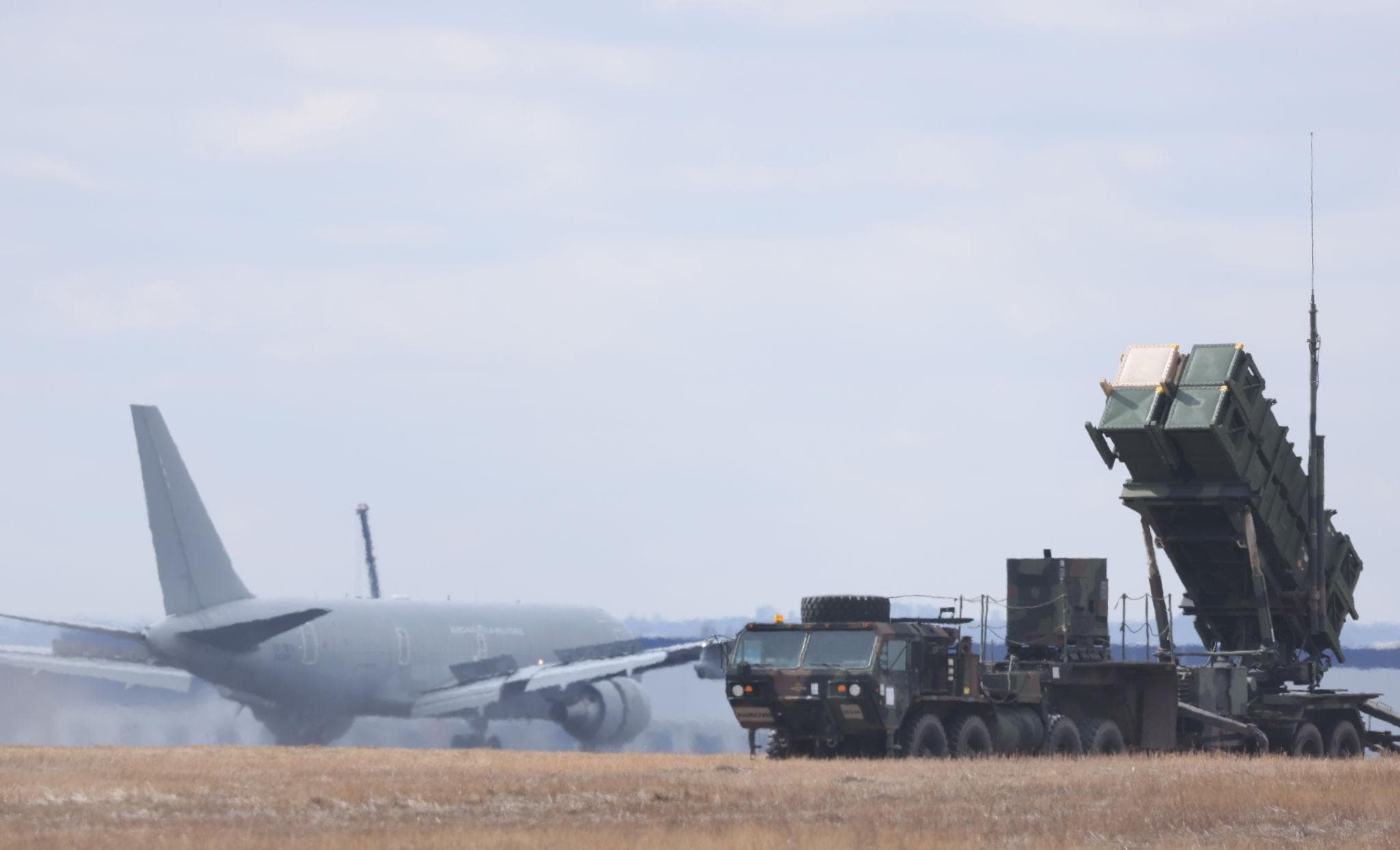
The analytical significance of the Polish agreement lies in several dimensions. The first concerns the scale relative to the national fiscal baseline. A €43.7 billion commitment, drawn against a single EU instrument, represents a multi-year acceleration of capability acquisition that would have been difficult to finance through purely domestic channels. The implied procurement programme is heavily weighted toward integrated air and missile defence, mechanised land forces, drone capability, and the ammunition supply chain, areas where European production lines have historically been undersized relative to current requirements. The instrument’s joint-procurement provisions push member states to align specifications, which over time should reduce the fragmentation that has long handicapped European defence industrial output.
The second dimension is industrial. SAFE deliberately conditions access on common procurement involving at least one beneficiary and one additional member state, with eligibility extended to Ukraine and EEA-EFTA partners. This design pushes contracts toward consortia and away from purely national prime contractors, which over a multi-year horizon could reshape the structure of the European defence industrial base. Polish industry, in particular, is positioned to absorb significant subcontracting volumes through PGZ and adjacent firms, but the larger effect will likely be felt in cross-border capability supply chains that link Polish assembly with German, French, and Italian sub-systems. The Commission’s monitoring framework, including the European Defence Industry Programme and the upcoming defence-readiness reports, will provide the empirical grounding for assessing whether SAFE delivers the productivity uplift its designers expect.
A third dimension concerns the political economy of EU defence integration. SAFE is the first pillar of the broader ReArm Europe Plan that aims to unlock more than €800 billion of defence spending across the bloc. Its loan-based architecture deliberately avoids the political contentiousness of common grants or eurobonds while still pooling some elements of credit risk and procurement governance. For governments wary of cession of sovereignty, the design offers a workable bridge between national defence prerogatives and the logic of European-scale efficiency. For the Commission, the rapid uptake of the first €38 billion tranche in February 2026, followed by the full Polish package, validates the conviction that conditional lending instruments can produce alignment without treaty change.
Yet several analytical caveats deserve attention. Capacity constraints in European defence production remain binding. Ammunition lines, propellant supply, and skilled-labour bottlenecks cannot be resolved by financial commitments alone; investment in industrial capacity must be paired with predictable demand signals and workforce strategies. Foreign-affairs Commissioner Kaja Kallas has herself acknowledged that despite substantial financial commitments, European industry has not yet scaled output to match. Second, the loans must be serviced from national budgets, which raises a sustainability question for member states that combine high SAFE drawdowns with elevated debt-to-GDP ratios. Third, the geopolitical premise of SAFE assumes a sustained American posture of conditional engagement; a sharp reversal in Washington’s stance could either accelerate European integration or, conversely, redirect spending toward national hedging strategies.
In sum, the Warsaw signature on a €43.7 billion package is less a culmination than a milestone. It crystallises the eastward tilt of European defence priorities, validates the SAFE design, and sets a benchmark that smaller member states will reference in their own negotiations. The harder work, of converting financial commitments into delivered capability within the planned procurement horizon, has only just begun.