August 9, 2026
LATEST
New EU Gas Market Rules Take Effect With Consumer SafeguardsDeforestation Regulation Holds Its December Deadline Despite CutsDigital Omnibus Delays Europe’s High-Risk AI Deadline to 2027Europe’s Schools Confront a Widening Basic Skills GapRule of Law Report Finds Progress but Trust Still LagsIRIS2 Gains 66 Satellites as Brussels Signs the Rollout DealNature Restoration Plans Come Due as Member States Race a DeadlineECB Rates Hold at 2.25 Percent as Frankfurt Waits on the DataEU Budget Talks Turn to Cohesion as Ireland Takes OverWildfire Response Stretches Europe’s Emergency Fleet ThinCan Europe’s Quantum Plan Match Its Big Ambitions?Armenia Edges West as Moscow’s Grip Slips AwayEurope Inherits the World’s Aid Bill It Cannot Fully PayAir Passenger Rights Get Their First Overhaul in Two DecadesErasmus Opens a 5 Billion Euro Round for Skills and MobilityCeuta Crisis Pushes the EU Toward Faster Migrant ReturnsBulky Parcels Face a Packaging Crackdown From August 12Can Europe Build Its Drone Wall Before 2030 Arrives?Indonesia’s Trade Deal With Europe Nears Its Final SignatureEurope Leans on Beijing to Keep Climate Talks Alive Before AntalyaNew EU Gas Market Rules Take Effect With Consumer SafeguardsDeforestation Regulation Holds Its December Deadline Despite CutsDigital Omnibus Delays Europe’s High-Risk AI Deadline to 2027Europe’s Schools Confront a Widening Basic Skills GapRule of Law Report Finds Progress but Trust Still LagsIRIS2 Gains 66 Satellites as Brussels Signs the Rollout DealNature Restoration Plans Come Due as Member States Race a DeadlineECB Rates Hold at 2.25 Percent as Frankfurt Waits on the DataEU Budget Talks Turn to Cohesion as Ireland Takes OverWildfire Response Stretches Europe’s Emergency Fleet ThinCan Europe’s Quantum Plan Match Its Big Ambitions?Armenia Edges West as Moscow’s Grip Slips AwayEurope Inherits the World’s Aid Bill It Cannot Fully PayAir Passenger Rights Get Their First Overhaul in Two DecadesErasmus Opens a 5 Billion Euro Round for Skills and MobilityCeuta Crisis Pushes the EU Toward Faster Migrant ReturnsBulky Parcels Face a Packaging Crackdown From August 12Can Europe Build Its Drone Wall Before 2030 Arrives?Indonesia’s Trade Deal With Europe Nears Its Final SignatureEurope Leans on Beijing to Keep Climate Talks Alive Before Antalya
August 9, 2026
LATEST
New EU Gas Market Rules Take Effect With Consumer SafeguardsDeforestation Regulation Holds Its December Deadline Despite CutsDigital Omnibus Delays Europe’s High-Risk AI Deadline to 2027Europe’s Schools Confront a Widening Basic Skills GapRule of Law Report Finds Progress but Trust Still LagsIRIS2 Gains 66 Satellites as Brussels Signs the Rollout DealNature Restoration Plans Come Due as Member States Race a DeadlineECB Rates Hold at 2.25 Percent as Frankfurt Waits on the DataEU Budget Talks Turn to Cohesion as Ireland Takes OverWildfire Response Stretches Europe’s Emergency Fleet ThinCan Europe’s Quantum Plan Match Its Big Ambitions?Armenia Edges West as Moscow’s Grip Slips AwayEurope Inherits the World’s Aid Bill It Cannot Fully PayAir Passenger Rights Get Their First Overhaul in Two DecadesErasmus Opens a 5 Billion Euro Round for Skills and MobilityCeuta Crisis Pushes the EU Toward Faster Migrant ReturnsBulky Parcels Face a Packaging Crackdown From August 12Can Europe Build Its Drone Wall Before 2030 Arrives?Indonesia’s Trade Deal With Europe Nears Its Final SignatureEurope Leans on Beijing to Keep Climate Talks Alive Before AntalyaNew EU Gas Market Rules Take Effect With Consumer SafeguardsDeforestation Regulation Holds Its December Deadline Despite CutsDigital Omnibus Delays Europe’s High-Risk AI Deadline to 2027Europe’s Schools Confront a Widening Basic Skills GapRule of Law Report Finds Progress but Trust Still LagsIRIS2 Gains 66 Satellites as Brussels Signs the Rollout DealNature Restoration Plans Come Due as Member States Race a DeadlineECB Rates Hold at 2.25 Percent as Frankfurt Waits on the DataEU Budget Talks Turn to Cohesion as Ireland Takes OverWildfire Response Stretches Europe’s Emergency Fleet ThinCan Europe’s Quantum Plan Match Its Big Ambitions?Armenia Edges West as Moscow’s Grip Slips AwayEurope Inherits the World’s Aid Bill It Cannot Fully PayAir Passenger Rights Get Their First Overhaul in Two DecadesErasmus Opens a 5 Billion Euro Round for Skills and MobilityCeuta Crisis Pushes the EU Toward Faster Migrant ReturnsBulky Parcels Face a Packaging Crackdown From August 12Can Europe Build Its Drone Wall Before 2030 Arrives?Indonesia’s Trade Deal With Europe Nears Its Final SignatureEurope Leans on Beijing to Keep Climate Talks Alive Before Antalya

Why Europe Blinked on Its 2035 Combustion Engine Ban

For three years the European Union’s signature climate pledge for road transport was admirably simple. From 2035, every new car and van sold would have to emit zero carbon at the tailpipe, a 100 percent reduction written into Regulation 2023/851. It was a number with no asterisks, and its clarity was the point. That clarity is now gone. Under the Automotive Package the Commission presented in December 2025, the 2035 target becomes a 90 percent cut, with the final ten percent to be offset through low-carbon steel made in the Union, e-fuels or biofuels rather than eliminated outright.

The wording change is small and the consequences are not. A 90 percent tailpipe target, paired with credits for cleaner inputs, reopens the door to technologies the original rule was designed to phase out. Plug-in hybrids, range extenders, mild hybrids and even conventional internal combustion engines can keep a foothold beyond 2035, provided their residual emissions are compensated elsewhere in the value chain. The hard cutoff that gave investors and city planners a fixed horizon has been replaced by an accounting exercise. That is a meaningful loss of certainty for an industry whose product cycles run longer than the political cycles that regulate it.

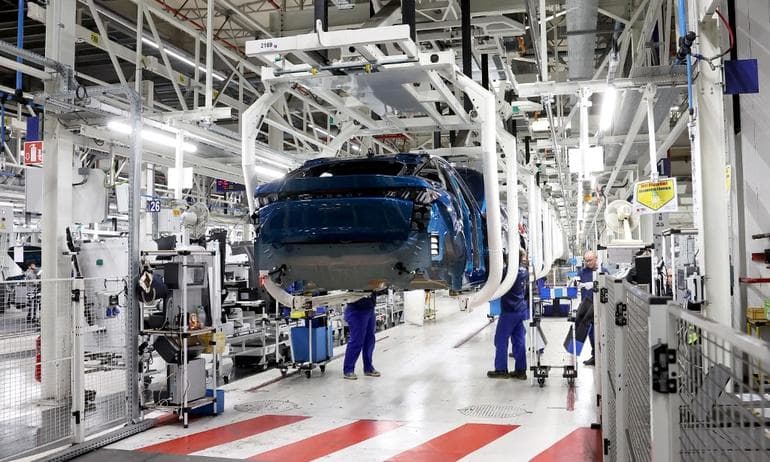
The case for softening is real and worth stating plainly. Europe’s carmakers are squeezed between Chinese manufacturers who reached cost-competitive electric vehicles first and an American market turning protectionist. Charging infrastructure remains uneven across member states, residual demand for combustion vehicles persists in poorer regions, and the supply chain for batteries still leans heavily on imports. Defenders of the revision argue that a slightly slower, more flexible path keeps European plants open and European workers employed, and that a rule which bankrupts the industry it governs serves no climate purpose. Folding low-carbon steel into the target also nudges decarbonisation upstream, into heavy industry, where emissions are harder to shift.

The case against is equally concrete. Regulatory certainty is itself an industrial asset. Firms that committed billions to electrification on the strength of a firm 2035 deadline now watch competitors who hesitated being rewarded with extra room. The ten percent flexibility is not free. It depends on a low-carbon steel supply and an e-fuels market that barely exist at scale today, which risks turning a compliance pathway into a paper exercise. And every reopening of a settled climate file invites the next one. If the 2035 target can move once, the assumption that it is final disappears, and with it much of the disciplining power that made the rule effective in the first place.

What makes this revision consequential beyond cars is the precedent. The 2035 ban was the most legible commitment in the entire Green Deal, the one a citizen could understand without reading a regulation. Diluting it tells every other sector watching that headline targets are negotiable once the compliance deadline starts to bite. That is a corrosive message for a climate framework built on the credibility of its end dates.

The proposal now passes to the European Parliament and the Council, where it will be fought over through 2026. The likely outcome is not a clean reversal but further bargaining at the margins, with manufacturers pressing for more flexibility and climate-focused governments resisting. Whatever emerges, the symbolic damage is already done. Europe set a clean, unambiguous line, held it long enough to reshape industrial investment, and then moved it the moment the political cost came due. The revised target may still cut emissions sharply, and ninety percent is not a trivial number. But the Union has traded the one thing that made the policy powerful, its certainty, for flexibility it may struggle to convert into real reductions. That trade, not the missing ten percentage points, is the part worth watching.