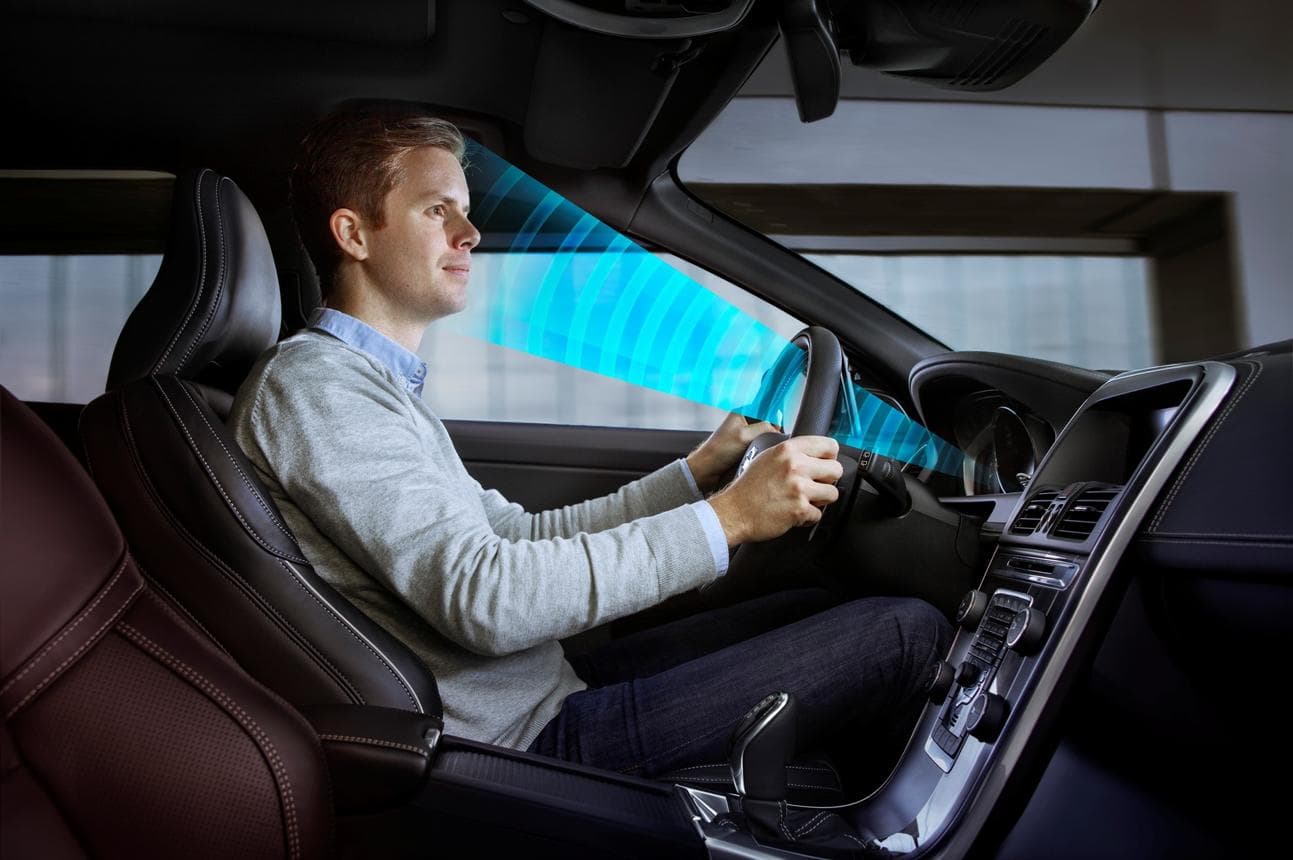
Brussels: A driver who glances at the phone for four seconds on a motorway now sets off an alarm inside the dashboard. From 7 July 2026, every new passenger car and van registered in the European Union must ship with a suite of advanced safety systems, and the rules push car safety from an option buyers pay extra for to a baseline nobody can decline.
The change marks the next phase of the General Safety Regulation, the framework the EU rolled out in stages to bend its road death curve toward zero. The Commission set out the new requirements in its own announcement, available here.
What the new rules demand
Manufacturers must now fit advanced emergency braking that detects cyclists and pedestrians, not only other vehicles. They must add a driver-distraction warning system, improve the driver’s forward visibility, meet new testing standards for worn tyres, and expand the areas of safety glass that protect pedestrians in a collision.
The distraction system draws the most attention because it points an infrared camera at the driver. It tracks eye movement, blinking, gaze direction, and even yawning to judge when attention drifts. If a driver looks away from the road for 3.5 seconds above 50 kilometres an hour, or six seconds between 20 and 50, the car raises an alert.
That design choice reveals the regulation’s logic. Human error causes the vast majority of crashes, so the rules target the moment attention lapses rather than the moment metal meets metal. The camera does not record or transmit, the Commission stresses, because the point is to nudge the driver back to the road, not to build a surveillance file.
The trade-off Europe has chosen
The safety case is substantial. The RAC estimates the General Safety Regulation could save more than 25,000 lives and prevent at least 140,000 serious injuries over the coming years, a payoff that feeds directly into the EU’s Vision Zero target of eliminating road deaths by 2050.
Critics push back on two fronts. Privacy advocates dislike a camera aimed at the driver, even one that keeps no footage, and they warn that today’s monitoring feature can become tomorrow’s data pipeline if a future rule relaxes the safeguards. Consumer groups raise cost, because every mandated system adds to a sticker price at a moment when new cars already strain household budgets.
There is also the question of trust. Emergency braking that misreads a shadow, or a distraction alert that fires while a driver checks a mirror, breeds the kind of irritation that leads people to tune the warning out. The technology only saves lives if drivers accept it rather than resent it, and that acceptance depends on how cleanly these first mandated systems perform.
Europe has made its choice plain. It will accept more sensors, more alerts, and a modestly higher price in exchange for fewer funerals. Whether drivers embrace the bargain or fight it will shape the next phase of car safety as surely as the engineering does.