August 9, 2026
LATEST
New EU Gas Market Rules Take Effect With Consumer SafeguardsDeforestation Regulation Holds Its December Deadline Despite CutsDigital Omnibus Delays Europe’s High-Risk AI Deadline to 2027Europe’s Schools Confront a Widening Basic Skills GapRule of Law Report Finds Progress but Trust Still LagsIRIS2 Gains 66 Satellites as Brussels Signs the Rollout DealNature Restoration Plans Come Due as Member States Race a DeadlineECB Rates Hold at 2.25 Percent as Frankfurt Waits on the DataEU Budget Talks Turn to Cohesion as Ireland Takes OverWildfire Response Stretches Europe’s Emergency Fleet ThinCan Europe’s Quantum Plan Match Its Big Ambitions?Armenia Edges West as Moscow’s Grip Slips AwayEurope Inherits the World’s Aid Bill It Cannot Fully PayAir Passenger Rights Get Their First Overhaul in Two DecadesErasmus Opens a 5 Billion Euro Round for Skills and MobilityCeuta Crisis Pushes the EU Toward Faster Migrant ReturnsBulky Parcels Face a Packaging Crackdown From August 12Can Europe Build Its Drone Wall Before 2030 Arrives?Indonesia’s Trade Deal With Europe Nears Its Final SignatureEurope Leans on Beijing to Keep Climate Talks Alive Before AntalyaNew EU Gas Market Rules Take Effect With Consumer SafeguardsDeforestation Regulation Holds Its December Deadline Despite CutsDigital Omnibus Delays Europe’s High-Risk AI Deadline to 2027Europe’s Schools Confront a Widening Basic Skills GapRule of Law Report Finds Progress but Trust Still LagsIRIS2 Gains 66 Satellites as Brussels Signs the Rollout DealNature Restoration Plans Come Due as Member States Race a DeadlineECB Rates Hold at 2.25 Percent as Frankfurt Waits on the DataEU Budget Talks Turn to Cohesion as Ireland Takes OverWildfire Response Stretches Europe’s Emergency Fleet ThinCan Europe’s Quantum Plan Match Its Big Ambitions?Armenia Edges West as Moscow’s Grip Slips AwayEurope Inherits the World’s Aid Bill It Cannot Fully PayAir Passenger Rights Get Their First Overhaul in Two DecadesErasmus Opens a 5 Billion Euro Round for Skills and MobilityCeuta Crisis Pushes the EU Toward Faster Migrant ReturnsBulky Parcels Face a Packaging Crackdown From August 12Can Europe Build Its Drone Wall Before 2030 Arrives?Indonesia’s Trade Deal With Europe Nears Its Final SignatureEurope Leans on Beijing to Keep Climate Talks Alive Before Antalya
August 9, 2026
LATEST
New EU Gas Market Rules Take Effect With Consumer SafeguardsDeforestation Regulation Holds Its December Deadline Despite CutsDigital Omnibus Delays Europe’s High-Risk AI Deadline to 2027Europe’s Schools Confront a Widening Basic Skills GapRule of Law Report Finds Progress but Trust Still LagsIRIS2 Gains 66 Satellites as Brussels Signs the Rollout DealNature Restoration Plans Come Due as Member States Race a DeadlineECB Rates Hold at 2.25 Percent as Frankfurt Waits on the DataEU Budget Talks Turn to Cohesion as Ireland Takes OverWildfire Response Stretches Europe’s Emergency Fleet ThinCan Europe’s Quantum Plan Match Its Big Ambitions?Armenia Edges West as Moscow’s Grip Slips AwayEurope Inherits the World’s Aid Bill It Cannot Fully PayAir Passenger Rights Get Their First Overhaul in Two DecadesErasmus Opens a 5 Billion Euro Round for Skills and MobilityCeuta Crisis Pushes the EU Toward Faster Migrant ReturnsBulky Parcels Face a Packaging Crackdown From August 12Can Europe Build Its Drone Wall Before 2030 Arrives?Indonesia’s Trade Deal With Europe Nears Its Final SignatureEurope Leans on Beijing to Keep Climate Talks Alive Before AntalyaNew EU Gas Market Rules Take Effect With Consumer SafeguardsDeforestation Regulation Holds Its December Deadline Despite CutsDigital Omnibus Delays Europe’s High-Risk AI Deadline to 2027Europe’s Schools Confront a Widening Basic Skills GapRule of Law Report Finds Progress but Trust Still LagsIRIS2 Gains 66 Satellites as Brussels Signs the Rollout DealNature Restoration Plans Come Due as Member States Race a DeadlineECB Rates Hold at 2.25 Percent as Frankfurt Waits on the DataEU Budget Talks Turn to Cohesion as Ireland Takes OverWildfire Response Stretches Europe’s Emergency Fleet ThinCan Europe’s Quantum Plan Match Its Big Ambitions?Armenia Edges West as Moscow’s Grip Slips AwayEurope Inherits the World’s Aid Bill It Cannot Fully PayAir Passenger Rights Get Their First Overhaul in Two DecadesErasmus Opens a 5 Billion Euro Round for Skills and MobilityCeuta Crisis Pushes the EU Toward Faster Migrant ReturnsBulky Parcels Face a Packaging Crackdown From August 12Can Europe Build Its Drone Wall Before 2030 Arrives?Indonesia’s Trade Deal With Europe Nears Its Final SignatureEurope Leans on Beijing to Keep Climate Talks Alive Before Antalya

Why Six Countries Can Now Buy Critical Medicines Together

Brussels: The provisional deal that Parliament and Council struck on the Critical Medicines Act on 12 May contains one change that looks technical and is in fact the heart of the law. The minimum number of member states needed to launch a joint procurement of essential medicines has been cut from nine to six. Lowering a threshold rarely makes news, but this one rewrites the arithmetic of how smaller and mid-sized countries secure supply, and it explains much of why the file moved as quickly as it did.

The problem the Act tries to solve is familiar to anyone who followed the shortages of recent winters. Generic medicines with razor-thin margins, often dependent on a single factory for their active ingredient, vanish from shelves the moment demand spikes or a supplier stumbles. Small national markets have little leverage on their own; a manufacturer has limited reason to prioritise a country ordering modest volumes. Pooling demand changes that calculation, and the old requirement for nine participants made coalitions hard to assemble, particularly for medicines that only a handful of states urgently needed at the same moment.

The second structural change is less visible but arguably more consequential. In public procurement for critical medicines, the agreement obliges buyers to let resilience criteria take precedence over price. For two decades European health procurement has been organised around the lowest bid, a discipline that delivered cheap generics and, as a side effect, hollowed out manufacturing until much of it concentrated in a few sites in Asia. Instructing public buyers to weigh security of supply ahead of cost is an explicit admission that the cheapest source and the most reliable source are not the same thing, and that the gap between them has a price worth paying.

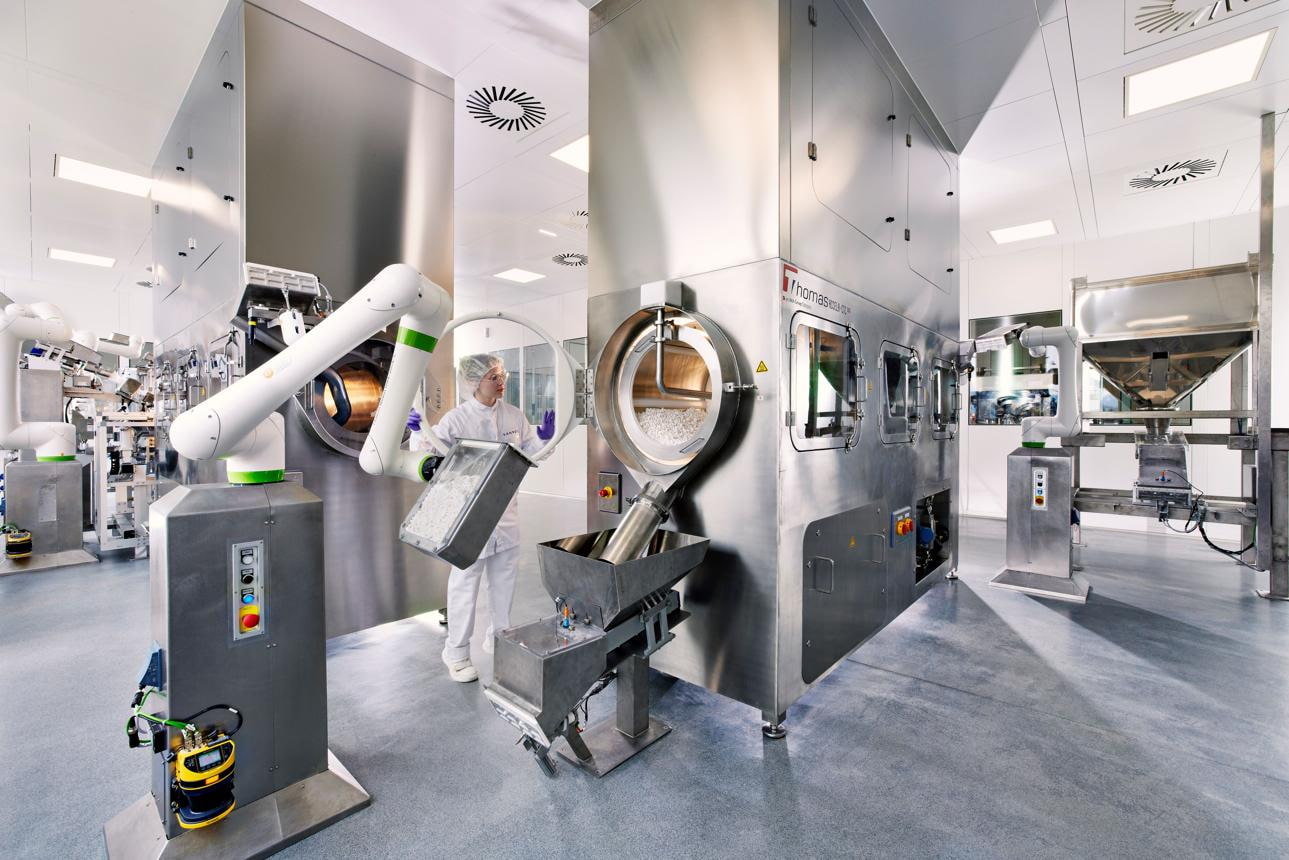
The Act also targets the upstream end of the chain, the active pharmaceutical ingredients where European dependence is deepest. The text seeks to encourage manufacturing of those ingredients within the Union and to diversify away from concentrated third-country suppliers. This is where ambition meets hard economics. Building or reshoring ingredient production is expensive and slow, and no procurement preference on its own conjures a factory into existence. The law sets the incentive; whether private capital follows depends on whether the resilience premium proves durable rather than a one-cycle political gesture.

Sceptics make two fair points. The first is cost, since prioritising resilience over price means health systems already under budget strain will sometimes pay more for the same molecule. The second is timing, because the provisional agreement still needs formal ratification by both institutions and the final text is not expected in the Official Journal until late in the year, with the date of application confirmed only then. A law that bites in 2027 or beyond does little for a shortage this winter.

Even so, the direction of travel is unmistakable, and it mirrors the logic now applied to chips and raw materials. The Union has concluded that for a defined set of products the market optimised for efficiency produced a system optimised for fragility. The lowered procurement threshold is the most immediately usable tool in the package, and it will reveal quickly whether member states actually want to buy together when the rules finally let them, or whether national habits prove stronger than the shared interest the Act assumes.