August 12, 2026
LATEST
Minimum Wages Climb Fastest in Eastern Europe, Data ShowsEurope’s Electrification Plan Aims to Slash Fossil Fuel BillsCouncil Clears Fertiliser Aid to Shield Struggling EU FarmersCan Europe Court Beijing and Contain It at the Same Time?Korean Tanks Fill the Gaps Europe Cannot Arm Fast EnoughAustralia Becomes Europe’s Answer to China’s Mineral GripEurope and Japan Bet on Shared Labs to Outpace ChinaWhy Europe and South Korea Rewrote the Rules of Digital TradeNew Zealand Helps Europe Anchor Its Ambitions Across the PacificCompetitiveness Fund Faces Its First Real Test of DeliveryHorizon Europe Rolls Out Its 14 Billion Research PushCERV Programme Grants Target Civic Space Under StrainEurope’s Firefighting Fleet Faces Its Worst Season on RecordAI Gigafactories Draw a 30 Billion Euro Bid to Rival the USRail Passengers Win Full Rights on Multi-Leg TripsEuropean Universities Face a Budget and Reform TestTobacco Rules Face a Sweeping Reset as Vaping SurgesRiyadh Summit Tests Europe’s New Bet on the GulfEurope Pours Millions Into a Sudan Crisis It Cannot ReachBrussels Braces for a Bruising Fight Over Its New Space Act RulesMinimum Wages Climb Fastest in Eastern Europe, Data ShowsEurope’s Electrification Plan Aims to Slash Fossil Fuel BillsCouncil Clears Fertiliser Aid to Shield Struggling EU FarmersCan Europe Court Beijing and Contain It at the Same Time?Korean Tanks Fill the Gaps Europe Cannot Arm Fast EnoughAustralia Becomes Europe’s Answer to China’s Mineral GripEurope and Japan Bet on Shared Labs to Outpace ChinaWhy Europe and South Korea Rewrote the Rules of Digital TradeNew Zealand Helps Europe Anchor Its Ambitions Across the PacificCompetitiveness Fund Faces Its First Real Test of DeliveryHorizon Europe Rolls Out Its 14 Billion Research PushCERV Programme Grants Target Civic Space Under StrainEurope’s Firefighting Fleet Faces Its Worst Season on RecordAI Gigafactories Draw a 30 Billion Euro Bid to Rival the USRail Passengers Win Full Rights on Multi-Leg TripsEuropean Universities Face a Budget and Reform TestTobacco Rules Face a Sweeping Reset as Vaping SurgesRiyadh Summit Tests Europe’s New Bet on the GulfEurope Pours Millions Into a Sudan Crisis It Cannot ReachBrussels Braces for a Bruising Fight Over Its New Space Act Rules
August 12, 2026
LATEST
Minimum Wages Climb Fastest in Eastern Europe, Data ShowsEurope’s Electrification Plan Aims to Slash Fossil Fuel BillsCouncil Clears Fertiliser Aid to Shield Struggling EU FarmersCan Europe Court Beijing and Contain It at the Same Time?Korean Tanks Fill the Gaps Europe Cannot Arm Fast EnoughAustralia Becomes Europe’s Answer to China’s Mineral GripEurope and Japan Bet on Shared Labs to Outpace ChinaWhy Europe and South Korea Rewrote the Rules of Digital TradeNew Zealand Helps Europe Anchor Its Ambitions Across the PacificCompetitiveness Fund Faces Its First Real Test of DeliveryHorizon Europe Rolls Out Its 14 Billion Research PushCERV Programme Grants Target Civic Space Under StrainEurope’s Firefighting Fleet Faces Its Worst Season on RecordAI Gigafactories Draw a 30 Billion Euro Bid to Rival the USRail Passengers Win Full Rights on Multi-Leg TripsEuropean Universities Face a Budget and Reform TestTobacco Rules Face a Sweeping Reset as Vaping SurgesRiyadh Summit Tests Europe’s New Bet on the GulfEurope Pours Millions Into a Sudan Crisis It Cannot ReachBrussels Braces for a Bruising Fight Over Its New Space Act RulesMinimum Wages Climb Fastest in Eastern Europe, Data ShowsEurope’s Electrification Plan Aims to Slash Fossil Fuel BillsCouncil Clears Fertiliser Aid to Shield Struggling EU FarmersCan Europe Court Beijing and Contain It at the Same Time?Korean Tanks Fill the Gaps Europe Cannot Arm Fast EnoughAustralia Becomes Europe’s Answer to China’s Mineral GripEurope and Japan Bet on Shared Labs to Outpace ChinaWhy Europe and South Korea Rewrote the Rules of Digital TradeNew Zealand Helps Europe Anchor Its Ambitions Across the PacificCompetitiveness Fund Faces Its First Real Test of DeliveryHorizon Europe Rolls Out Its 14 Billion Research PushCERV Programme Grants Target Civic Space Under StrainEurope’s Firefighting Fleet Faces Its Worst Season on RecordAI Gigafactories Draw a 30 Billion Euro Bid to Rival the USRail Passengers Win Full Rights on Multi-Leg TripsEuropean Universities Face a Budget and Reform TestTobacco Rules Face a Sweeping Reset as Vaping SurgesRiyadh Summit Tests Europe’s New Bet on the GulfEurope Pours Millions Into a Sudan Crisis It Cannot ReachBrussels Braces for a Bruising Fight Over Its New Space Act Rules

Why Tokyo Has Become Europe’s Closest Security Partner in Asia

Tokyo: Europe rarely builds a security partnership with a country eight thousand kilometres away, yet its bond with Japan keeps tightening. Since the two sides sealed their security and defence partnership in November 2024, they have moved from warm communiques toward hard commitments that stitch the Atlantic and the Pacific into a single strategic picture.

The partnership made Japan the first Indo-Pacific state to strike such a pact with the Union, and it took effect alongside a broader strategic partnership agreement at the start of 2025. Officials framed the timing deliberately. As Russia leaned on North Korean troops and China pressed its claims in the East and South China Seas, Brussels and Tokyo concluded that their security problems had begun to rhyme. The European External Action Service published the partnership text setting out its scope.

The agenda now runs well beyond declarations. Both governments prize maritime security, and they have pledged to defend freedom of navigation and to protect the undersea cables and pipelines that carry Europe’s data and energy. They have also opened formal talks on a security of information agreement, the unglamorous plumbing that lets partners share classified intelligence without leaks.

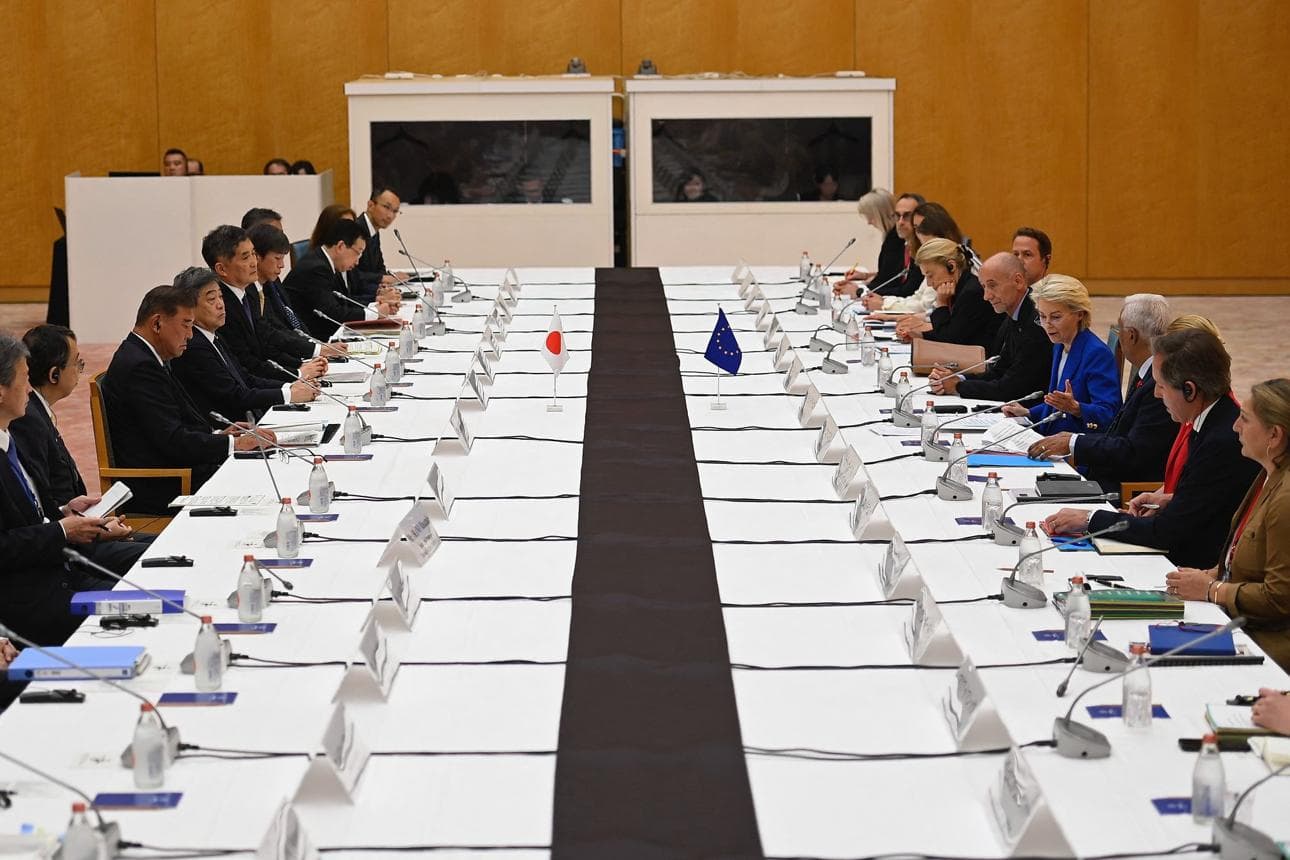
Their leaders drove the point home at last summer’s summit, where they declared that the security of Europe and the security of the Indo-Pacific stand closely interlinked. You can read the outcome of that EU-Japan summit in the Council’s record. Words like these once sounded aspirational; today they underpin joint exercises, shared threat assessments, and coordinated positions on sanctions.

National capitals reinforce the trend. Germany has courted Tokyo hard, and Berlin proposed a reciprocal access agreement during a defence visit to the region in March, a deal that would smooth joint training between the two militaries. France and Italy sail carriers through Asian waters, and the Netherlands guards the export controls that keep advanced chipmaking tools out of Chinese hands. Each thread ties Europe more firmly to Japan’s neighbourhood.

Skeptics counsel restraint. Europe has no treaty obligation to defend Japan, and its navies operate thousands of miles from home with thin logistics. Should a crisis erupt over Taiwan, the Union would struggle to do more than issue statements and tighten sanctions. Tokyo understands the limits, which is why it hedges by deepening its own alliance with Washington even as it embraces Brussels.

Yet the value of this security partnership lies less in warships than in resilience. Japan offers Europe a trusted supplier of semiconductors, a fellow rule-maker on technology standards, and a democracy that reads Beijing’s intentions from up close. Europe offers Japan regulatory heft, sanctions coordination, and a second front that complicates any adversary’s planning.

The partnership will be tested not by grand summits but by quiet follow-through, on the information agreement, on cable protection, on export controls. If Brussels and Tokyo keep converting language into machinery, they will prove that two oceans no longer describe a distance so much as a shared frontier.