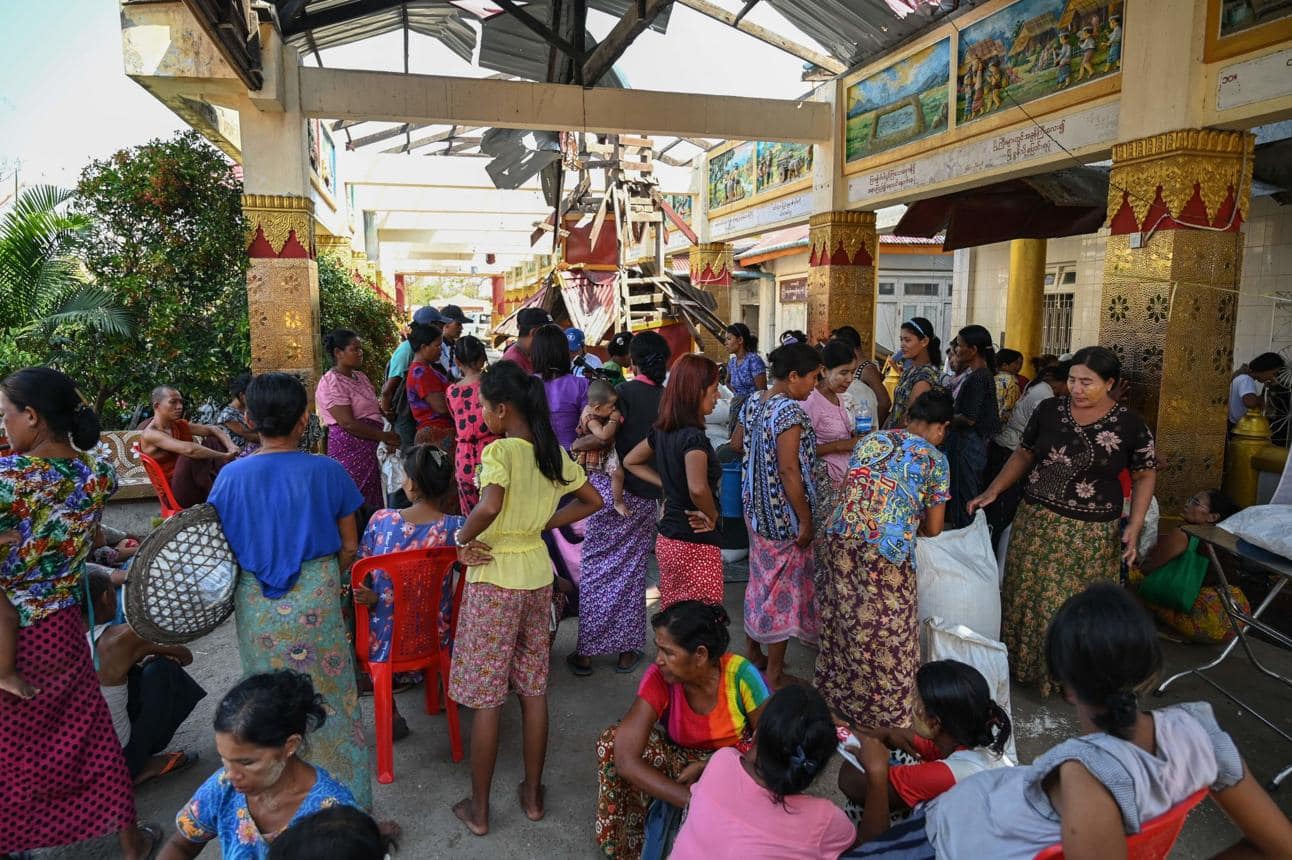
Sittwe: Europe added money to Myanmar last week and changed almost nothing on the ground, which is the most honest summary of where Myanmar aid now stands. The Commission released a further EUR 10.5 million on 13 August, lifting European humanitarian funding for the country to EUR 49.1 million this year. The accompanying statement recorded that the conflict has now claimed more than 100,000 lives. The funding covers emergency healthcare, food, protection, shelter and water and sanitation equipment for people displaced by fighting and by this year’s flash floods.
Read the figure against the wider budget and the priority is real. The Commission opened 2026 with EUR 1.9 billion for humanitarian operations worldwide, of which EUR 73 million went to Southeast Asia and the Pacific, dominated by the Myanmar crisis and its spillover into Bangladesh. Myanmar therefore absorbs most of a regional envelope that competes against Sudan, Gaza, Afghanistan and the Sahel. Nobody in Brussels is neglecting this file.
Funding, however, stopped being the binding constraint some time ago. Aid agencies working across Rakhine, Chin and Sagaing report the same limitation month after month, and it is not the size of the grant. It is permission. Travel authorisations expire and are not renewed. Convoys wait at checkpoints controlled by authorities who answer to nobody the European Union can telephone. Banking channels close, which means cash programming, the fastest and most dignified way to help a displaced family, becomes the hardest instrument to run. A grant that cannot move is an accounting entry.
This is where European humanitarian policy meets a problem it cannot solve with its own instruments. The Union sanctions the military administration, refuses to legitimise it, and channels assistance through United Nations agencies and non-governmental partners rather than through the state. Those positions are coherent and defensible. They also leave Brussels with no counterpart able to guarantee access. The actors who decide whether a truck reaches Sittwe are precisely the actors Europe has chosen not to deal with, and the ethnic armed organisations controlling large parts of the north and west sit outside any framework the Union can formally recognise.
ASEAN offers the only structural alternative, and it has underperformed. The regional bloc’s humanitarian centre holds a mandate the Europeans lack, namely standing to negotiate with the administration in Naypyidaw without conferring recognition. European support for that channel has been real but modest, partly because ASEAN’s five point consensus has produced so little that funding it looks like rewarding failure. That judgement is understandable and probably wrong. A weak channel that can obtain travel permits delivers more than a strong donor that cannot.
The harder question concerns what Europe measures. Announcements report euros committed, because euros committed is what a Commission controls and what a court of auditors can verify. Nobody publishes a quarterly figure for access days granted, convoys cleared or districts reached. Until something like that exists, each new tranche will read as evidence of engagement while the population in Rakhine experiences no change at all. Myanmar aid has become a case where generosity and effectiveness have quietly separated, and only one of them appears in the press release.