August 9, 2026
LATEST
Japan Becomes Europe’s Closest Security Partner in AsiaCan Europe’s New Zealand Deal Anchor It in the Pacific?Chip Research Binds Europe and South Korea CloserMinimum Prices Replace Tariffs in Europe’s China Car DealBrussels and Beijing Keep Talking While the Trade Gap WidensKorean Weapons and EU Loans Now Bankroll Europe’s RearmamentNew EU Gas Market Rules Take Effect With Consumer SafeguardsDeforestation Regulation Holds Its December Deadline Despite CutsDigital Omnibus Delays Europe’s High-Risk AI Deadline to 2027Europe’s Schools Confront a Widening Basic Skills GapRule of Law Report Finds Progress but Trust Still LagsIRIS2 Gains 66 Satellites as Brussels Signs the Rollout DealNature Restoration Plans Come Due as Member States Race a DeadlineECB Rates Hold at 2.25 Percent as Frankfurt Waits on the DataEU Budget Talks Turn to Cohesion as Ireland Takes OverWildfire Response Stretches Europe’s Emergency Fleet ThinCan Europe’s Quantum Plan Match Its Big Ambitions?Armenia Edges West as Moscow’s Grip Slips AwayEurope Inherits the World’s Aid Bill It Cannot Fully PayAir Passenger Rights Get Their First Overhaul in Two DecadesJapan Becomes Europe’s Closest Security Partner in AsiaCan Europe’s New Zealand Deal Anchor It in the Pacific?Chip Research Binds Europe and South Korea CloserMinimum Prices Replace Tariffs in Europe’s China Car DealBrussels and Beijing Keep Talking While the Trade Gap WidensKorean Weapons and EU Loans Now Bankroll Europe’s RearmamentNew EU Gas Market Rules Take Effect With Consumer SafeguardsDeforestation Regulation Holds Its December Deadline Despite CutsDigital Omnibus Delays Europe’s High-Risk AI Deadline to 2027Europe’s Schools Confront a Widening Basic Skills GapRule of Law Report Finds Progress but Trust Still LagsIRIS2 Gains 66 Satellites as Brussels Signs the Rollout DealNature Restoration Plans Come Due as Member States Race a DeadlineECB Rates Hold at 2.25 Percent as Frankfurt Waits on the DataEU Budget Talks Turn to Cohesion as Ireland Takes OverWildfire Response Stretches Europe’s Emergency Fleet ThinCan Europe’s Quantum Plan Match Its Big Ambitions?Armenia Edges West as Moscow’s Grip Slips AwayEurope Inherits the World’s Aid Bill It Cannot Fully PayAir Passenger Rights Get Their First Overhaul in Two Decades
August 9, 2026
LATEST
Japan Becomes Europe’s Closest Security Partner in AsiaCan Europe’s New Zealand Deal Anchor It in the Pacific?Chip Research Binds Europe and South Korea CloserMinimum Prices Replace Tariffs in Europe’s China Car DealBrussels and Beijing Keep Talking While the Trade Gap WidensKorean Weapons and EU Loans Now Bankroll Europe’s RearmamentNew EU Gas Market Rules Take Effect With Consumer SafeguardsDeforestation Regulation Holds Its December Deadline Despite CutsDigital Omnibus Delays Europe’s High-Risk AI Deadline to 2027Europe’s Schools Confront a Widening Basic Skills GapRule of Law Report Finds Progress but Trust Still LagsIRIS2 Gains 66 Satellites as Brussels Signs the Rollout DealNature Restoration Plans Come Due as Member States Race a DeadlineECB Rates Hold at 2.25 Percent as Frankfurt Waits on the DataEU Budget Talks Turn to Cohesion as Ireland Takes OverWildfire Response Stretches Europe’s Emergency Fleet ThinCan Europe’s Quantum Plan Match Its Big Ambitions?Armenia Edges West as Moscow’s Grip Slips AwayEurope Inherits the World’s Aid Bill It Cannot Fully PayAir Passenger Rights Get Their First Overhaul in Two DecadesJapan Becomes Europe’s Closest Security Partner in AsiaCan Europe’s New Zealand Deal Anchor It in the Pacific?Chip Research Binds Europe and South Korea CloserMinimum Prices Replace Tariffs in Europe’s China Car DealBrussels and Beijing Keep Talking While the Trade Gap WidensKorean Weapons and EU Loans Now Bankroll Europe’s RearmamentNew EU Gas Market Rules Take Effect With Consumer SafeguardsDeforestation Regulation Holds Its December Deadline Despite CutsDigital Omnibus Delays Europe’s High-Risk AI Deadline to 2027Europe’s Schools Confront a Widening Basic Skills GapRule of Law Report Finds Progress but Trust Still LagsIRIS2 Gains 66 Satellites as Brussels Signs the Rollout DealNature Restoration Plans Come Due as Member States Race a DeadlineECB Rates Hold at 2.25 Percent as Frankfurt Waits on the DataEU Budget Talks Turn to Cohesion as Ireland Takes OverWildfire Response Stretches Europe’s Emergency Fleet ThinCan Europe’s Quantum Plan Match Its Big Ambitions?Armenia Edges West as Moscow’s Grip Slips AwayEurope Inherits the World’s Aid Bill It Cannot Fully PayAir Passenger Rights Get Their First Overhaul in Two Decades

Gene-Edited Crops Clear Their Last Big Hurdle In European Law

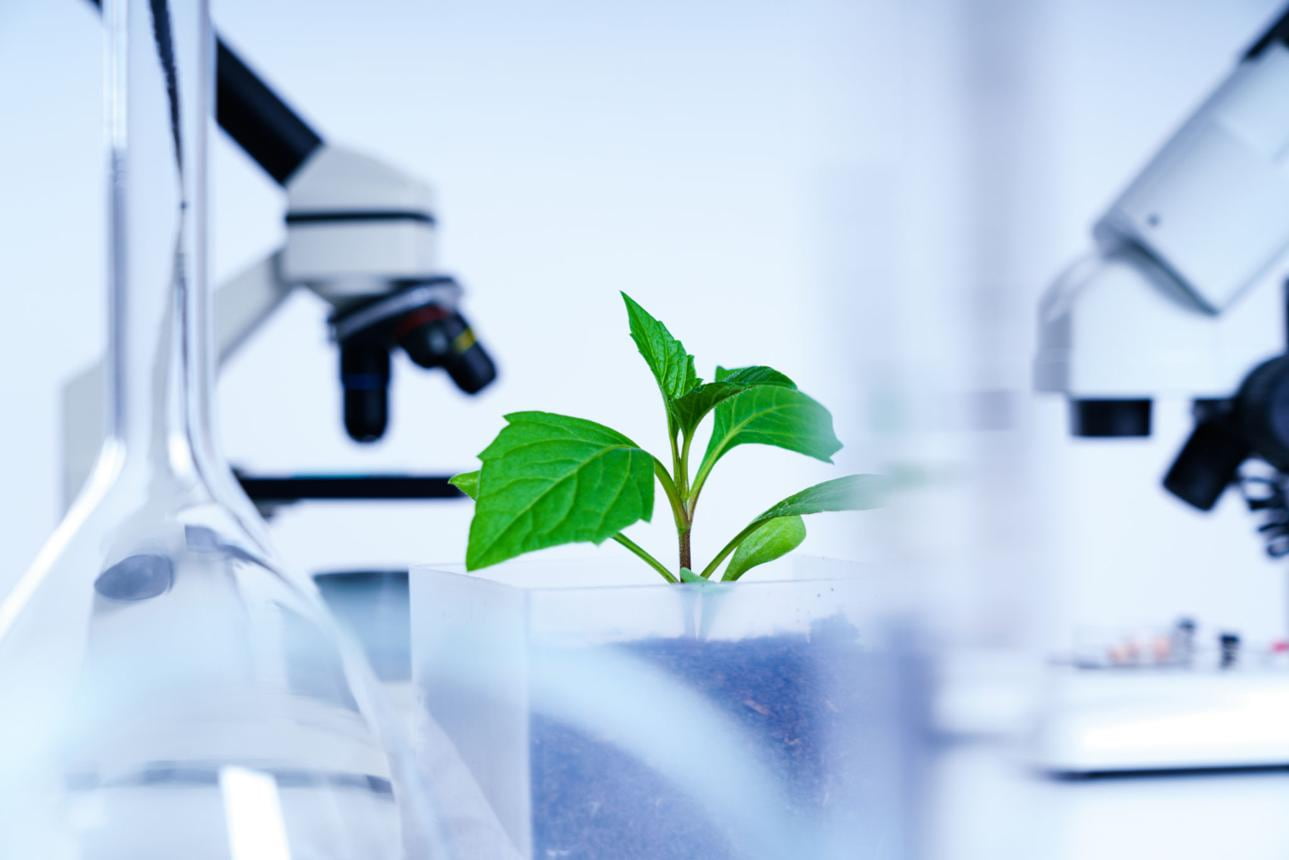
Wageningen: In the glasshouses that ring this Dutch research town, plant breeders have spent a decade working with tools that European law could not quite classify. A gene-edited tomato that resists blight, a wheat line tweaked to tolerate drought, a potato with the bruising switched off, all of them sat under the same heavy rules that govern transgenic crops, even when nothing foreign had been added to the genome. That long ambiguity is now ending. After the Council formally adopted the regulation on new genomic techniques and Parliament confirmed the text at its spring plenary, the bloc has a dedicated legal home for plants edited with newer methods such as CRISPR.

The deal rests on a split that breeders have lobbied for since the file appeared. Plants whose changes could plausibly have arisen through conventional breeding or natural variation fall into a first category and are treated, in effect, like ordinary varieties. They escape the authorisation, traceability and labelling machinery of the older directive, with one carve-out: seed and other reproductive material must still carry an indication of the technique used, so that farmers and the organic sector know what they are buying. Anything more elaborate, including the deliberate insertion of genes from unrelated species, stays in a second category that keeps the full risk assessment, consent and labelling regime.

Not every edited plant can drift into the lighter tier. Traits that regulators consider sensitive, including tolerance to herbicides and the production of known insecticidal compounds, are explicitly pushed back into the stricter track regardless of how the change was made. Developers of first-category plants will also have to register patent information in a public database, and the Commission has promised a code of conduct on patents plus an expert group to study how intellectual property could distort access to edited seed. That last point matters to smaller breeders who fear that a handful of firms could fence off the best traits.

Supporters frame the law as a competitiveness and sustainability measure rolled into one. They argue that crops needing less water, fewer fungicides or no chemical protection at all are exactly what a warming, input-squeezed European agriculture needs, and that keeping such plants tangled in 1990s rules simply ships the innovation, and the jobs, to North America and Asia. Seed companies and many farm groups have welcomed the clarity, saying field trials and product pipelines can finally be planned with a known endpoint.

The objections have not gone away. Organic farmers worry about coexistence and the risk that unlabelled edited varieties contaminate certified seed. Several environmental groups and a bloc of member states argue that exempting whole categories from traceability removes the consumer’s ability to choose and weakens the precautionary principle that underpins EU food law. They also question whether a patent database, without firmer limits, will really keep the technology open.

The practical timetable buys everyone room to argue. The regulation is expected to be published later this year but only starts to apply in 2028, leaving the Commission to draft the technical detail on verification, patents and seed marking. By the time the first relabelled packets reach a Wageningen test plot, the science will already have moved on again.