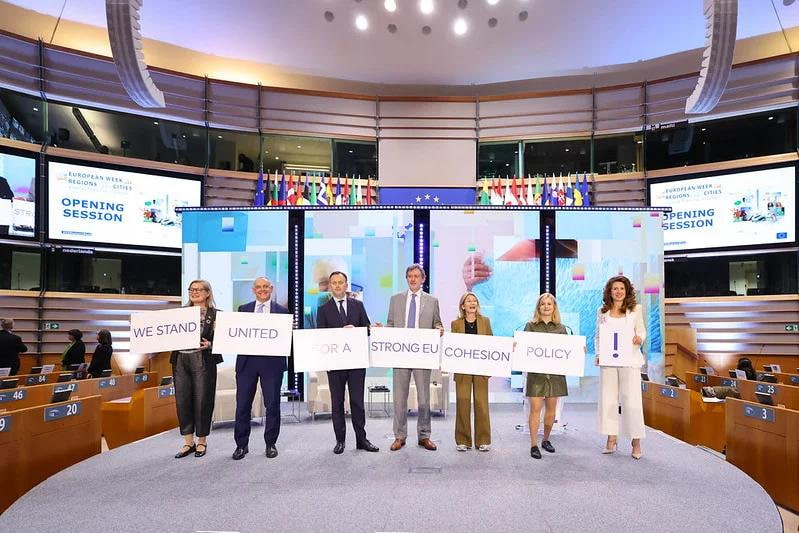
The fight over cohesion policy has become the sharpest regional dispute in the talks on the 2028 to 2034 EU budget. Regions and cities say the Commission’s plan to deliver funds through single National and Regional Partnership Plans would hand control to national capitals. The European Committee of the Regions repeated that opposition on 23 October at a seminar in Valencia, while negotiations on the long-term budget continue.
The Commission proposed the plans on 16 July 2025. They would bring together cohesion funding, agricultural support and fisheries money under one national framework for each member state. Committee of the Regions President Kata Tüttő has argued that the proposal gives no legal guarantee for regional involvement in fund management and no commitment to assess regional impact.
The Committee adopted its formal position unanimously at its plenary on 6 May 2026. It rejects a single fund and wants separate envelopes for the European Regional Development Fund, the Cohesion Fund, the European Social Fund Plus and Interreg. Sari Rautio, the rapporteur, called on co-legislators to restore the partnership principle and to protect cohesion policy from cuts.
The opinion also proposes concrete safeguards. It asks for a subsidiarity clause that would let regions and cities take a case to the Commission if a member state ignores multilevel governance when preparing its plan. It wants member states to assess the local and regional impact of their plans, and it asks that at least 20 percent of cohesion, rural development and fisheries money go to integrated territorial development strategies.
Parliament’s position matters because it can reshape the plan before governments settle. The regions’ alliance says the Parliament text includes many of their priorities, which makes the Parliament a likely ally in the cohesion policy talks. Member states, which would manage the plans, have not published a comparable bloc position in the material reviewed, so the balance in the Council on cohesion policy remains unclear.
A binding rule that EU policies must not harm cohesion sits at the centre of the demands. The Committee wants that principle to apply to the whole budget, including the European Competitiveness Fund.
The pressure continues outside the Committee. On 28 September a coalition of 143 regions, known as EUregions4cohesion, said the shift to a centralised national delivery model had not yet been sufficiently reversed. The group welcomed the European Parliament’s position, which includes many of its priorities, and asked for co-financing rates of 50 to 100 percent, regional chapters in the national plans and direct negotiations with the Commission.
Chairing the Committee’s economic policy commission, Alberto Cirio told the Valencia seminar that reindustrialisation must also strengthen territorial cohesion. The next public stage is a Committee conference in Brussels on 10 November. The Commission’s 2027 work programme calls for agreement on the 2028 to 2034 budget framework by the end of the year, so the final shape of cohesion policy depends on how far member states accept regional safeguards. If governments keep the single-plan model, regions will argue that cohesion policy loses its local character.