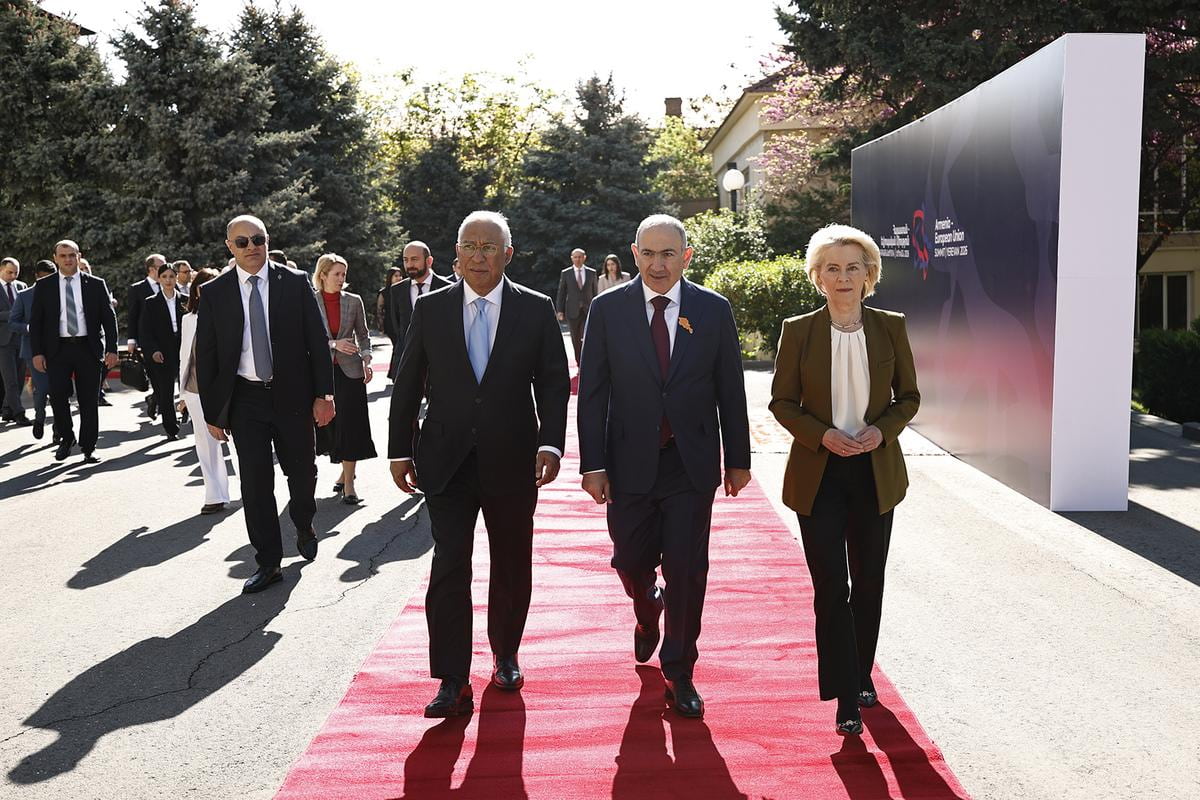
Yerevan: The first EU-Armenia summit, held in Yerevan on 5 May 2026, deepened practical cooperation between Brussels and the South Caucasus but made no tangible progress on the question of Armenian membership. European Council President António Costa and Commission President Ursula von der Leyen met Prime Minister Nikol Pashinyan, and the leaders adopted a joint declaration. The New Union Post, the only outlet reviewed for this article, described the result as closer ties outside the framework of accession.
The most concrete deliverable was the EU-Armenia Connectivity Partnership, signed in Yerevan the same day. It covers transport, energy and digital links, launches a High-Level Transport Dialogue and invites EU and European Economic Area companies to invest in the South Caucasus. The EU-Armenia summit also set out funding: Global Gateway investments are expected to reach €2.5 billion, and a Resilience and Growth Plan worth €270 million continues to support reforms.
Security featured more quietly. The declaration points to support for the Armenian Armed Forces under the European Peace Facility and welcomes efforts to institutionalise peace with Azerbaijan and to normalise relations with Türkiye, including reopening regional communication links. Cooperation with Europol, Eurojust, Frontex and the European Public Prosecutor’s Office was strengthened, and cybersecurity and resilience were named as the first areas for closer exchanges on defence.
Membership is where the EU-Armenia summit stayed cautious. The declaration only acknowledges the country’s intention to move towards the EU, referring to Armenia’s 2025 law on launching the accession process. The constitution requires a referendum before Yerevan applies to any supranational organisation, and Brussels says it cannot act until a formal application arrives. Visa liberalisation moves along a separate track, and von der Leyen said she was convinced the two sides would get there.
The EU-Armenia summit therefore sells a strategy of sectoral integration rather than a promise. Armenia has historically depended on Russia for security and has not fully cut links with Moscow, so Brussels is offering roads, grids and training that make a European choice easier without forcing it. The risk for Yerevan is that investment announcements outrun delivery, while the risk for Brussels is that a wide offer builds expectations it cannot meet.
Three signals will show whether the EU-Armenia summit marks a turning point. The first is whether the EU publishes funding beyond 2027, which the declaration says only may be considered. The second is whether Armenia holds a referendum and lodges an application. The third is progress on visa liberalisation. If those arrive, the EU-Armenia summit will look like the start of a real partnership; if not, it will be remembered for its documents.