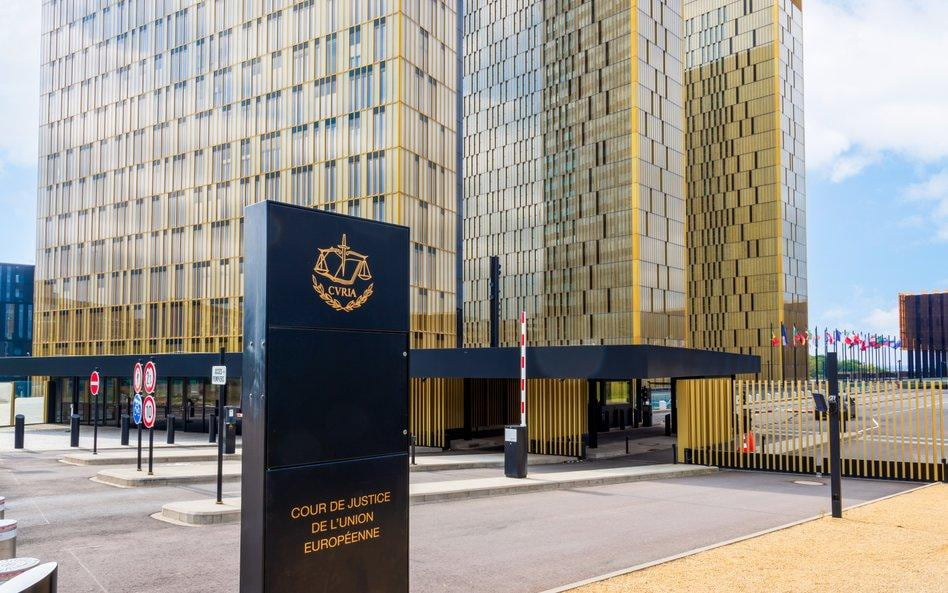
An EU sanctions listing renewal cannot rest indefinitely on conduct that has already stopped, the General Court held in two judgments delivered on 16 September 2026. The Fourth Chamber split the outcome: it dismissed Roman Trotsenko’s challenge in full, while annulling the later renewals that kept the singer Polina Gagarina on the Russia list. The reasoning matters more than the names.
## What the General Court decided on 16 September
Gagarina was originally listed in 2024 on the basis that she regularly performed at state propaganda events. The Council rolled that listing over in March 2025 and again in September 2025, repeating the same justification each time.
The Court left the original 2024 listing standing but annulled the two renewal acts. The Council, it found, had not produced evidence of comparable conduct after March 2024, and past conduct could not by itself justify indefinite maintenance on the list.
## Why the reasoning cuts across the whole Russia regime
Restrictive measures under the Ukraine territorial-integrity framework are renewed on a fixed cycle, and the administrative reality is that renewal has often been close to automatic. The listing file is reconfirmed, the statement of reasons is copied forward, and the evidence pack ages quietly in the background.
That practice is what the judgment targets. An EU sanctions listing renewal is a fresh legal act with its own reviewable basis, and the Council must be able to show that the criterion is still met on the date of renewal, not merely that it was met when the name first appeared.
## Where the Trotsenko outcome differs
The contrast with Trotsenko is instructive rather than inconsistent. His action was dismissed in full, and the same chamber reached that result on the same day.
Business-based criteria and conduct-based criteria age differently. Ownership or control of a major industrial asset persists until it is sold; attendance at a propaganda concert is an event that happened on a date. The Court is effectively telling the Council that the durability of the evidence has to match the nature of the criterion invoked.
## The free-expression question sitting underneath
Gagarina’s case has been read in some quarters as a ruling about artistic expression and the limits of sanctioning performers. That reading overstates it. The judgment does not hold that singers cannot be listed, and it did not disturb the 2024 act.
Still, the practical effect leans in that direction. Where a listing rests on participation in state messaging, the Council will now need contemporaneous proof for each renewal cycle, which is a materially harder evidentiary task than documenting a shareholding.
## What happens next in the Council
The immediate consequence is administrative. Sanctions files across the Russia regime will need evidence refreshed ahead of the next rollover, and the Council’s legal service has a finite window to do it.
### The record at a glance
– Judgments delivered: 16 September 2026, General Court, Fourth Chamber
– Gagarina: 2024 listing upheld, March and September 2025 renewals annulled
– Trotsenko, case T-459/24: action dismissed in full
– Core holding: past conduct alone cannot sustain indefinite listing
There is also a precedent problem the Council has faced before. Annulments in individual listing cases have repeatedly been followed by relisting on a reworked statement of reasons, which keeps the measure alive but invites a second round of litigation and does little for the credibility of the regime.
## Key takeaways
The value of this pair of judgments is that it draws a line without weakening the sanctions architecture. Nothing in either ruling questions the Council’s power to designate; both question the quality of the file behind a particular renewal.
For anyone tracking EU restrictive measures, the operational lesson is narrow and concrete. Renewal is not ratification. Each cycle needs evidence dated to that cycle, and the Court has now shown it will annul where the Council cannot supply it.