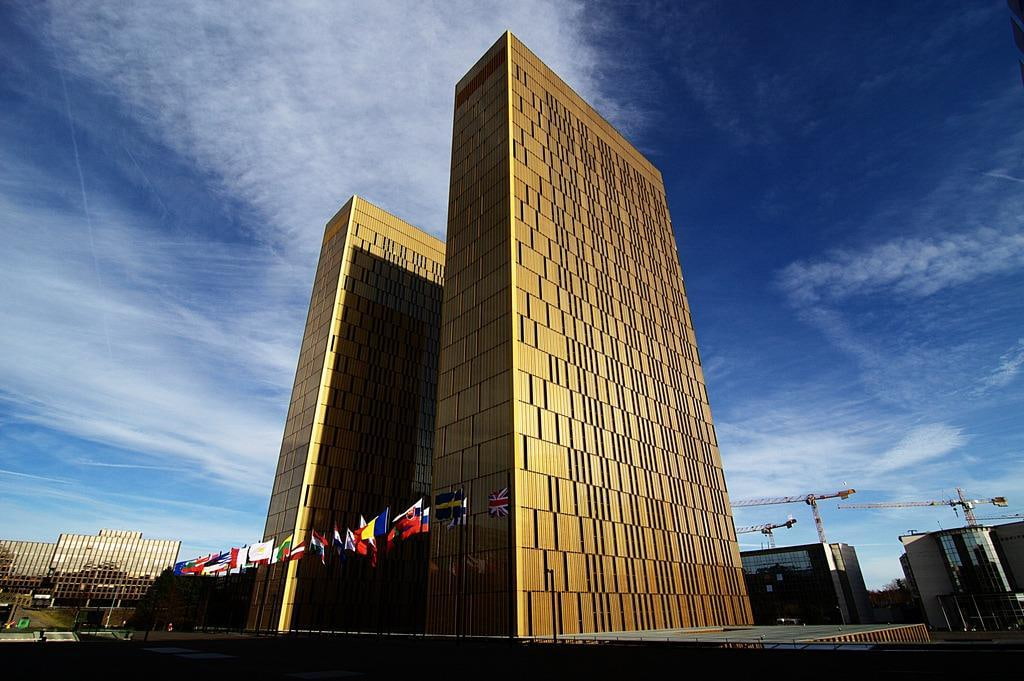
For years, anyone defamed by a film or television series that aired across borders faced a confusing question before they could even argue the merits: which country’s courts were allowed to hear the claim. A judgment handed down by the Court of Justice on 18 June has now drawn a sharper line, and it does so through an unusually charged set of facts.
The case, C-232/25 (Idziski), reached Luxembourg from the Polish Supreme Court. A former member of a clandestine Polish military unit that operated during the Second World War, together with an association of that unit’s veterans, sued the German co-producers of a television series. They argued that several scenes breached their personality rights by depicting the unit’s soldiers as anti-Semitic and complicit in the Holocaust. The series had been broadcast in several member states and was also available online, which is precisely what made the jurisdiction question so thorny.
The Court split its answer along the line between traditional broadcasting and internet distribution. For the television broadcast itself, it reaffirmed the long-standing mosaic principle: a court in each member state may rule only on the harm suffered within its own territory. The more claimant-friendly centre-of-interests rule, developed for online defamation in the eDate and Bolagsupplysningen line of cases, does not stretch to cover a conventional broadcast. A claimant who wants compensation for harm across the whole continent must, in principle, sue where the producer is established and gather every national slice of damage in one place.
Where the series travelled over the internet, the Court was willing to go further, but in a carefully bounded way. It accepted that a legal entity whose specific purpose is to defend a closed, clearly identified group can sue at the centre of its own interests. The decisive factor, the judges stressed, is not how many members the association has. It is whether the series directly and unambiguously identifies the closed group, and whether defending that group is the association’s reason for existing. When both conditions hold, the Court reasoned, it is foreseeable to the producers that they may be taken to court wherever that association is based.
That reasoning matters well beyond one wartime dispute. It tells streaming platforms and broadcasters that the risk map is not uniform. A drama that names or plainly depicts a specific, organised community can expose its makers to litigation concentrated in a single forum, even one they had not anticipated. A more diffuse portrayal that wounds scattered individuals will still be governed by the older, fragmented model, forcing claimants to litigate country by country or travel to the producer’s home court.
The ruling also reflects a quiet tension running through the Court’s case law on Article 7(2) of the Brussels regime. Each extension of the centre-of-interests idea makes life easier for those whose reputations are damaged, but it chips away at the predictability that producers and insurers rely on when they commission cross-border content. By tying the online exception to identifiable closed groups and their dedicated defenders, the Court has tried to expand access to justice without handing every aggrieved viewer a roving licence to sue anywhere.
For Europe’s booming audiovisual sector, the practical lesson is that historical and politically sensitive subject matter now carries a distinct procedural cost. Legal teams will read scripts not only for accuracy and tone, but for whether a depicted community is organised enough, and identifiable enough, to one day choose the courtroom.