August 9, 2026
LATEST
New EU Gas Market Rules Take Effect With Consumer SafeguardsDeforestation Regulation Holds Its December Deadline Despite CutsDigital Omnibus Delays Europe’s High-Risk AI Deadline to 2027Europe’s Schools Confront a Widening Basic Skills GapRule of Law Report Finds Progress but Trust Still LagsIRIS2 Gains 66 Satellites as Brussels Signs the Rollout DealNature Restoration Plans Come Due as Member States Race a DeadlineECB Rates Hold at 2.25 Percent as Frankfurt Waits on the DataEU Budget Talks Turn to Cohesion as Ireland Takes OverWildfire Response Stretches Europe’s Emergency Fleet ThinCan Europe’s Quantum Plan Match Its Big Ambitions?Armenia Edges West as Moscow’s Grip Slips AwayEurope Inherits the World’s Aid Bill It Cannot Fully PayAir Passenger Rights Get Their First Overhaul in Two DecadesErasmus Opens a 5 Billion Euro Round for Skills and MobilityCeuta Crisis Pushes the EU Toward Faster Migrant ReturnsBulky Parcels Face a Packaging Crackdown From August 12Can Europe Build Its Drone Wall Before 2030 Arrives?Indonesia’s Trade Deal With Europe Nears Its Final SignatureEurope Leans on Beijing to Keep Climate Talks Alive Before AntalyaNew EU Gas Market Rules Take Effect With Consumer SafeguardsDeforestation Regulation Holds Its December Deadline Despite CutsDigital Omnibus Delays Europe’s High-Risk AI Deadline to 2027Europe’s Schools Confront a Widening Basic Skills GapRule of Law Report Finds Progress but Trust Still LagsIRIS2 Gains 66 Satellites as Brussels Signs the Rollout DealNature Restoration Plans Come Due as Member States Race a DeadlineECB Rates Hold at 2.25 Percent as Frankfurt Waits on the DataEU Budget Talks Turn to Cohesion as Ireland Takes OverWildfire Response Stretches Europe’s Emergency Fleet ThinCan Europe’s Quantum Plan Match Its Big Ambitions?Armenia Edges West as Moscow’s Grip Slips AwayEurope Inherits the World’s Aid Bill It Cannot Fully PayAir Passenger Rights Get Their First Overhaul in Two DecadesErasmus Opens a 5 Billion Euro Round for Skills and MobilityCeuta Crisis Pushes the EU Toward Faster Migrant ReturnsBulky Parcels Face a Packaging Crackdown From August 12Can Europe Build Its Drone Wall Before 2030 Arrives?Indonesia’s Trade Deal With Europe Nears Its Final SignatureEurope Leans on Beijing to Keep Climate Talks Alive Before Antalya
August 9, 2026
LATEST
New EU Gas Market Rules Take Effect With Consumer SafeguardsDeforestation Regulation Holds Its December Deadline Despite CutsDigital Omnibus Delays Europe’s High-Risk AI Deadline to 2027Europe’s Schools Confront a Widening Basic Skills GapRule of Law Report Finds Progress but Trust Still LagsIRIS2 Gains 66 Satellites as Brussels Signs the Rollout DealNature Restoration Plans Come Due as Member States Race a DeadlineECB Rates Hold at 2.25 Percent as Frankfurt Waits on the DataEU Budget Talks Turn to Cohesion as Ireland Takes OverWildfire Response Stretches Europe’s Emergency Fleet ThinCan Europe’s Quantum Plan Match Its Big Ambitions?Armenia Edges West as Moscow’s Grip Slips AwayEurope Inherits the World’s Aid Bill It Cannot Fully PayAir Passenger Rights Get Their First Overhaul in Two DecadesErasmus Opens a 5 Billion Euro Round for Skills and MobilityCeuta Crisis Pushes the EU Toward Faster Migrant ReturnsBulky Parcels Face a Packaging Crackdown From August 12Can Europe Build Its Drone Wall Before 2030 Arrives?Indonesia’s Trade Deal With Europe Nears Its Final SignatureEurope Leans on Beijing to Keep Climate Talks Alive Before AntalyaNew EU Gas Market Rules Take Effect With Consumer SafeguardsDeforestation Regulation Holds Its December Deadline Despite CutsDigital Omnibus Delays Europe’s High-Risk AI Deadline to 2027Europe’s Schools Confront a Widening Basic Skills GapRule of Law Report Finds Progress but Trust Still LagsIRIS2 Gains 66 Satellites as Brussels Signs the Rollout DealNature Restoration Plans Come Due as Member States Race a DeadlineECB Rates Hold at 2.25 Percent as Frankfurt Waits on the DataEU Budget Talks Turn to Cohesion as Ireland Takes OverWildfire Response Stretches Europe’s Emergency Fleet ThinCan Europe’s Quantum Plan Match Its Big Ambitions?Armenia Edges West as Moscow’s Grip Slips AwayEurope Inherits the World’s Aid Bill It Cannot Fully PayAir Passenger Rights Get Their First Overhaul in Two DecadesErasmus Opens a 5 Billion Euro Round for Skills and MobilityCeuta Crisis Pushes the EU Toward Faster Migrant ReturnsBulky Parcels Face a Packaging Crackdown From August 12Can Europe Build Its Drone Wall Before 2030 Arrives?Indonesia’s Trade Deal With Europe Nears Its Final SignatureEurope Leans on Beijing to Keep Climate Talks Alive Before Antalya

Carmakers Eye Softer EU Car CO2 Rules as 2035 Review Advances

Brussels: The European Parliament and EU governments are weighing a Commission plan that would loosen the EU car CO2 standards for 2035, allowing combustion-engine and hybrid models to stay on sale beyond the original cut-off, as lawmakers work through the proposal during 2026. The review, tabled as part of the Commission’s December 2025 automotive package, marks the most significant softening of the bloc’s clean-car timetable since the 2035 phase-out was agreed.

What the EU car CO2 standards would allow

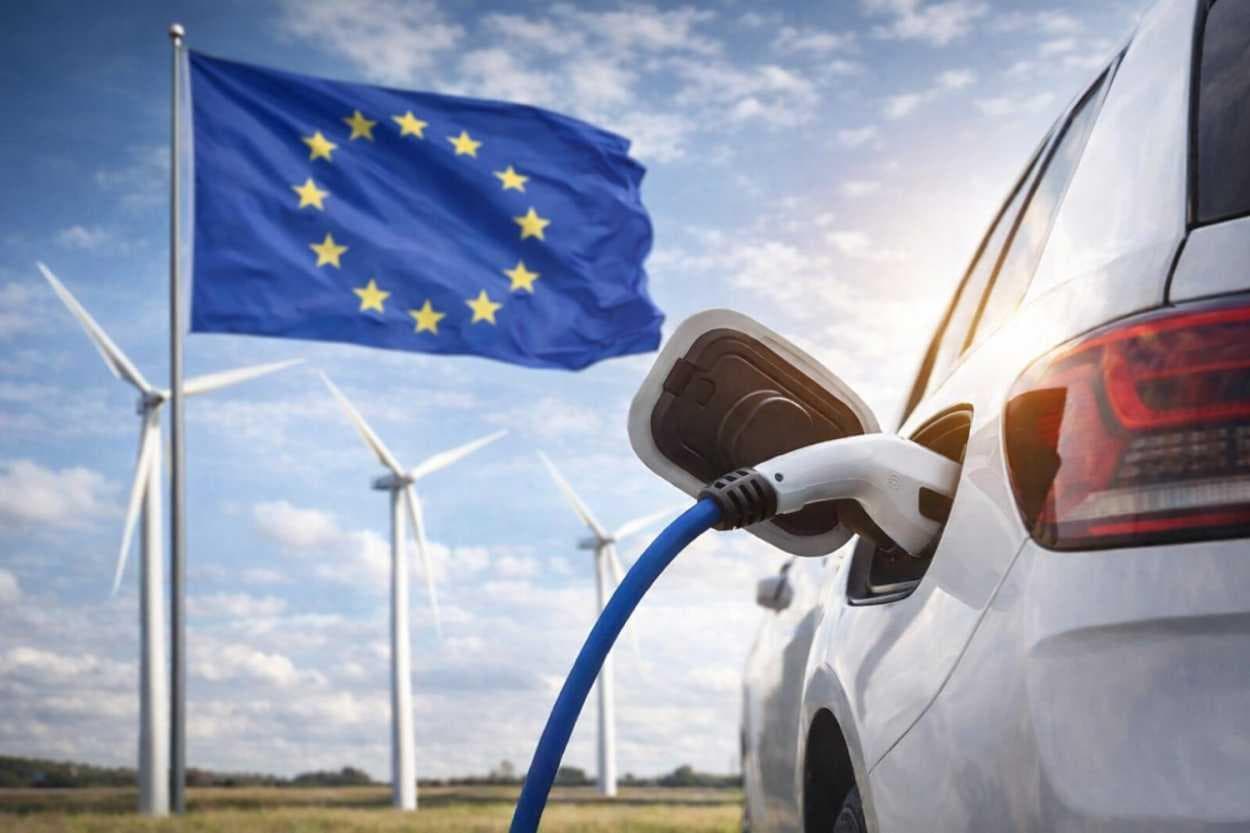
Under the current law, new cars and vans must hit zero tailpipe CO2 from 2035. The revised EU car CO2 standards replace that with a 90% tailpipe reduction target, with the remaining 10% to be offset through low-carbon steel made in the Union, e-fuels or biofuels.

In practice, the change keeps the door open for several technologies beyond 2035:

  • Plug-in hybrids, range extenders and mild hybrids alongside full electric and hydrogen cars.
  • A lower 2030 target for vans, cut from a 50% to a 40% CO2 reduction.
  • Super credits before 2035 for small, affordable electric cars built in the EU.

Why Brussels is shifting

The Commission casts the rewrite as a lifeline for a struggling European auto sector facing high costs, slowing EV demand and intense competition from Chinese rivals. It presented the measures under the banner of a clean and competitive automotive sector, pairing flexibility with incentives for domestic manufacturing.

The proposal is designed to support the automotive sector’s transition to clean mobility while protecting jobs and industrial capacity in Europe, the European Commission says.

Industry and green groups split

Manufacturers and several governments have welcomed the breathing room, arguing that rigid targets risked offshoring production. Environmental campaigners see it differently. The group Transport & Environment warns that counting e-fuels and biofuels toward compliance weakens the signal to electrify and could lock in higher emissions for years.

Analysts note that the 10% non-tailpipe allowance is hard to verify and may prove difficult to police, raising questions about whether the headline 90% figure delivers the cuts it promises on paper.

How we got here

The 2035 zero-emission rule was a centrepiece of the European Green Deal, hailed at adoption as proof the bloc would decarbonise road transport, its largest remaining source of climate-warming emissions from fossil fuels. A built-in review clause always foresaw a 2026 check, but lobbying intensified as EV sales cooled and plant closures loomed.

The file now moves through the European Parliament and Council during 2026, where MEPs and ministers can amend the flexibilities before the standards become law. With both institutions divided, the final shape of the EU car CO2 standards will signal how far Europe is willing to trade climate ambition for industrial protection.