August 9, 2026
LATEST
New EU Gas Market Rules Take Effect With Consumer SafeguardsDeforestation Regulation Holds Its December Deadline Despite CutsDigital Omnibus Delays Europe’s High-Risk AI Deadline to 2027Europe’s Schools Confront a Widening Basic Skills GapRule of Law Report Finds Progress but Trust Still LagsIRIS2 Gains 66 Satellites as Brussels Signs the Rollout DealNature Restoration Plans Come Due as Member States Race a DeadlineECB Rates Hold at 2.25 Percent as Frankfurt Waits on the DataEU Budget Talks Turn to Cohesion as Ireland Takes OverWildfire Response Stretches Europe’s Emergency Fleet ThinCan Europe’s Quantum Plan Match Its Big Ambitions?Armenia Edges West as Moscow’s Grip Slips AwayEurope Inherits the World’s Aid Bill It Cannot Fully PayAir Passenger Rights Get Their First Overhaul in Two DecadesErasmus Opens a 5 Billion Euro Round for Skills and MobilityCeuta Crisis Pushes the EU Toward Faster Migrant ReturnsBulky Parcels Face a Packaging Crackdown From August 12Can Europe Build Its Drone Wall Before 2030 Arrives?Indonesia’s Trade Deal With Europe Nears Its Final SignatureEurope Leans on Beijing to Keep Climate Talks Alive Before AntalyaNew EU Gas Market Rules Take Effect With Consumer SafeguardsDeforestation Regulation Holds Its December Deadline Despite CutsDigital Omnibus Delays Europe’s High-Risk AI Deadline to 2027Europe’s Schools Confront a Widening Basic Skills GapRule of Law Report Finds Progress but Trust Still LagsIRIS2 Gains 66 Satellites as Brussels Signs the Rollout DealNature Restoration Plans Come Due as Member States Race a DeadlineECB Rates Hold at 2.25 Percent as Frankfurt Waits on the DataEU Budget Talks Turn to Cohesion as Ireland Takes OverWildfire Response Stretches Europe’s Emergency Fleet ThinCan Europe’s Quantum Plan Match Its Big Ambitions?Armenia Edges West as Moscow’s Grip Slips AwayEurope Inherits the World’s Aid Bill It Cannot Fully PayAir Passenger Rights Get Their First Overhaul in Two DecadesErasmus Opens a 5 Billion Euro Round for Skills and MobilityCeuta Crisis Pushes the EU Toward Faster Migrant ReturnsBulky Parcels Face a Packaging Crackdown From August 12Can Europe Build Its Drone Wall Before 2030 Arrives?Indonesia’s Trade Deal With Europe Nears Its Final SignatureEurope Leans on Beijing to Keep Climate Talks Alive Before Antalya
August 9, 2026
LATEST
New EU Gas Market Rules Take Effect With Consumer SafeguardsDeforestation Regulation Holds Its December Deadline Despite CutsDigital Omnibus Delays Europe’s High-Risk AI Deadline to 2027Europe’s Schools Confront a Widening Basic Skills GapRule of Law Report Finds Progress but Trust Still LagsIRIS2 Gains 66 Satellites as Brussels Signs the Rollout DealNature Restoration Plans Come Due as Member States Race a DeadlineECB Rates Hold at 2.25 Percent as Frankfurt Waits on the DataEU Budget Talks Turn to Cohesion as Ireland Takes OverWildfire Response Stretches Europe’s Emergency Fleet ThinCan Europe’s Quantum Plan Match Its Big Ambitions?Armenia Edges West as Moscow’s Grip Slips AwayEurope Inherits the World’s Aid Bill It Cannot Fully PayAir Passenger Rights Get Their First Overhaul in Two DecadesErasmus Opens a 5 Billion Euro Round for Skills and MobilityCeuta Crisis Pushes the EU Toward Faster Migrant ReturnsBulky Parcels Face a Packaging Crackdown From August 12Can Europe Build Its Drone Wall Before 2030 Arrives?Indonesia’s Trade Deal With Europe Nears Its Final SignatureEurope Leans on Beijing to Keep Climate Talks Alive Before AntalyaNew EU Gas Market Rules Take Effect With Consumer SafeguardsDeforestation Regulation Holds Its December Deadline Despite CutsDigital Omnibus Delays Europe’s High-Risk AI Deadline to 2027Europe’s Schools Confront a Widening Basic Skills GapRule of Law Report Finds Progress but Trust Still LagsIRIS2 Gains 66 Satellites as Brussels Signs the Rollout DealNature Restoration Plans Come Due as Member States Race a DeadlineECB Rates Hold at 2.25 Percent as Frankfurt Waits on the DataEU Budget Talks Turn to Cohesion as Ireland Takes OverWildfire Response Stretches Europe’s Emergency Fleet ThinCan Europe’s Quantum Plan Match Its Big Ambitions?Armenia Edges West as Moscow’s Grip Slips AwayEurope Inherits the World’s Aid Bill It Cannot Fully PayAir Passenger Rights Get Their First Overhaul in Two DecadesErasmus Opens a 5 Billion Euro Round for Skills and MobilityCeuta Crisis Pushes the EU Toward Faster Migrant ReturnsBulky Parcels Face a Packaging Crackdown From August 12Can Europe Build Its Drone Wall Before 2030 Arrives?Indonesia’s Trade Deal With Europe Nears Its Final SignatureEurope Leans on Beijing to Keep Climate Talks Alive Before Antalya

Strategic Reserves Network Adds Romania As rescEU Footprint Widens

Bucharest: rescEU is getting two new strategic reserves before the autumn fire and flood season, and the larger of the pair is going up in Romania, where Commission and national civil protection services have agreed on a site near Bucharest to host the biggest medical and shelter stockpile on the EU’s Eastern flank. The second new facility, smaller and focused on chemical, biological, radiological and nuclear equipment, will sit in Estonia.

The expansion takes the rescEU stockpile network to thirteen physical sites and edges the mechanism closer to the figure floated in the Defence and Resilience white paper last autumn — fifteen reserves by end-2027. The Romanian site, a converted logistics hub close to Henri Coandă airport, will hold a mix of field hospital modules, generators, water purification units, and reception centre kits. Procurement contracts for the first tranche of equipment have already been awarded, with deliveries scheduled across summer and a formal operational stamp targeted for September.

What is new in this round is the financing arrangement. Until now, rescEU stockpiles were almost entirely Commission-financed under the Union Civil Protection Mechanism budget, with the host state taking on operational costs. Romania’s hub is being co-financed by the European Investment Bank under a dedicated humanitarian infrastructure facility opened last quarter, with the host state contribution converted from a budget line into a guarantee on a long-term lease. That model is being watched by other capitals interested in hosting reserves without committing operational outlays years in advance.

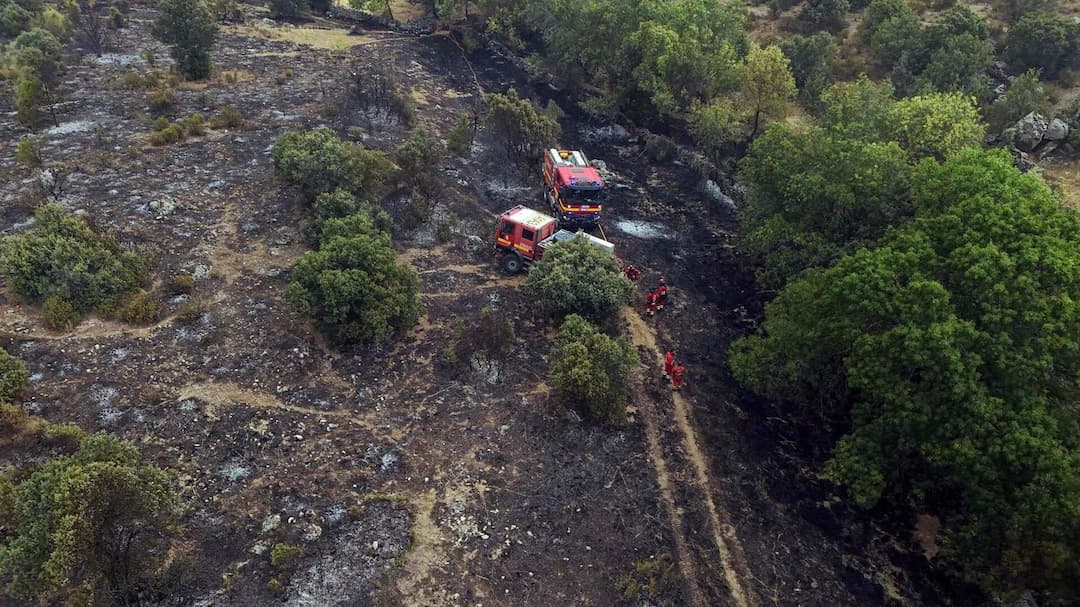
Activations during the past twelve months have stretched the existing network. The Sudan crisis pulled medical kits and shelter modules from the Belgian and Swedish reserves at a pace that surprised mechanism planners; subsequent deployments to the Western Balkans floods and the Spanish wildfire season ran in parallel. Officials inside DG ECHO say the simultaneous deployments were the closest the mechanism has come to a real capacity test since the pandemic stockpiles were drawn down. The Romanian site is sized to absorb roughly a third of the Eastern flank’s projected demand under planning scenarios used in the 2025 stress assessment.

The Estonian CBRN reserve is the more politically sensitive of the two additions. It plugs a gap identified after the Russian-Belarusian exercises last autumn, which Estonian and Latvian authorities flagged as a planning trigger for civil protection contingencies. The reserve will hold decontamination units, protective suits, and detection equipment, with a portion ring-fenced for cross-border deployment under bilateral agreements with Latvia, Lithuania, Finland, and Poland. Operational responsibility sits with the Estonian Rescue Board, with the Commission’s Emergency Response Coordination Centre keeping overarching tasking authority.

Capitals are also waiting on the next round of rescEU aerial firefighting capacity. The fleet of EU-owned and EU-financed Canadair aircraft will reach eighteen units by end of summer, with two more leased on standby through Greek and Croatian operators. Officials confirm that this season’s stand-up date for the central pool is 1 June, two weeks earlier than last year, after high-fire-risk reads from the EFFIS dashboard for southern France and parts of Iberia.

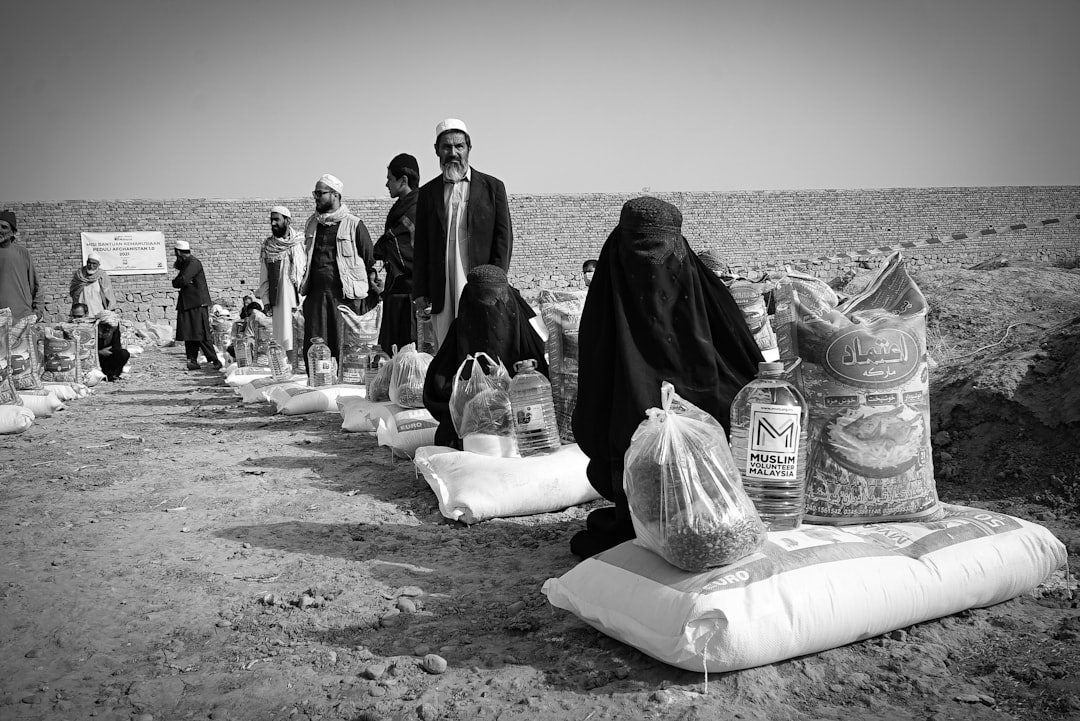
The expansion lands at a moment when humanitarian budgets are tight everywhere else. ECHO’s external action envelope for 2026 is pencilled in at a level barely keeping pace with named crises in Ukraine, Gaza, Sudan, and the Sahel. Reserves inside the EU, by contrast, are being treated as a resilience investment rather than a humanitarian line, and the funding architecture is starting to reflect that distinction. The Romanian and Estonian sites are the first practical signs of that shift.