August 23, 2026
LATEST
What Seoul Must Sign Before Korean Firms Can Touch SAFE MoneyNorth Korea’s Money Moves Faster Than Europe Can List Its OwnersNew Zealand Is Still Waiting for the Pact Japan and Korea SignedFarmers Won a CAP Budget Floor and Lost the Second PillarAustralia Wants Into Horizon Europe Before the Money DoublesOcean Act Drafters Face a Deadline and Two Rival DirectivesFive Joint Defence Projects Start With 325 Million in Seed MoneyVehicle Circularity Rules Now Land on Suppliers, Not Just CarmakersArmenia Is Halfway Through a Visa Roadmap of 74 BenchmarksSyria Regained a Trade Agreement While Sanctions Remain in PlaceHeatwave Preparedness Now Needs a Law, Not Another PlanEurope’s Tobacco Tax Overhaul Now Doubles as an EU Budget FixCrypto Rules Reopened Two Years After They Took EffectETIAS Has Quietly Lost the Only Launch Date It Ever Committed ToSteel Quotas Fell 47 Percent and Buyers Are Still AdjustingWill the Space Act Survive Its Second Half of Negotiations in CouncilFishermen Want More Herring While Scientists Advise Zero CodDestroying Unsold Clothes Became Illegal and Little Has ChangedCivil Society Gets Double the Money and Loses Its ProgrammeNine Days Remain Before Restoration Plans Fall Due in BrusselsWhat Seoul Must Sign Before Korean Firms Can Touch SAFE MoneyNorth Korea’s Money Moves Faster Than Europe Can List Its OwnersNew Zealand Is Still Waiting for the Pact Japan and Korea SignedFarmers Won a CAP Budget Floor and Lost the Second PillarAustralia Wants Into Horizon Europe Before the Money DoublesOcean Act Drafters Face a Deadline and Two Rival DirectivesFive Joint Defence Projects Start With 325 Million in Seed MoneyVehicle Circularity Rules Now Land on Suppliers, Not Just CarmakersArmenia Is Halfway Through a Visa Roadmap of 74 BenchmarksSyria Regained a Trade Agreement While Sanctions Remain in PlaceHeatwave Preparedness Now Needs a Law, Not Another PlanEurope’s Tobacco Tax Overhaul Now Doubles as an EU Budget FixCrypto Rules Reopened Two Years After They Took EffectETIAS Has Quietly Lost the Only Launch Date It Ever Committed ToSteel Quotas Fell 47 Percent and Buyers Are Still AdjustingWill the Space Act Survive Its Second Half of Negotiations in CouncilFishermen Want More Herring While Scientists Advise Zero CodDestroying Unsold Clothes Became Illegal and Little Has ChangedCivil Society Gets Double the Money and Loses Its ProgrammeNine Days Remain Before Restoration Plans Fall Due in Brussels
August 23, 2026
LATEST
What Seoul Must Sign Before Korean Firms Can Touch SAFE MoneyNorth Korea’s Money Moves Faster Than Europe Can List Its OwnersNew Zealand Is Still Waiting for the Pact Japan and Korea SignedFarmers Won a CAP Budget Floor and Lost the Second PillarAustralia Wants Into Horizon Europe Before the Money DoublesOcean Act Drafters Face a Deadline and Two Rival DirectivesFive Joint Defence Projects Start With 325 Million in Seed MoneyVehicle Circularity Rules Now Land on Suppliers, Not Just CarmakersArmenia Is Halfway Through a Visa Roadmap of 74 BenchmarksSyria Regained a Trade Agreement While Sanctions Remain in PlaceHeatwave Preparedness Now Needs a Law, Not Another PlanEurope’s Tobacco Tax Overhaul Now Doubles as an EU Budget FixCrypto Rules Reopened Two Years After They Took EffectETIAS Has Quietly Lost the Only Launch Date It Ever Committed ToSteel Quotas Fell 47 Percent and Buyers Are Still AdjustingWill the Space Act Survive Its Second Half of Negotiations in CouncilFishermen Want More Herring While Scientists Advise Zero CodDestroying Unsold Clothes Became Illegal and Little Has ChangedCivil Society Gets Double the Money and Loses Its ProgrammeNine Days Remain Before Restoration Plans Fall Due in BrusselsWhat Seoul Must Sign Before Korean Firms Can Touch SAFE MoneyNorth Korea’s Money Moves Faster Than Europe Can List Its OwnersNew Zealand Is Still Waiting for the Pact Japan and Korea SignedFarmers Won a CAP Budget Floor and Lost the Second PillarAustralia Wants Into Horizon Europe Before the Money DoublesOcean Act Drafters Face a Deadline and Two Rival DirectivesFive Joint Defence Projects Start With 325 Million in Seed MoneyVehicle Circularity Rules Now Land on Suppliers, Not Just CarmakersArmenia Is Halfway Through a Visa Roadmap of 74 BenchmarksSyria Regained a Trade Agreement While Sanctions Remain in PlaceHeatwave Preparedness Now Needs a Law, Not Another PlanEurope’s Tobacco Tax Overhaul Now Doubles as an EU Budget FixCrypto Rules Reopened Two Years After They Took EffectETIAS Has Quietly Lost the Only Launch Date It Ever Committed ToSteel Quotas Fell 47 Percent and Buyers Are Still AdjustingWill the Space Act Survive Its Second Half of Negotiations in CouncilFishermen Want More Herring While Scientists Advise Zero CodDestroying Unsold Clothes Became Illegal and Little Has ChangedCivil Society Gets Double the Money and Loses Its ProgrammeNine Days Remain Before Restoration Plans Fall Due in Brussels

Nine Days Remain Before Restoration Plans Fall Due in Brussels

Brussels: Restoration plans from all 27 member states fall due at the European Commission in September, and with nine days of August left the Commission has published no running count of who has filed. The Nature Restoration Regulation fixed that date when it entered into force on 18 August 2024, handing capitals exactly two years to turn continent-wide targets into national programmes of work.

The law asks a lot. Member states must put restoration measures across at least 20% of the EU’s land and sea area by 2030, and across every ecosystem that needs them by 2050. Those percentages mean nothing on their own. The restoration plans convert them into hectares, budget lines, lead ministries and dates, which is why this filing matters more than the headline figure ever did.

Brussels built the case on a blunt number. Roughly 81% of protected habitats in the EU sit in poor condition. One in three bee and butterfly species is declining. The Commission argues that every euro spent on restoration returns between four and 38 euros in flood protection, pollination, water filtration and carbon storage, and it leans on that ratio whenever finance ministries ask what the exercise buys.

The specific targets tell governments where to look. Countries must reverse pollinator decline by 2030, stop the net loss of urban green space and tree cover, lift organic carbon in cropland soils, rewet drained agricultural peatlands, restore seagrass beds and sediment bottoms at sea, and clear enough barriers to return 25,000 kilometres of river to a free-flowing state by the end of the decade.

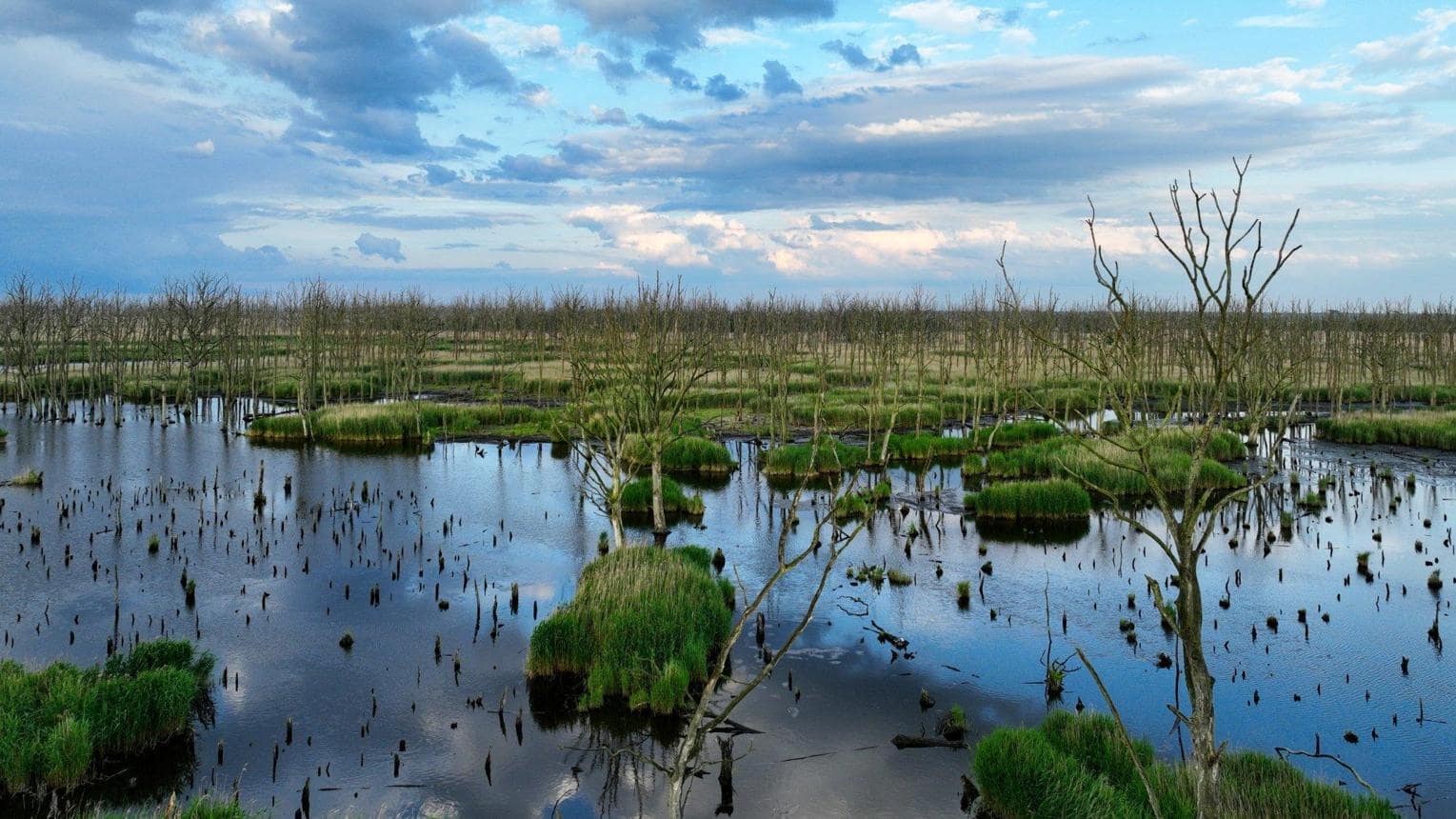
Peatlands remain the hardest ask. Rewetting drained farmland changes what a field can grow and who farms it, and the farm protests of 2023 and 2024 already forced negotiators to soften that chapter and add safeguards on food production. Any plan that treats peat as an accounting problem rather than a land-use negotiation will run into the same politics at national level within a year.

Money is the second gap. The regulation created no dedicated fund, so environment ministries must assemble financing from the common agricultural policy, the LIFE programme and cohesion envelopes that other departments already claim. That competition explains much of the drafting delay, and it will shape which measures appear as firm commitments and which arrive labelled as ambitions.

What happens after September decides whether the deadline was real. The Commission reviews each draft and issues observations, and member states must take those observations into account rather than simply file them. The European Environment Agency will produce technical progress reports, and the Commission reports back to Parliament and Council. That review loop, not the submission itself, is where thin plans get exposed.

Environmental groups will read the drafts for baselines. A plan that cannot say what condition a habitat starts in cannot later prove improvement, and vague baselines have quietly weakened earlier nature directives for two decades. Governments counter that the science is uneven across ecosystems and that a rough plan filed on time beats a precise one filed in 2028.

Both arguments have merit. The regulation’s real test arrives when a finance ministry has to choose between a rewetting scheme and a road, and the restoration plans are the document that makes that choice visible. Anyone tracking EU environmental policy should watch which capitals publish their drafts in full and which release only a summary.