September 22, 2026
LATEST
One Ticket Promise Meets Its First Real Test Inside the CouncilCyprus Judge Takes Over a General Court Still Absorbing CasesSkills Portability Act Sets Five Weeks as the New Recognition LimitIreland Reopens the Digital Omnibus With Cookies Back in PlayMinisters Weigh the Long-Term Budget Before a Negotiating BoxSocial Partners Have One Week Left to Shape the Quality Jobs ActPhuket Round Decides Whether Thailand Closes Its Deal This YearSyria’s Banks Reconnect While Europe’s Risk Premium Stays PutMercosur’s First Health Ban Tests a Deal Still Being RatifiedBudget Performance Regulation Slips Toward a 2027 VotePontes Digital Euro Platform Goes Live for 13 BanksEU Arctic Drilling Ban Survives Norway’s Lobbying PushPrivacy Watchdog Wants Tighter Limits on Eurojust’s New DatabasesScrutiny Board Sends Europe’s Circular Economy Act Back for ReworkLow-LEO Studies Open the Next Chapter for Europe’s IRIS2 PlanFour Indo-Pacific Partners Join Europe’s Ministers in New YorkWildfire Season Closes Above Average as the rescEU Fleet GrowsQuality Education Roadmap Lands in November With Three FrontsPartnership Plans Recast Cohesion Policy Before Anyone VotesHandling Fee on Small Parcels Must Be Ready by 1 November 2026One Ticket Promise Meets Its First Real Test Inside the CouncilCyprus Judge Takes Over a General Court Still Absorbing CasesSkills Portability Act Sets Five Weeks as the New Recognition LimitIreland Reopens the Digital Omnibus With Cookies Back in PlayMinisters Weigh the Long-Term Budget Before a Negotiating BoxSocial Partners Have One Week Left to Shape the Quality Jobs ActPhuket Round Decides Whether Thailand Closes Its Deal This YearSyria’s Banks Reconnect While Europe’s Risk Premium Stays PutMercosur’s First Health Ban Tests a Deal Still Being RatifiedBudget Performance Regulation Slips Toward a 2027 VotePontes Digital Euro Platform Goes Live for 13 BanksEU Arctic Drilling Ban Survives Norway’s Lobbying PushPrivacy Watchdog Wants Tighter Limits on Eurojust’s New DatabasesScrutiny Board Sends Europe’s Circular Economy Act Back for ReworkLow-LEO Studies Open the Next Chapter for Europe’s IRIS2 PlanFour Indo-Pacific Partners Join Europe’s Ministers in New YorkWildfire Season Closes Above Average as the rescEU Fleet GrowsQuality Education Roadmap Lands in November With Three FrontsPartnership Plans Recast Cohesion Policy Before Anyone VotesHandling Fee on Small Parcels Must Be Ready by 1 November 2026
September 22, 2026
LATEST
One Ticket Promise Meets Its First Real Test Inside the CouncilCyprus Judge Takes Over a General Court Still Absorbing CasesSkills Portability Act Sets Five Weeks as the New Recognition LimitIreland Reopens the Digital Omnibus With Cookies Back in PlayMinisters Weigh the Long-Term Budget Before a Negotiating BoxSocial Partners Have One Week Left to Shape the Quality Jobs ActPhuket Round Decides Whether Thailand Closes Its Deal This YearSyria’s Banks Reconnect While Europe’s Risk Premium Stays PutMercosur’s First Health Ban Tests a Deal Still Being RatifiedBudget Performance Regulation Slips Toward a 2027 VotePontes Digital Euro Platform Goes Live for 13 BanksEU Arctic Drilling Ban Survives Norway’s Lobbying PushPrivacy Watchdog Wants Tighter Limits on Eurojust’s New DatabasesScrutiny Board Sends Europe’s Circular Economy Act Back for ReworkLow-LEO Studies Open the Next Chapter for Europe’s IRIS2 PlanFour Indo-Pacific Partners Join Europe’s Ministers in New YorkWildfire Season Closes Above Average as the rescEU Fleet GrowsQuality Education Roadmap Lands in November With Three FrontsPartnership Plans Recast Cohesion Policy Before Anyone VotesHandling Fee on Small Parcels Must Be Ready by 1 November 2026One Ticket Promise Meets Its First Real Test Inside the CouncilCyprus Judge Takes Over a General Court Still Absorbing CasesSkills Portability Act Sets Five Weeks as the New Recognition LimitIreland Reopens the Digital Omnibus With Cookies Back in PlayMinisters Weigh the Long-Term Budget Before a Negotiating BoxSocial Partners Have One Week Left to Shape the Quality Jobs ActPhuket Round Decides Whether Thailand Closes Its Deal This YearSyria’s Banks Reconnect While Europe’s Risk Premium Stays PutMercosur’s First Health Ban Tests a Deal Still Being RatifiedBudget Performance Regulation Slips Toward a 2027 VotePontes Digital Euro Platform Goes Live for 13 BanksEU Arctic Drilling Ban Survives Norway’s Lobbying PushPrivacy Watchdog Wants Tighter Limits on Eurojust’s New DatabasesScrutiny Board Sends Europe’s Circular Economy Act Back for ReworkLow-LEO Studies Open the Next Chapter for Europe’s IRIS2 PlanFour Indo-Pacific Partners Join Europe’s Ministers in New YorkWildfire Season Closes Above Average as the rescEU Fleet GrowsQuality Education Roadmap Lands in November With Three FrontsPartnership Plans Recast Cohesion Policy Before Anyone VotesHandling Fee on Small Parcels Must Be Ready by 1 November 2026

A Diversification Instrument Arrives Before Anyone Defines It

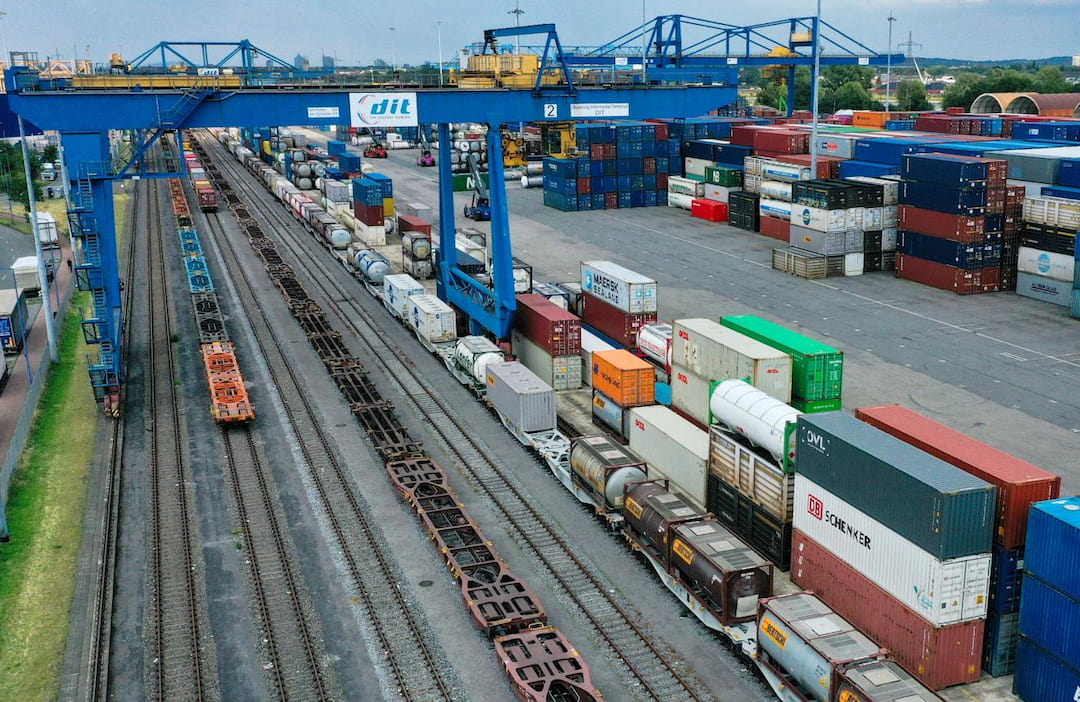
Duisburg: The inland port that once advertised itself as the western terminus of China’s rail freight corridor now handles fewer Chinese trains and considerably more anxiety about what those trains carry. Its operators watch the European Commission’s autumn calendar closely, because the trade instrument Brussels has promised for September will shape how fast Europe can move when a supply chain narrows to a single country.

Ursula von der Leyen told leaders in June that the Commission would build what she called a diversification instrument, and officials have since pointed to the September State of the Union address as the likely moment to reveal it. Reporting by Euronews put the political backing of national capitals behind the idea, though nobody has published a legal text.

The arithmetic drives the urgency. Europe’s goods deficit with China widened sharply through the pandemic years and has never returned to a level the Commission describes as sustainable. Chinese exports of electric vehicles, batteries, machinery and increasingly medical devices have pushed the argument out of trade statistics and into industrial policy, where ministers answer to factory towns rather than to economists.

Analysts at the Atlantic Council read the direction of travel as Europe edging toward something resembling the American Section 301 procedure, a tool that lets an executive act against a trading partner’s practices without proving injury to European producers case by case. That comparison flatters the ambition and understates the difficulty. Washington concentrates the authority in one office. Brussels spreads it across a Commission, a Council of twenty-seven governments and a Parliament that guards its say.

The split among capitals is already public. France, Spain, the Netherlands, Italy and Lithuania wrote jointly to the Commission asking for faster investigations and sharper defensive tools. Germany declined to sign. Berlin instead argues for deeper industrial engagement with China, a position its carmakers and chemical producers have defended for two decades and which the country’s exposure to the Chinese market makes entirely rational from a national vantage point.

That refusal matters more than the letter. A diversification instrument works only if governments accept that Brussels may steer procurement, subsidy and permitting toward suppliers outside China, and that some of those suppliers will cost more. Germany’s industrial base would carry a disproportionate share of that cost. So would the ports and logistics firms whose business models assume volume rather than origin.

Vice-minister level meetings continued through August and September, which tells its own story. Neither side wants a rupture. Chinese negotiators want predictable access to the single market and relief on the electric vehicle duties. European negotiators want export controls on rare earths eased and want Chinese support for Russia’s war economy curtailed. Trade officials in Brussels have said plainly that Ukraine remains the variable most capable of wrecking the relationship, and no economic instrument fixes that.

The realistic test for whatever appears in September stays narrow. Does it give the Commission a faster route to act, does it survive a Council that contains Berlin, and does it arrive with money to make alternative suppliers viable? Announce a tool without the third element and Europe repeats the pattern of the Critical Raw Materials Act, where targets landed years before the mines, refineries and offtake contracts that would meet them.

Duisburg will not notice a difference in September. It may notice one by 2030, when the instrument either redirected some share of European demand or simply added another acronym to a policy shelf that already holds several.