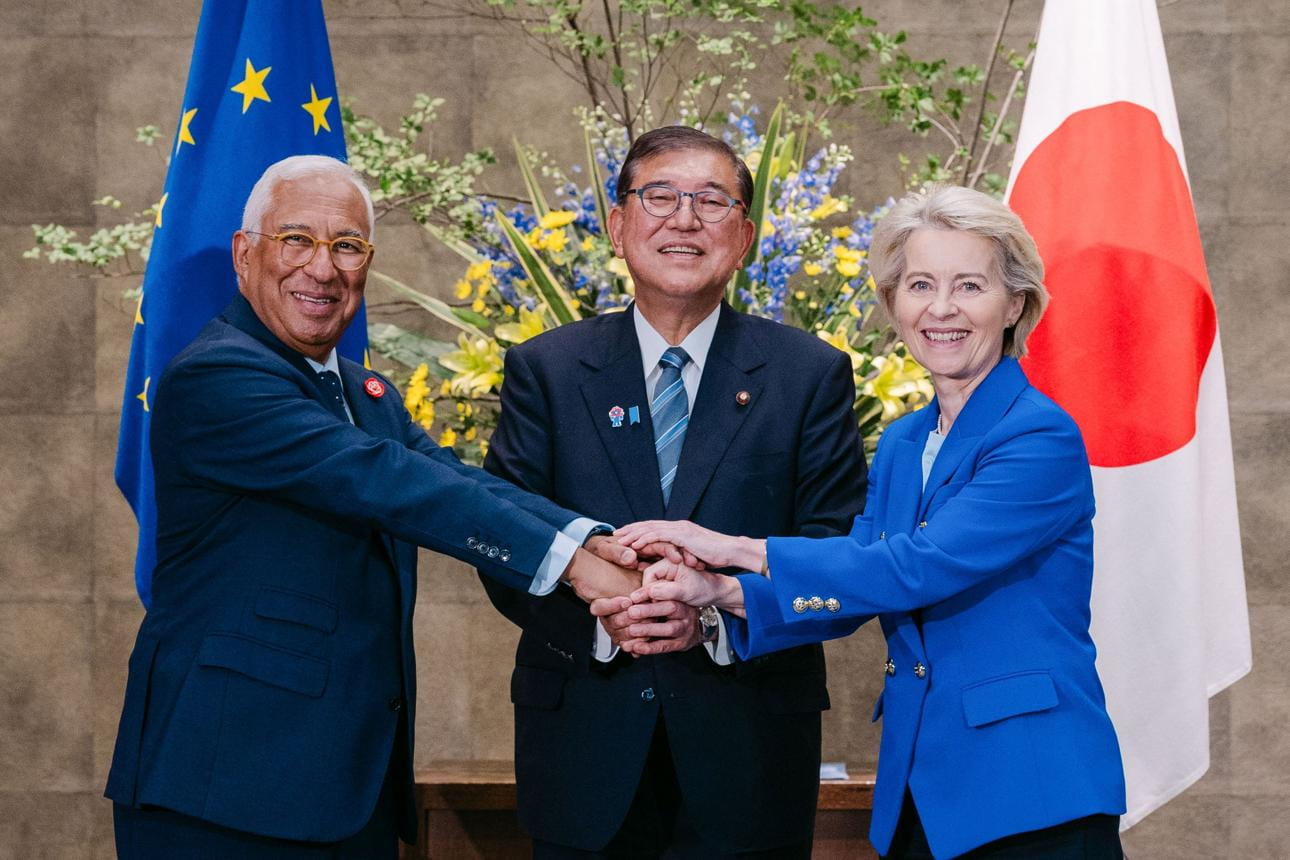
Yokosuka: The security partnership Europe and Japan signed with fanfare is quietly becoming something more practical, and the change is happening on the water.
The two sides have agreed a formal arrangement to facilitate naval cooperation, linking the European Union’s long-running counter-piracy operation off the Horn of Africa with Japan’s Self-Defence Forces. It is a technical document rather than a treaty, but technical documents are where alliances actually live. They decide whether two navies can share a fuel line, a radio frequency and a plan when a merchant ship sends a distress call.
The arrangement grows out of the wider security and defence partnership the two announced in Tokyo, which spans joint exercises, defence-industry contacts, space and cyber security. What sets the naval strand apart is that it can be tested at sea now, without waiting for parliaments or fresh budgets. Port calls, shared drills and coordinated patrols cost political will more than money, and both sides appear willing to spend it.
The strategic message travels further than the ships. Europe has spent two years insisting it is an Indo-Pacific actor rather than a bystander, and skeptics in the region have asked for evidence beyond communiqués. A European frigate exercising alongside a Japanese destroyer supplies that evidence in a form Beijing reads clearly. It says the distance between the two ends of Eurasia is no longer a reason for their democracies to look away from each other’s troubles.
Japan’s motives are equally plain. Tokyo has relied on the United States for its hardware and its ultimate guarantee, yet it now hedges against a future in which that guarantee feels less certain. Building habits of cooperation with European navies, and co-developing a next-generation fighter with Italy and Britain, spreads Japan’s bets across more than one ocean and more than one capital.
The constraints are honest ones. Europe keeps few ships permanently east of Suez, and a single arrangement will not turn occasional visitors into a standing presence. Japan’s post-war legal framework still hedges how far its forces may go. Neither side is pretending this makes them treaty allies, and both are careful to frame the work as cooperation among partners rather than a bloc aimed at any one rival.
Yet the direction of travel is unmistakable. Two powers that once treated each other as distant trading partners are learning to operate together where it is hardest, on the open sea. If Europe wants its Indo-Pacific ambitions believed, arrangements like this one are how the belief is earned, not with declarations but with a wake in the water and a shared plan for the next call for help.