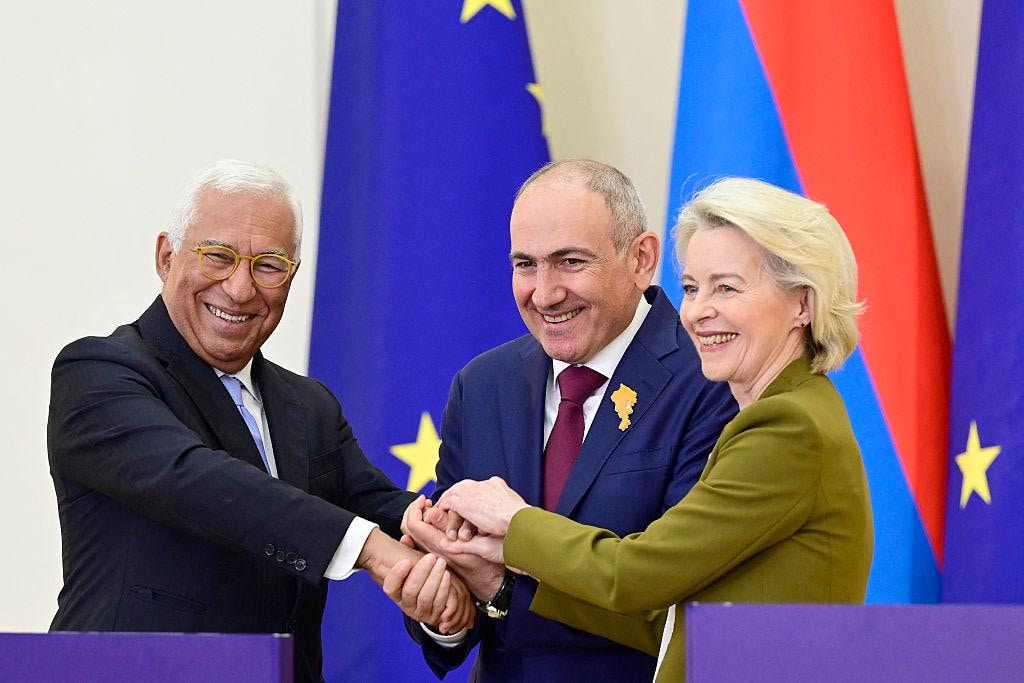
Riyadh: When European and Gulf leaders gather in the Saudi capital this autumn, they will try to turn warm words into a durable Gulf partnership. The first EU-Gulf Cooperation Council summit in Brussels in October 2024 opened the relationship. The second, in Riyadh, must prove that two blocs long content to swap oil for cars can build something more strategic.
The timing carries weight. Iran’s spring strikes on Gulf states rattled the region and reminded Brussels that Europe’s energy security runs straight through the Strait of Hormuz. A Gulf partnership now looks less like a commercial nicety and more like a hedge against a volatile neighbourhood.
Energy sits at the centre of the agenda. Saudi Arabia, the United Arab Emirates and Qatar want to sell Europe clean hydrogen, not just crude. European buyers, keen to diversify away from Russian gas, are listening. Officials on both sides talk of power-grid interconnection, hydrogen corridors and rail and port links that would stitch the two regions together. The EU-GCC hydrogen dialogue that met in Abu Dhabi in January sketched the regulatory scaffolding such trade would need.
Yet ambition outpaces delivery. The two sides still lack a free-trade agreement, and negotiators have circled the same human-rights and market-access questions for two decades. Brussels wants labour and environmental commitments; Gulf governments resent the lecturing. Riyadh offers a chance to park the maximalist demands and strike sector deals on energy, investment and connectivity instead.
Saudi Arabia has its own reasons to court Europe. Vision 2030, Crown Prince Mohammed bin Salman’s plan to wean the kingdom off oil, needs foreign capital, technology and tourists. European firms bring all three. A stable, rules-based link with the world’s largest single market would anchor those diversification bets against regional shocks.
For the EU, the calculus is equally hard-headed. China has spent a decade deepening its Gulf footprint, and Washington’s commitment to the region swings with each election. A credible European offer keeps Brussels in a game it cannot afford to sit out. The Commission lays out its thinking on its EU-Gulf relations page.
The risk is that Riyadh yields another handsome communiqué and little else. Summits reward pageantry over follow-through, and both blocs excel at declarations. The real test comes afterward, in whether hydrogen contracts get signed and grid cables get laid. Analysts tracking the Riyadh preparations warn that political ambition still has to survive contact with commercial reality.
Europe has finally decided the Gulf matters. Riyadh will show whether it means it.