September 22, 2026
LATEST
One Ticket Promise Meets Its First Real Test Inside the CouncilCyprus Judge Takes Over a General Court Still Absorbing CasesSkills Portability Act Sets Five Weeks as the New Recognition LimitIreland Reopens the Digital Omnibus With Cookies Back in PlayMinisters Weigh the Long-Term Budget Before a Negotiating BoxSocial Partners Have One Week Left to Shape the Quality Jobs ActPhuket Round Decides Whether Thailand Closes Its Deal This YearSyria’s Banks Reconnect While Europe’s Risk Premium Stays PutMercosur’s First Health Ban Tests a Deal Still Being RatifiedBudget Performance Regulation Slips Toward a 2027 VotePontes Digital Euro Platform Goes Live for 13 BanksEU Arctic Drilling Ban Survives Norway’s Lobbying PushPrivacy Watchdog Wants Tighter Limits on Eurojust’s New DatabasesScrutiny Board Sends Europe’s Circular Economy Act Back for ReworkLow-LEO Studies Open the Next Chapter for Europe’s IRIS2 PlanFour Indo-Pacific Partners Join Europe’s Ministers in New YorkWildfire Season Closes Above Average as the rescEU Fleet GrowsQuality Education Roadmap Lands in November With Three FrontsPartnership Plans Recast Cohesion Policy Before Anyone VotesHandling Fee on Small Parcels Must Be Ready by 1 November 2026One Ticket Promise Meets Its First Real Test Inside the CouncilCyprus Judge Takes Over a General Court Still Absorbing CasesSkills Portability Act Sets Five Weeks as the New Recognition LimitIreland Reopens the Digital Omnibus With Cookies Back in PlayMinisters Weigh the Long-Term Budget Before a Negotiating BoxSocial Partners Have One Week Left to Shape the Quality Jobs ActPhuket Round Decides Whether Thailand Closes Its Deal This YearSyria’s Banks Reconnect While Europe’s Risk Premium Stays PutMercosur’s First Health Ban Tests a Deal Still Being RatifiedBudget Performance Regulation Slips Toward a 2027 VotePontes Digital Euro Platform Goes Live for 13 BanksEU Arctic Drilling Ban Survives Norway’s Lobbying PushPrivacy Watchdog Wants Tighter Limits on Eurojust’s New DatabasesScrutiny Board Sends Europe’s Circular Economy Act Back for ReworkLow-LEO Studies Open the Next Chapter for Europe’s IRIS2 PlanFour Indo-Pacific Partners Join Europe’s Ministers in New YorkWildfire Season Closes Above Average as the rescEU Fleet GrowsQuality Education Roadmap Lands in November With Three FrontsPartnership Plans Recast Cohesion Policy Before Anyone VotesHandling Fee on Small Parcels Must Be Ready by 1 November 2026
September 22, 2026
LATEST
One Ticket Promise Meets Its First Real Test Inside the CouncilCyprus Judge Takes Over a General Court Still Absorbing CasesSkills Portability Act Sets Five Weeks as the New Recognition LimitIreland Reopens the Digital Omnibus With Cookies Back in PlayMinisters Weigh the Long-Term Budget Before a Negotiating BoxSocial Partners Have One Week Left to Shape the Quality Jobs ActPhuket Round Decides Whether Thailand Closes Its Deal This YearSyria’s Banks Reconnect While Europe’s Risk Premium Stays PutMercosur’s First Health Ban Tests a Deal Still Being RatifiedBudget Performance Regulation Slips Toward a 2027 VotePontes Digital Euro Platform Goes Live for 13 BanksEU Arctic Drilling Ban Survives Norway’s Lobbying PushPrivacy Watchdog Wants Tighter Limits on Eurojust’s New DatabasesScrutiny Board Sends Europe’s Circular Economy Act Back for ReworkLow-LEO Studies Open the Next Chapter for Europe’s IRIS2 PlanFour Indo-Pacific Partners Join Europe’s Ministers in New YorkWildfire Season Closes Above Average as the rescEU Fleet GrowsQuality Education Roadmap Lands in November With Three FrontsPartnership Plans Recast Cohesion Policy Before Anyone VotesHandling Fee on Small Parcels Must Be Ready by 1 November 2026One Ticket Promise Meets Its First Real Test Inside the CouncilCyprus Judge Takes Over a General Court Still Absorbing CasesSkills Portability Act Sets Five Weeks as the New Recognition LimitIreland Reopens the Digital Omnibus With Cookies Back in PlayMinisters Weigh the Long-Term Budget Before a Negotiating BoxSocial Partners Have One Week Left to Shape the Quality Jobs ActPhuket Round Decides Whether Thailand Closes Its Deal This YearSyria’s Banks Reconnect While Europe’s Risk Premium Stays PutMercosur’s First Health Ban Tests a Deal Still Being RatifiedBudget Performance Regulation Slips Toward a 2027 VotePontes Digital Euro Platform Goes Live for 13 BanksEU Arctic Drilling Ban Survives Norway’s Lobbying PushPrivacy Watchdog Wants Tighter Limits on Eurojust’s New DatabasesScrutiny Board Sends Europe’s Circular Economy Act Back for ReworkLow-LEO Studies Open the Next Chapter for Europe’s IRIS2 PlanFour Indo-Pacific Partners Join Europe’s Ministers in New YorkWildfire Season Closes Above Average as the rescEU Fleet GrowsQuality Education Roadmap Lands in November With Three FrontsPartnership Plans Recast Cohesion Policy Before Anyone VotesHandling Fee on Small Parcels Must Be Ready by 1 November 2026

Europe Sends an Envoy to a Sahel It No Longer Has Missions In

Nouakchott: The European Union has appointed a Special Representative for a region where it no longer runs a single training mission. Birgitte Nygaard Markussen took up the Sahel post on 1 September for an initial twelve months, succeeding Joao Cravinho, and inherits a brief covering Burkina Faso, Chad, Mali, Mauritania and Niger at a moment when three of those five capitals treat European advice as an intrusion and European money as leverage they have learned to live without.

The choice of person is not the interesting part. Markussen ran the EU delegation to the African Union and served as ambassador to the UN Economic Commission for Africa before becoming Denmark’s special envoy for the Sahel and the Great Lakes. Nobody doubts she knows the file. The interesting part is the mandate length. Twelve months, to 31 August 2027, is short by the standards of the post, and short mandates are what the Council writes when it wants an option to reconsider rather than a commitment to a course. The vacancy also took time to fill, which is rarely a sign that member states agree on what the job is for.

What the job is for has genuinely changed. The architecture Europe built between 2013 and 2022 – military training, civilian capacity building, a regional coordination cell, a development envelope tied to migration cooperation – has been dismantled piece by piece, mostly at the request of the governments it was meant to help. The G5 Sahel, once the organising frame for the whole regional strategy, is effectively defunct. The Alliance of Sahel States that replaced it was founded by the three junta-led capitals in September 2023 and has since organised its members’ departure from ECOWAS. Europe’s instruments were designed for a regional partner that no longer exists.

The 2025 renewed approach accepts this in language, if not yet in budget lines. It drops the presumption that security cooperation is the entry point to everything else and puts political dialogue, targeted investment and mediation support in front. That is the right order of operations, and it is also an admission that the previous order produced very little. The difficulty is that an EUSR has no instruments of their own. The post convenes, travels and reports. Money sits with the Commission’s partnership directorates, mission decisions sit with the Political and Security Committee, and bilateral channels sit with the member states that still have embassies and the ones that have quietly kept intelligence relationships running.

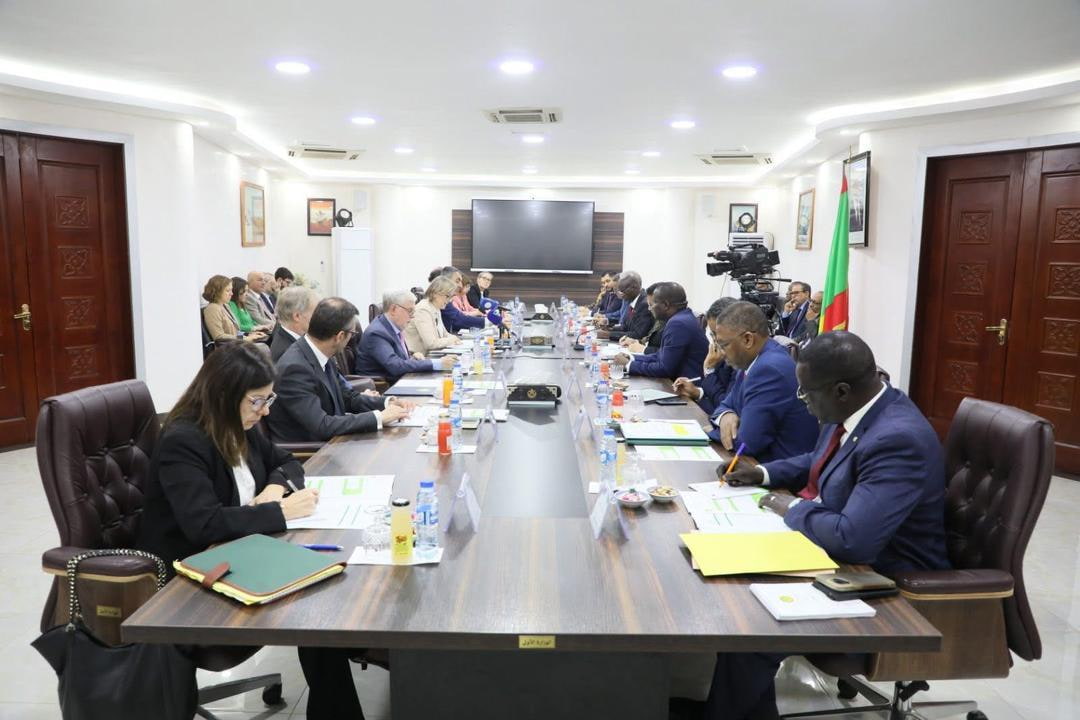
Mauritania is the practical test, and it is a more complicated one than Brussels sometimes allows. It is the Sahel state where the EU relationship still functions on its own terms, with regular political dialogue, a fisheries agreement, humanitarian programming and a migration file that has delivered results European interior ministries can point to. It is also a state that has been carefully warming its own ties to the Alliance, on humanitarian and trade grounds, because it shares long borders and longer supply routes with countries Europe has stopped talking to. Treating Nouakchott as a model partner risks mistaking a hedge for an alignment.

The competitive field has filled in fast. Russian security contractors, Turkish drones and training, Gulf finance and Moroccan port and pipeline diplomacy all operate in the space Europe vacated, and they do so without conditionality on governance. Europe cannot match that offer and should not try. What it can do is be honest about what re-engagement means: talking to governments it did not choose, on files narrower than it would like, without pretending that a resumed conversation is a restored partnership.

A twelve-month mandate is enough to test whether those conversations produce anything. It is not enough to build anything on them. The Council will know by next August which of the two it has bought.