August 9, 2026
LATEST
Japan Becomes Europe’s Closest Security Partner in AsiaCan Europe’s New Zealand Deal Anchor It in the Pacific?Chip Research Binds Europe and South Korea CloserMinimum Prices Replace Tariffs in Europe’s China Car DealBrussels and Beijing Keep Talking While the Trade Gap WidensKorean Weapons and EU Loans Now Bankroll Europe’s RearmamentNew EU Gas Market Rules Take Effect With Consumer SafeguardsDeforestation Regulation Holds Its December Deadline Despite CutsDigital Omnibus Delays Europe’s High-Risk AI Deadline to 2027Europe’s Schools Confront a Widening Basic Skills GapRule of Law Report Finds Progress but Trust Still LagsIRIS2 Gains 66 Satellites as Brussels Signs the Rollout DealNature Restoration Plans Come Due as Member States Race a DeadlineECB Rates Hold at 2.25 Percent as Frankfurt Waits on the DataEU Budget Talks Turn to Cohesion as Ireland Takes OverWildfire Response Stretches Europe’s Emergency Fleet ThinCan Europe’s Quantum Plan Match Its Big Ambitions?Armenia Edges West as Moscow’s Grip Slips AwayEurope Inherits the World’s Aid Bill It Cannot Fully PayAir Passenger Rights Get Their First Overhaul in Two DecadesJapan Becomes Europe’s Closest Security Partner in AsiaCan Europe’s New Zealand Deal Anchor It in the Pacific?Chip Research Binds Europe and South Korea CloserMinimum Prices Replace Tariffs in Europe’s China Car DealBrussels and Beijing Keep Talking While the Trade Gap WidensKorean Weapons and EU Loans Now Bankroll Europe’s RearmamentNew EU Gas Market Rules Take Effect With Consumer SafeguardsDeforestation Regulation Holds Its December Deadline Despite CutsDigital Omnibus Delays Europe’s High-Risk AI Deadline to 2027Europe’s Schools Confront a Widening Basic Skills GapRule of Law Report Finds Progress but Trust Still LagsIRIS2 Gains 66 Satellites as Brussels Signs the Rollout DealNature Restoration Plans Come Due as Member States Race a DeadlineECB Rates Hold at 2.25 Percent as Frankfurt Waits on the DataEU Budget Talks Turn to Cohesion as Ireland Takes OverWildfire Response Stretches Europe’s Emergency Fleet ThinCan Europe’s Quantum Plan Match Its Big Ambitions?Armenia Edges West as Moscow’s Grip Slips AwayEurope Inherits the World’s Aid Bill It Cannot Fully PayAir Passenger Rights Get Their First Overhaul in Two Decades
August 9, 2026
LATEST
Japan Becomes Europe’s Closest Security Partner in AsiaCan Europe’s New Zealand Deal Anchor It in the Pacific?Chip Research Binds Europe and South Korea CloserMinimum Prices Replace Tariffs in Europe’s China Car DealBrussels and Beijing Keep Talking While the Trade Gap WidensKorean Weapons and EU Loans Now Bankroll Europe’s RearmamentNew EU Gas Market Rules Take Effect With Consumer SafeguardsDeforestation Regulation Holds Its December Deadline Despite CutsDigital Omnibus Delays Europe’s High-Risk AI Deadline to 2027Europe’s Schools Confront a Widening Basic Skills GapRule of Law Report Finds Progress but Trust Still LagsIRIS2 Gains 66 Satellites as Brussels Signs the Rollout DealNature Restoration Plans Come Due as Member States Race a DeadlineECB Rates Hold at 2.25 Percent as Frankfurt Waits on the DataEU Budget Talks Turn to Cohesion as Ireland Takes OverWildfire Response Stretches Europe’s Emergency Fleet ThinCan Europe’s Quantum Plan Match Its Big Ambitions?Armenia Edges West as Moscow’s Grip Slips AwayEurope Inherits the World’s Aid Bill It Cannot Fully PayAir Passenger Rights Get Their First Overhaul in Two DecadesJapan Becomes Europe’s Closest Security Partner in AsiaCan Europe’s New Zealand Deal Anchor It in the Pacific?Chip Research Binds Europe and South Korea CloserMinimum Prices Replace Tariffs in Europe’s China Car DealBrussels and Beijing Keep Talking While the Trade Gap WidensKorean Weapons and EU Loans Now Bankroll Europe’s RearmamentNew EU Gas Market Rules Take Effect With Consumer SafeguardsDeforestation Regulation Holds Its December Deadline Despite CutsDigital Omnibus Delays Europe’s High-Risk AI Deadline to 2027Europe’s Schools Confront a Widening Basic Skills GapRule of Law Report Finds Progress but Trust Still LagsIRIS2 Gains 66 Satellites as Brussels Signs the Rollout DealNature Restoration Plans Come Due as Member States Race a DeadlineECB Rates Hold at 2.25 Percent as Frankfurt Waits on the DataEU Budget Talks Turn to Cohesion as Ireland Takes OverWildfire Response Stretches Europe’s Emergency Fleet ThinCan Europe’s Quantum Plan Match Its Big Ambitions?Armenia Edges West as Moscow’s Grip Slips AwayEurope Inherits the World’s Aid Bill It Cannot Fully PayAir Passenger Rights Get Their First Overhaul in Two Decades

India And Europe Build Their Digital Pact Around AI And Chips

New Delhi: It is easy to read the European Union’s deepening embrace of India as a story about tariffs and textiles. The more interesting chapter may be written in code. When the two sides concluded their long-awaited free trade agreement in January, the headline numbers concerned goods and market access, but tucked inside the text was a digital trade chapter that could shape how the world’s largest democracy and its largest single market handle data, signatures and the contested technologies of the coming decade.

The agreement, sealed at the EU-India summit and expected to be formally signed around the middle of this year before entering force in 2027, commits both sides to a predictable and secure environment for digital commerce. That sounds abstract until one considers the alternative. Without common rules, every cross-border transaction risks colliding with mismatched standards on data flows, electronic contracts and online consumer protection. The digital chapter is an attempt to lay track before the trains arrive.

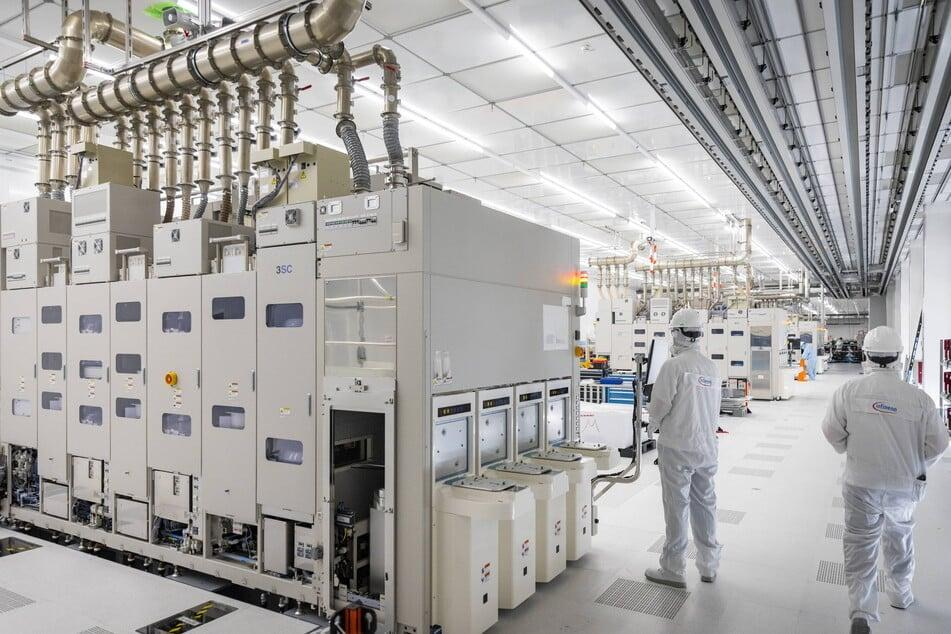
Around that core sit a cluster of more ambitious initiatives. Through the EU-India Trade and Technology Council, the two have signed an administrative arrangement recognising advanced electronic signatures and seals, a technical-sounding step that quietly lowers the cost of doing business across continents. They have opened cooperation on artificial intelligence, clean technologies and, most pointedly, semiconductors, the chips that have become the oil of the modern economy and the chokepoint of modern geopolitics. A first tech business forum in New Delhi gave companies on both sides a venue to turn intent into contracts.

The appeal for Brussels is not hard to decode. Europe wants to diversify away from dependence on a small number of Asian chip suppliers and to find democratic partners for the AI standards it hopes will travel the world. India offers scale, a vast pool of engineers, and a government eager to climb the value chain rather than remain the back office of someone else’s revolution. For New Delhi, association with European regulation lends credibility and access to a market that prizes trust as much as price.

The obstacles are real, and pretending otherwise would flatter the deal. India and the EU have clashed for years over data governance, with Europe’s strict privacy regime sitting uneasily beside India’s evolving framework. Disputes over digital taxation, market access for European firms, and the localisation of data have not vanished simply because a treaty was signed. Ambition on semiconductors is cheap; the capital and decades of accumulated know-how required to build fabrication plants are not, and neither partner can conjure them by communique.

There is also a quieter question of expectations. Digital chapters in trade agreements have a habit of promising frictionless futures that dissolve on contact with national regulators jealous of their authority. The true measure of this partnership will be whether a European software firm and an Indian one can actually sign an enforceable contract with less friction in 2028 than they could in 2025, and whether a chip designed in one place can be reliably made with help from the other.

For now, the direction of travel is clear enough. Two systems that have often eyed each other warily are choosing, in the digital realm at least, to write rules together rather than apart. In an era when technology is increasingly a theatre of rivalry, the decision to treat it instead as a field of partnership is itself a statement worth noting.