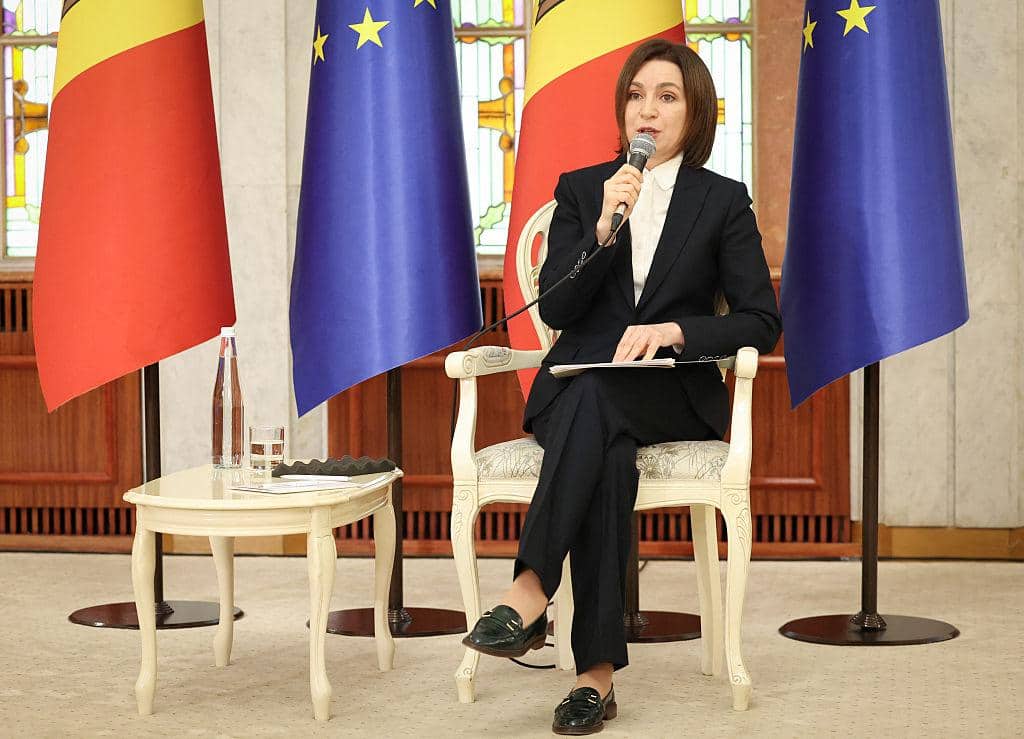
Islamabad: Diplomatic visits are easily mistaken for their billing, and the eighth round of the EU-Pakistan Strategic Dialogue, convened in the capital on 1 June, will be read by many as another entry in a long sequence of structured but inconsequential consultations, a reading that underestimates what Kaja Kallas brings with her.
The European Union is Pakistan’s second-largest trading partner, and the market access that underpins that trade is neither permanent nor unconditional, a fact that lends the High Representative’s formal agenda a weight its modest framing conceals. She co-chairs the session with Deputy Prime Minister and Foreign Minister Ishaq Dar, and holds separate calls on Prime Minister Shehbaz Sharif, President Asif Ali Zardari and the country’s most consequential figure, Field Marshal Asim Munir.
The instrument in question is GSP+, the bloc’s special incentive scheme that grants duty-free or reduced-duty entry to European markets in exchange for ratifying and implementing twenty-seven international conventions spanning human rights, labour standards, environmental protection and good governance. For an export economy built so heavily on textiles, the arrangement is close to existential, with billions of euros and hundreds of thousands of jobs resting on its continuation, which makes it one of the few levers that reliably concentrates minds in Islamabad. The dialogue itself proceeds under the Strategic Engagement Plan signed in June 2019, the architecture both sides have used to give shape to an otherwise uneven relationship.
The timing sharpens the stakes considerably, because the EU is overhauling its preferences framework, and the next iteration is widely expected to bind those preferences more tightly to demonstrable compliance, with readier mechanisms for suspension when commitments lapse. European monitors are likely to raise the familiar items on the bloc’s own agenda, from the death penalty and the application of blasphemy laws to questions over civil society space and labour conditions in the garment sector, each of which is now treated by Brussels as an explicit trade variable rather than a diplomatic aside. It is a shift the bloc’s own ambassador signalled last year when he noted that Pakistan would need to demonstrate further progress on its convention commitments.
Geopolitics complicates the picture further. Pakistan’s recovery of stability after last year’s confrontation with India, the unresolved security situation along its Afghan frontier, and the migration pressures that flow from both are matters in which Europe holds a direct and growing stake, as is the question of China, whose Belt and Road corridor runs the length of the country and offers Islamabad an alternative partner whose engagement carries no comparable conditionality. Kallas must therefore press her conditions in the knowledge that pushing too hard risks accelerating Pakistan’s tilt toward Beijing, while pressing too lightly hollows out the very leverage she has travelled to exercise.
There is also the question of where authority in Pakistan actually sits, since real decision-making has long been concentrated less in the prime minister’s office than in the general headquarters at Rawalpindi, a feature of the country’s political architecture that any serious European interlocutor must understand rather than wish away. Munir’s standing as Field Marshal places him at the centre of the strategic conversation, and engaging the country effectively means engaging the institution that carries the most durable weight on questions of security, regional policy and external alignment.
What Europe stands to gain from getting this right is substantial, namely a stable nuclear-armed state of some two hundred and forty million people, a managed migration relationship, and a foothold in a region where Chinese influence otherwise goes largely unchallenged. What it risks by getting it wrong is a familiar European failure, the quiet substitution of process for outcomes, in which dialogues are convened, communiqués issued, and preferences renewed irrespective of whether anything on the ground has shifted. The credibility of GSP+ as an instrument of values-based trade depends in the end on Brussels being willing, at least occasionally, to use it, and Islamabad will be watching closely to see whether this visit amounts to a negotiation or merely a ritual.