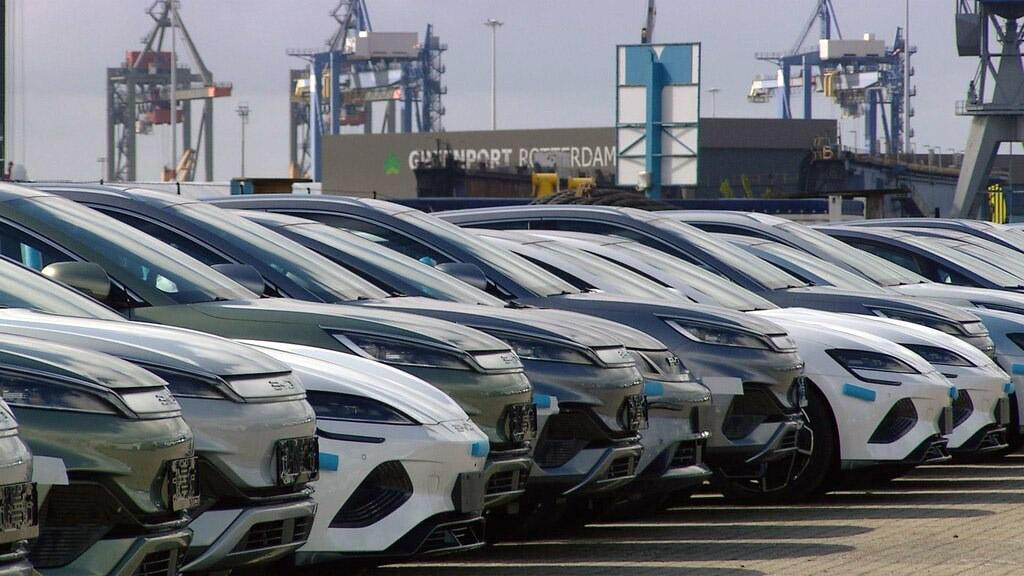
Hefei: The Anhui plant that builds the CUPRA Tavascan for European buyers became, in February, the first exporter cleared under the price floor Brussels is using to retire its tariffs on Chinese electric cars. Volkswagen Anhui promised not to sell below a minimum import price, and the countervailing duty fell away. One model, one exporter, and a template the Commission must now stretch across an entire industry.
The background matters. In October 2024 the Commission closed its anti-subsidy investigation and imposed definitive countervailing duties between 7.8 and 35.3 per cent. Beijing retaliated against brandy, pork and dairy. Both sides then spent a year looking for an exit, and in January 2026 the Commission published guidance on how exporters could offer price undertakings covering minimum import prices, sales channels, cross-compensation and future investment inside the Union.
A tariff is crude and self-enforcing. Customs collects at the border, the exporter cannot argue with the arithmetic, and enforcement costs almost nothing. A price floor demands something far harder: knowing what a car actually sells for by the time a consumer drives it away.
Cars resist that kind of scrutiny better than almost any other product. The sticker price is one variable among many. Subsidised financing, generous trade-in valuations, bundled charging, free servicing, insurance packages, dealer bonuses and fleet rebates each move thousands of euros without touching the invoice the Commission reads. An exporter that honours the floor on paper can still undercut a European rival on the forecourt.
Cross-compensation compounds the problem. A group selling a dozen models can respect the minimum price on the scrutinised vehicle and recover the margin elsewhere in its range, or in a market where nobody is watching. The Commission knows this, which is why its guidance addresses the practice directly. Naming a risk is not the same as detecting it.
The decision to calculate prices model by model rather than set one floor for all vehicles improves accuracy and multiplies the monitoring surface. Every acceptance adds a case file, a reporting stream and a set of undertakings somebody must verify. Enforcement capacity, not legal design, is the binding constraint.
Bruegel analysts have argued the deeper objection. A tariff transfers money to the European budget; a price floor transfers it to the exporter’s margin. Chinese manufacturers end up better capitalised than they would have been under duties, and they use that capital to build European plants, hire European engineers and compete more effectively. Europe may be financing its own competition.
The counter-argument carries weight too. Revenue was never the point. The measure exists to stop subsidised pricing from hollowing out European manufacturers before they finish retooling, and a negotiated floor achieves that with far less retaliation risk than duties. European farmers who spent a year locked out of Chinese markets can price that difference precisely.
There is also a split inside Europe’s own industry. Groups with Chinese joint ventures export from China themselves and gain from a workable undertaking regime. Manufacturers building only in Europe gain much less, and they are the ones whose employment the policy was meant to protect.
The price floor will succeed or fail on credibility. If exporters believe the Commission can see through a financing subsidy, the mechanism disciplines the market. If they do not, Brussels has traded an enforceable tariff for a promise, and promises are cheaper than duties. The first acceptance was the easy case. The next dozen will tell.