August 9, 2026
LATEST
New EU Gas Market Rules Take Effect With Consumer SafeguardsDeforestation Regulation Holds Its December Deadline Despite CutsDigital Omnibus Delays Europe’s High-Risk AI Deadline to 2027Europe’s Schools Confront a Widening Basic Skills GapRule of Law Report Finds Progress but Trust Still LagsIRIS2 Gains 66 Satellites as Brussels Signs the Rollout DealNature Restoration Plans Come Due as Member States Race a DeadlineECB Rates Hold at 2.25 Percent as Frankfurt Waits on the DataEU Budget Talks Turn to Cohesion as Ireland Takes OverWildfire Response Stretches Europe’s Emergency Fleet ThinCan Europe’s Quantum Plan Match Its Big Ambitions?Armenia Edges West as Moscow’s Grip Slips AwayEurope Inherits the World’s Aid Bill It Cannot Fully PayAir Passenger Rights Get Their First Overhaul in Two DecadesErasmus Opens a 5 Billion Euro Round for Skills and MobilityCeuta Crisis Pushes the EU Toward Faster Migrant ReturnsBulky Parcels Face a Packaging Crackdown From August 12Can Europe Build Its Drone Wall Before 2030 Arrives?Indonesia’s Trade Deal With Europe Nears Its Final SignatureEurope Leans on Beijing to Keep Climate Talks Alive Before AntalyaNew EU Gas Market Rules Take Effect With Consumer SafeguardsDeforestation Regulation Holds Its December Deadline Despite CutsDigital Omnibus Delays Europe’s High-Risk AI Deadline to 2027Europe’s Schools Confront a Widening Basic Skills GapRule of Law Report Finds Progress but Trust Still LagsIRIS2 Gains 66 Satellites as Brussels Signs the Rollout DealNature Restoration Plans Come Due as Member States Race a DeadlineECB Rates Hold at 2.25 Percent as Frankfurt Waits on the DataEU Budget Talks Turn to Cohesion as Ireland Takes OverWildfire Response Stretches Europe’s Emergency Fleet ThinCan Europe’s Quantum Plan Match Its Big Ambitions?Armenia Edges West as Moscow’s Grip Slips AwayEurope Inherits the World’s Aid Bill It Cannot Fully PayAir Passenger Rights Get Their First Overhaul in Two DecadesErasmus Opens a 5 Billion Euro Round for Skills and MobilityCeuta Crisis Pushes the EU Toward Faster Migrant ReturnsBulky Parcels Face a Packaging Crackdown From August 12Can Europe Build Its Drone Wall Before 2030 Arrives?Indonesia’s Trade Deal With Europe Nears Its Final SignatureEurope Leans on Beijing to Keep Climate Talks Alive Before Antalya
August 9, 2026
LATEST
New EU Gas Market Rules Take Effect With Consumer SafeguardsDeforestation Regulation Holds Its December Deadline Despite CutsDigital Omnibus Delays Europe’s High-Risk AI Deadline to 2027Europe’s Schools Confront a Widening Basic Skills GapRule of Law Report Finds Progress but Trust Still LagsIRIS2 Gains 66 Satellites as Brussels Signs the Rollout DealNature Restoration Plans Come Due as Member States Race a DeadlineECB Rates Hold at 2.25 Percent as Frankfurt Waits on the DataEU Budget Talks Turn to Cohesion as Ireland Takes OverWildfire Response Stretches Europe’s Emergency Fleet ThinCan Europe’s Quantum Plan Match Its Big Ambitions?Armenia Edges West as Moscow’s Grip Slips AwayEurope Inherits the World’s Aid Bill It Cannot Fully PayAir Passenger Rights Get Their First Overhaul in Two DecadesErasmus Opens a 5 Billion Euro Round for Skills and MobilityCeuta Crisis Pushes the EU Toward Faster Migrant ReturnsBulky Parcels Face a Packaging Crackdown From August 12Can Europe Build Its Drone Wall Before 2030 Arrives?Indonesia’s Trade Deal With Europe Nears Its Final SignatureEurope Leans on Beijing to Keep Climate Talks Alive Before AntalyaNew EU Gas Market Rules Take Effect With Consumer SafeguardsDeforestation Regulation Holds Its December Deadline Despite CutsDigital Omnibus Delays Europe’s High-Risk AI Deadline to 2027Europe’s Schools Confront a Widening Basic Skills GapRule of Law Report Finds Progress but Trust Still LagsIRIS2 Gains 66 Satellites as Brussels Signs the Rollout DealNature Restoration Plans Come Due as Member States Race a DeadlineECB Rates Hold at 2.25 Percent as Frankfurt Waits on the DataEU Budget Talks Turn to Cohesion as Ireland Takes OverWildfire Response Stretches Europe’s Emergency Fleet ThinCan Europe’s Quantum Plan Match Its Big Ambitions?Armenia Edges West as Moscow’s Grip Slips AwayEurope Inherits the World’s Aid Bill It Cannot Fully PayAir Passenger Rights Get Their First Overhaul in Two DecadesErasmus Opens a 5 Billion Euro Round for Skills and MobilityCeuta Crisis Pushes the EU Toward Faster Migrant ReturnsBulky Parcels Face a Packaging Crackdown From August 12Can Europe Build Its Drone Wall Before 2030 Arrives?Indonesia’s Trade Deal With Europe Nears Its Final SignatureEurope Leans on Beijing to Keep Climate Talks Alive Before Antalya

Taiwan Anchors Europe’s Bid for Semiconductor Independence

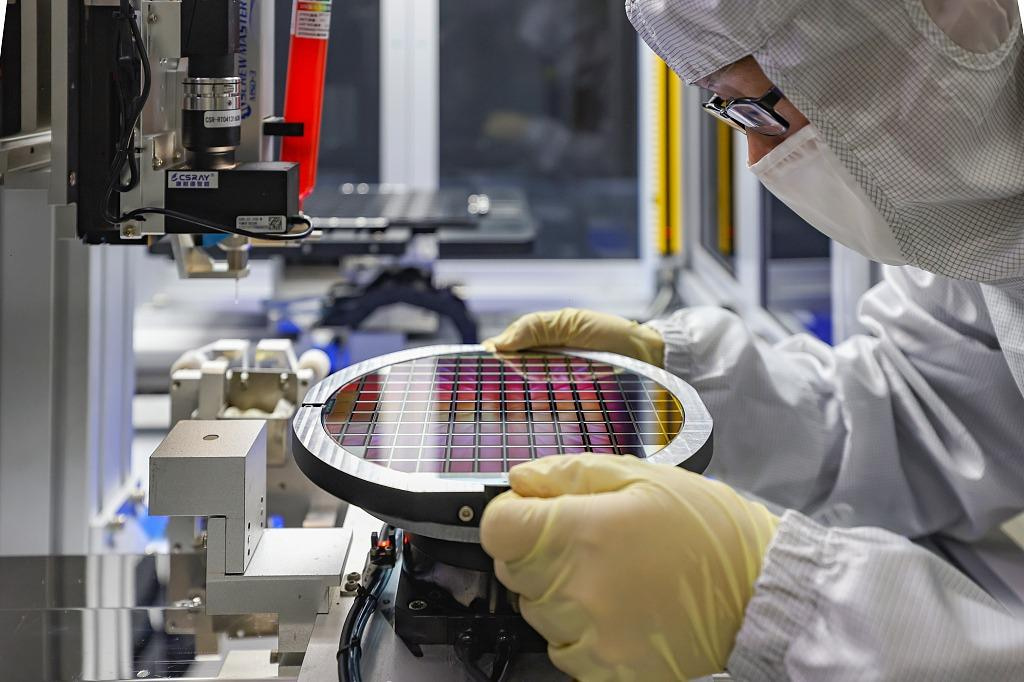
Taipei: No relationship better captures Europe’s technological anxiety than its quiet, deepening semiconductor partnership with Taiwan. The island now manufactures close to 90 percent of the world’s most advanced chips, the sub-seven-nanometre processors that power everything from data centres to guided missiles, and Europe has concluded it cannot secure its own future without cooperating with the place that makes them.

Brussels frames the challenge through its Chips Act, which sets a bold target of doubling the EU’s share of global chip production to 20 percent by 2030. The first version of the law channelled subsidies toward fabrication plants on European soil. The second, which the Commission moved to unveil in 2026, reflects a harder lesson: money alone does not conjure an ecosystem. Talent, research depth and reliable partners matter just as much, and on each front Taiwan is indispensable.

The engagement is becoming structured rather than ad hoc. An EU-funded chip diplomacy initiative, coordinated by the Institut Montaigne, published a 2026 policy paper mapping how Brussels and Taipei can bridge the gaps of trust, distance and regulation that have slowed cooperation. Its prescriptions are pragmatic: improve the business climate in European industrial hubs, scale up joint research, ease the movement of engineers and send clearer signals about long-term demand. Those themes dominated an EU-Taiwan industry dialogue held on the margins of a major trade fair, which gathered more than forty senior figures from firms on both sides.

Central Europe has become the unexpected front line. The Czech Republic, Poland and Slovakia have courted Taiwanese investment with government-backed research centres, talent programmes and supplier networks, betting that a semiconductor foothold today translates into industrial resilience tomorrow. For Taipei, deepening ties with European democracies also carries a diplomatic dividend, widening its circle of partners at a moment of intense pressure from Beijing.

There are reasons for caution. Critics note that Europe remains a small buyer of leading-edge chips, that its labour costs are high and its permitting slow, and that a Taiwanese firm choosing where to build its next plant will weigh Arizona and Japan before it weighs Dresden. Cooperation on research and talent is easier to celebrate than cutting-edge fabrication is to relocate, and some analysts warn the 2030 target may simply slip.

Yet the direction of travel is unmistakable. Europe has stopped treating semiconductor supply as a market question and started treating it as a matter of security, and Taiwan has become the partner that decision points toward. The next milestone will be whether the second Chips Act pairs its ambitions with the deregulation and demand guarantees that a genuine partnership requires. Until then, the relationship rests on a blunt reality: Europe needs Taiwan far more than Taiwan needs Europe, and both capitals know it. Details of the wider framework sit in the European Chips Act programme.