August 9, 2026
LATEST
New EU Gas Market Rules Take Effect With Consumer SafeguardsDeforestation Regulation Holds Its December Deadline Despite CutsDigital Omnibus Delays Europe’s High-Risk AI Deadline to 2027Europe’s Schools Confront a Widening Basic Skills GapRule of Law Report Finds Progress but Trust Still LagsIRIS2 Gains 66 Satellites as Brussels Signs the Rollout DealNature Restoration Plans Come Due as Member States Race a DeadlineECB Rates Hold at 2.25 Percent as Frankfurt Waits on the DataEU Budget Talks Turn to Cohesion as Ireland Takes OverWildfire Response Stretches Europe’s Emergency Fleet ThinCan Europe’s Quantum Plan Match Its Big Ambitions?Armenia Edges West as Moscow’s Grip Slips AwayEurope Inherits the World’s Aid Bill It Cannot Fully PayAir Passenger Rights Get Their First Overhaul in Two DecadesErasmus Opens a 5 Billion Euro Round for Skills and MobilityCeuta Crisis Pushes the EU Toward Faster Migrant ReturnsBulky Parcels Face a Packaging Crackdown From August 12Can Europe Build Its Drone Wall Before 2030 Arrives?Indonesia’s Trade Deal With Europe Nears Its Final SignatureEurope Leans on Beijing to Keep Climate Talks Alive Before AntalyaNew EU Gas Market Rules Take Effect With Consumer SafeguardsDeforestation Regulation Holds Its December Deadline Despite CutsDigital Omnibus Delays Europe’s High-Risk AI Deadline to 2027Europe’s Schools Confront a Widening Basic Skills GapRule of Law Report Finds Progress but Trust Still LagsIRIS2 Gains 66 Satellites as Brussels Signs the Rollout DealNature Restoration Plans Come Due as Member States Race a DeadlineECB Rates Hold at 2.25 Percent as Frankfurt Waits on the DataEU Budget Talks Turn to Cohesion as Ireland Takes OverWildfire Response Stretches Europe’s Emergency Fleet ThinCan Europe’s Quantum Plan Match Its Big Ambitions?Armenia Edges West as Moscow’s Grip Slips AwayEurope Inherits the World’s Aid Bill It Cannot Fully PayAir Passenger Rights Get Their First Overhaul in Two DecadesErasmus Opens a 5 Billion Euro Round for Skills and MobilityCeuta Crisis Pushes the EU Toward Faster Migrant ReturnsBulky Parcels Face a Packaging Crackdown From August 12Can Europe Build Its Drone Wall Before 2030 Arrives?Indonesia’s Trade Deal With Europe Nears Its Final SignatureEurope Leans on Beijing to Keep Climate Talks Alive Before Antalya
August 9, 2026
LATEST
New EU Gas Market Rules Take Effect With Consumer SafeguardsDeforestation Regulation Holds Its December Deadline Despite CutsDigital Omnibus Delays Europe’s High-Risk AI Deadline to 2027Europe’s Schools Confront a Widening Basic Skills GapRule of Law Report Finds Progress but Trust Still LagsIRIS2 Gains 66 Satellites as Brussels Signs the Rollout DealNature Restoration Plans Come Due as Member States Race a DeadlineECB Rates Hold at 2.25 Percent as Frankfurt Waits on the DataEU Budget Talks Turn to Cohesion as Ireland Takes OverWildfire Response Stretches Europe’s Emergency Fleet ThinCan Europe’s Quantum Plan Match Its Big Ambitions?Armenia Edges West as Moscow’s Grip Slips AwayEurope Inherits the World’s Aid Bill It Cannot Fully PayAir Passenger Rights Get Their First Overhaul in Two DecadesErasmus Opens a 5 Billion Euro Round for Skills and MobilityCeuta Crisis Pushes the EU Toward Faster Migrant ReturnsBulky Parcels Face a Packaging Crackdown From August 12Can Europe Build Its Drone Wall Before 2030 Arrives?Indonesia’s Trade Deal With Europe Nears Its Final SignatureEurope Leans on Beijing to Keep Climate Talks Alive Before AntalyaNew EU Gas Market Rules Take Effect With Consumer SafeguardsDeforestation Regulation Holds Its December Deadline Despite CutsDigital Omnibus Delays Europe’s High-Risk AI Deadline to 2027Europe’s Schools Confront a Widening Basic Skills GapRule of Law Report Finds Progress but Trust Still LagsIRIS2 Gains 66 Satellites as Brussels Signs the Rollout DealNature Restoration Plans Come Due as Member States Race a DeadlineECB Rates Hold at 2.25 Percent as Frankfurt Waits on the DataEU Budget Talks Turn to Cohesion as Ireland Takes OverWildfire Response Stretches Europe’s Emergency Fleet ThinCan Europe’s Quantum Plan Match Its Big Ambitions?Armenia Edges West as Moscow’s Grip Slips AwayEurope Inherits the World’s Aid Bill It Cannot Fully PayAir Passenger Rights Get Their First Overhaul in Two DecadesErasmus Opens a 5 Billion Euro Round for Skills and MobilityCeuta Crisis Pushes the EU Toward Faster Migrant ReturnsBulky Parcels Face a Packaging Crackdown From August 12Can Europe Build Its Drone Wall Before 2030 Arrives?Indonesia’s Trade Deal With Europe Nears Its Final SignatureEurope Leans on Beijing to Keep Climate Talks Alive Before Antalya

Von der Leyen Heads to the Caucasus as a Fragile Peace Holds

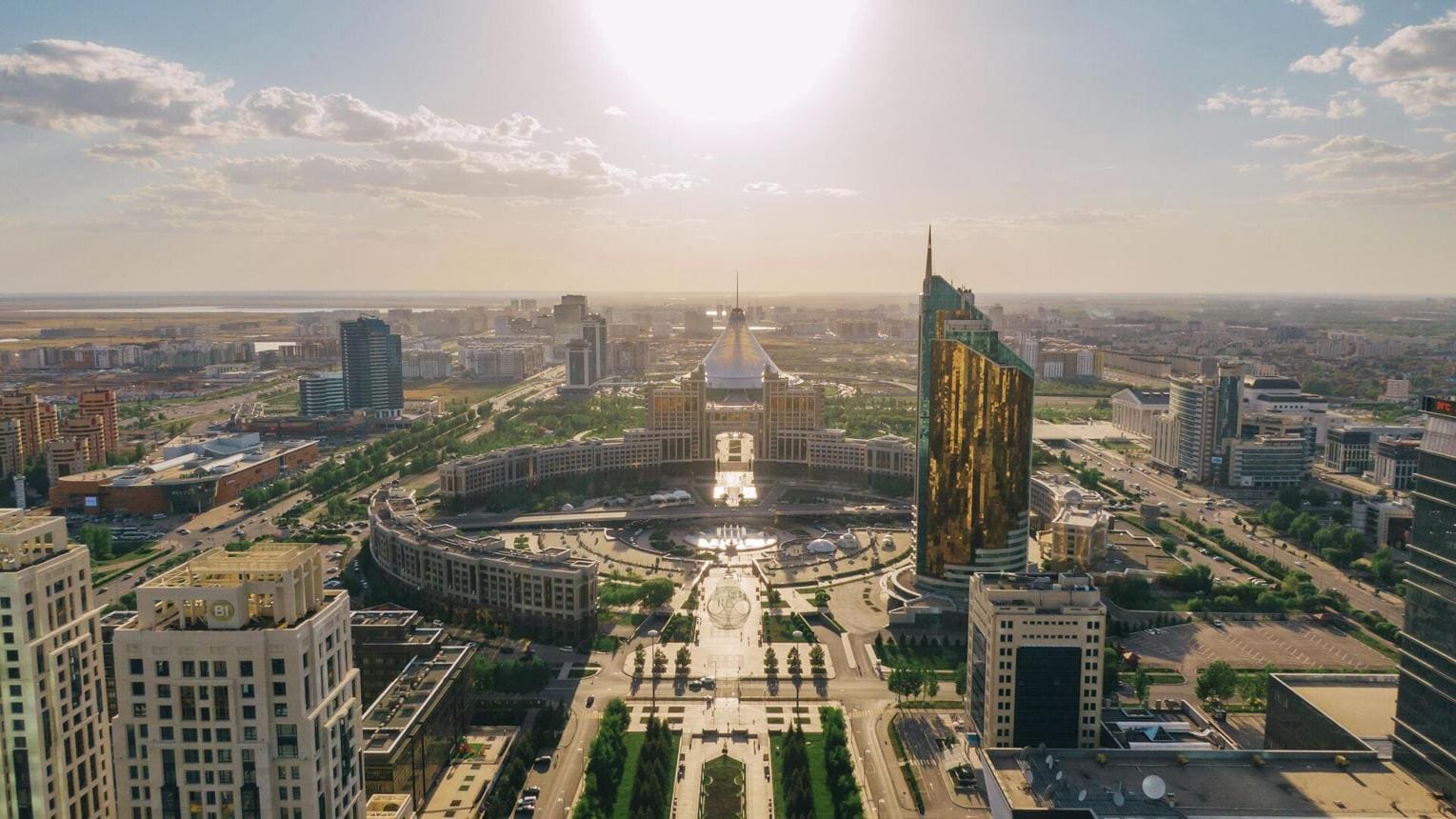
Baku: When Ursula von der Leyen arrives in the Azerbaijani capital on 1 July, the symbolism will be hard to miss. The European Commission president is touring a region that, for most of the past three decades, Brussels treated as a frozen periphery, a place for statements of concern rather than strategy. Her back-to-back stops in Baku and Yerevan signal that the European Union now sees the South Caucasus as a corridor worth competing for.

The backdrop is a peace that almost nobody predicted. After nearly forty years of conflict over Nagorno-Karabakh, Armenia and Azerbaijan agreed the text of a treaty in 2025, a breakthrough the EU’s foreign policy chief Kaja Kallas called “a decisive step.” Implementation remains the hard part, and the two governments still disagree over constitutional language and the reopening of transport links. But the guns have largely fallen silent, and that alone has changed the calculus in European capitals.

In Baku, von der Leyen’s agenda is candidly transactional. Azerbaijani gas has filled part of the gap left by Europe’s rupture with Russia, and energy remains the load-bearing pillar of the relationship. President Ilham Aliyev knows it, which is precisely the problem for a Union that likes to attach democratic conditions to its partnerships. Azerbaijan’s record on dissent and press freedom is poor, and rights groups argue that every cubic metre of gas buys Baku a measure of immunity from European criticism. The Commission’s challenge is to expand the pipeline without surrendering the leverage that conditionality is supposed to provide.

Yerevan presents the mirror image. Prime Minister Nikol Pashinyan has staked his career on a westward turn, and a recent electoral mandate has strengthened his hand. The EU has responded with a support package and a Connectivity Partnership built around the so-called Crossroads of Peace, Armenia’s bid to turn itself from a blockaded cul-de-sac into a transit hub. For Brussels, backing Yerevan is both a values story and a geopolitical one, an opportunity to pull a former Russian client state into Europe’s orbit while Moscow is distracted.

The risk is that the two halves of the trip pull against each other. Lavishing infrastructure money and political attention on Armenia could unsettle Baku, whose cooperation Europe needs on gas and on the contested corridor that would link Azerbaijan to its Nakhchivan exclave. Tilt too far toward Baku’s energy, and Brussels looks like it is rewarding autocracy while a democratic neighbour waits. Von der Leyen’s itinerary is an attempt to hold both lines at once.

Whether that balance survives contact with reality is the open question. The EU has limited hard power in the Caucasus and faces rivals with fewer scruples about it, as Russia, Turkey and increasingly the Gulf states all hold cards. Washington, too, has inserted itself into the connectivity debate. Europe’s comparative advantage is money, market access and the slow gravitational pull of accession-style integration, none of which delivers quick wins.

For all that, the visit matters. It marks the moment Brussels stopped treating the South Caucasus as someone else’s neighbourhood and started treating it as part of its own. The danger is that engagement without a clear hierarchy of goals, gas security here, democratic resilience there, connectivity everywhere, leaves the EU exposed to being played off between Baku and Yerevan. A fragile peace gives Europe an opening. It does not, by itself, give it a strategy.