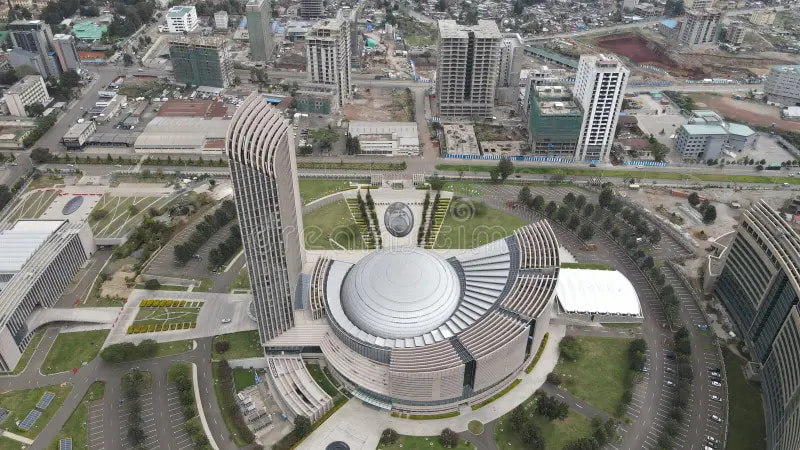
Addis Ababa: While Europe’s attention stayed fixed on Ukraine and its own budget fights, a less noticed piece of EU foreign policy was being assembled inside the African Union’s headquarters. From 3 to 5 June, more than sixty officials from around thirty-five African continental, regional and national institutions gathered to validate the technical blueprints for an African Single Electricity Market, a flagship of the Africa-EU Green Energy Initiative delivered under the bloc’s Global Gateway. It was the kind of workshop that produces guidelines, pre-feasibility studies and a continental power master plan rather than communiqués, and that is precisely why it matters.
Global Gateway, the EU’s answer to China’s Belt and Road, has long suffered from a credibility problem. The headline pledge of up to €150 billion for African infrastructure is enormous, but pledges are cheap and disbursement is slow, and African governments have learned to discount grand European numbers. The Addis Ababa session represents the unglamorous middle stage where strategy either becomes delivery or quietly evaporates. Validating the architecture for an integrated electricity market, rather than announcing it, is a sign that at least one strand of the initiative is moving from press release toward procurement.
The substance is genuinely ambitious. Roughly six hundred million Africans still lack reliable electricity, and national grids remain fragmented, undersized and frequently unable to trade power across borders. A continental market that lets surplus hydropower or solar generation flow from where it is produced to where it is needed could lower costs and stabilise supply far more effectively than any single national project. For the EU, financing that integration buys something money usually cannot: a structural role in the system Africa will depend on for decades, and a green credential it can point to at home.
Yet Europe is not the only suitor, and it is not even the most generous. China built much of Africa’s existing power infrastructure, and Italy’s parallel Mattei Plan now competes for the same partners and headlines under the same broad banner. African institutions, for their part, have grown noticeably less deferential, insisting that partnerships be struck on their own terms rather than designed in Brussels and delivered for signature. The language coming out of recent summits, about balance and mutual benefit rather than donor and recipient, reflects a continent that can now shop around.
That is the real test hidden inside a technical validation workshop. Europe’s comparative advantage is not the size of its cheque but the quality and durability of what it helps build, the regulatory expertise it can transfer, and its willingness to let African institutions own the result. A single electricity market cannot be imposed from outside; it requires harmonised national rules, trusted cross-border operators and political faith between governments that do not always trust one another. The EU can fund and advise, but it cannot supply that trust.
If the Continental Power System Master Plan turns these validated documents into financed, operating interconnectors, Global Gateway will have a flagship it can finally defend with results rather than ambition. If it stalls at the study stage, it will join a long list of European initiatives that mistook a workshop for a milestone. The difference between those two outcomes will not be decided in Brussels. It will be decided in places like Addis Ababa, in the slow, technical work of turning a master plan into wires in the ground.