Brussels: Europe spent years treating the Gulf mainly as an energy supplier and a market for its exporters. This month it treated the region as a security partner. Gulf security has climbed to the top of the European Union’s foreign-policy agenda, and the move says as much about Europe’s own exposure as it does about the turbulence rolling across the Middle East.
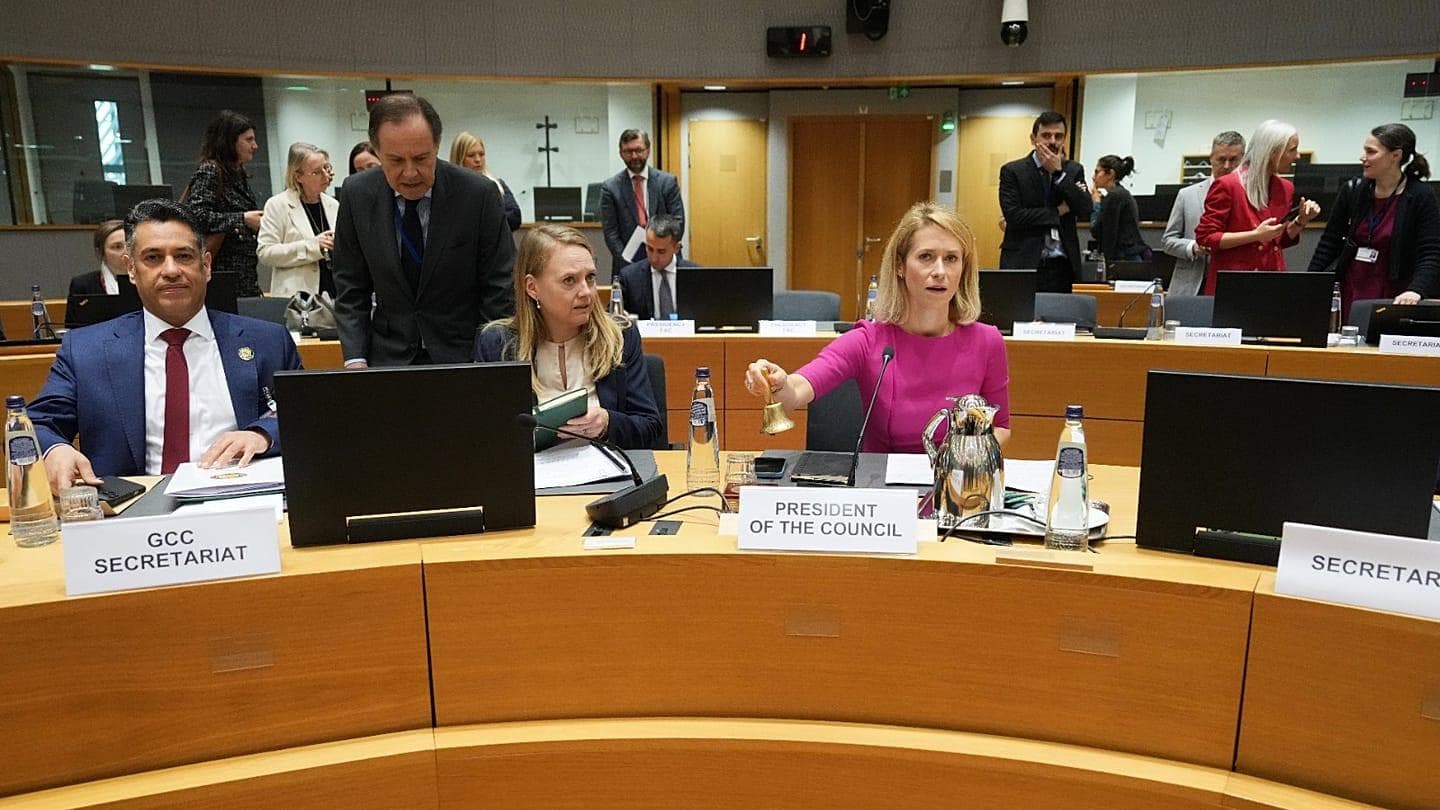
On 9 July the EU’s foreign-affairs chief Kaja Kallas chaired the third EU-GCC High Level Forum on Regional Security and Cooperation in Brussels, seating ministers from the six Gulf Cooperation Council states around a single table. Iran’s recent strikes on Gulf territory dominated the talks, and so did a harder question: how to keep the Strait of Hormuz open when one miscalculation could choke a fifth of the world’s seaborne oil.
Officials framed the forum around freedom of navigation and a durable regional settlement. Behind the diplomatic language sat a simpler calculation. Europe buys far less Gulf crude than it once did, yet a blockade in Hormuz would still spike prices on every forecourt from Lisbon to Helsinki, because oil trades as one global market. Gulf security, in other words, reaches straight into European kitchens and factories.
The forum did not appear out of nowhere. Leaders held the first-ever EU-GCC Summit in October 2024 under the banner of a strategic partnership, and they plan to meet again in the second half of this year. Brussels has also opened free-trade talks with the United Arab Emirates, chasing deals on green hydrogen and the critical raw materials its clean-energy plans depend on. Each strand points the same way, toward a relationship that no longer stops at trade statistics.
Yet Europe arrives at the table with modest tools. It commands no fleet in the Gulf and no appetite for one. It offers regulation, investment and diplomatic cover rather than warships, and Gulf capitals know it. Riyadh, Abu Dhabi and Doha hedge deliberately between Washington’s security guarantee, Beijing’s cash and Brussels’s market. Kallas can convene them, but she cannot yet deter the threats that worry them most.
That gap defines the coming months. If the next summit produces only warm statements, Gulf leaders will read Europe as a fair-weather friend and keep their strategic bets spread wide. If Brussels instead ties its diplomacy to concrete offers, on energy infrastructure, maritime monitoring and joint investment, it can turn a series of forums into something the region actually leans on. Europe has finally noticed that its prosperity runs through the Gulf. The test now is whether it will pay to defend that stake, or simply talk about it.