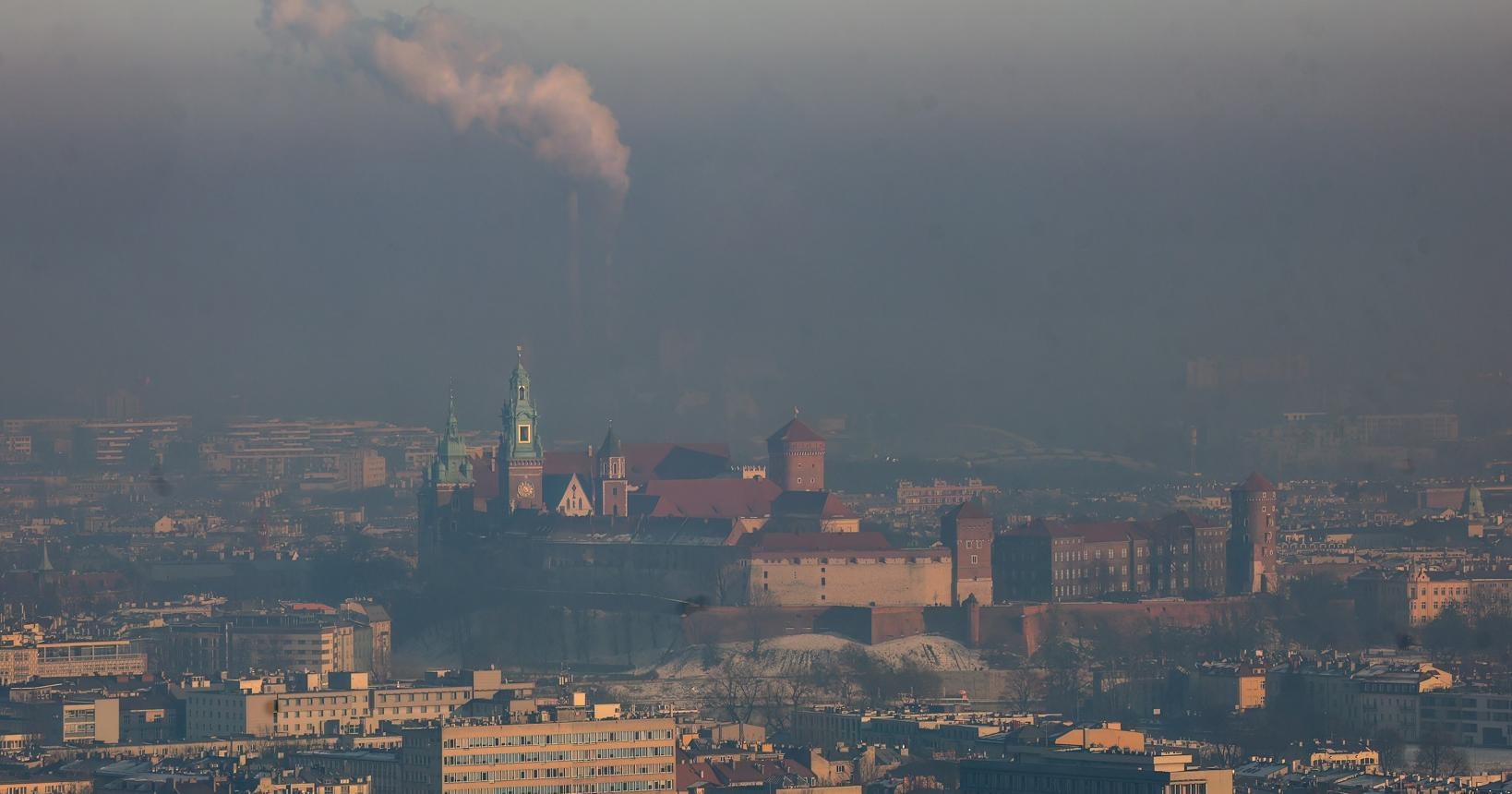
Kraków: A winter inversion over the Vistula valley still pushes particulate readings past the legal line, and the monitoring cabins record it every year. The European Environment Agency has now published its 2026 assessment of European air quality, and the headline is genuinely better than a decade ago. The detail underneath it is harder to celebrate.
Across the data for 2024 and 2025, most regions met the current EU standards for fine particulate matter and for nitrogen dioxide. That is the first time the agency can say so with this much confidence. Yet up to one monitoring station in five still recorded concentrations above the standards in force, and the offenders were not the pollutants that dominated the last round of enforcement. Coarser particulate matter, ground-level ozone and benzo(a)pyrene now carry most of the exceedances.
Ozone matters because nobody controls it directly. It forms in sunlight from precursors that travel, so a city with clean tailpipes can still fail on a hot week because of emissions three countries away. Benzo(a)pyrene tells a different story. It comes largely from solid fuel burned in homes, which sits outside industrial permitting and inside household budgets. Both pollutants resist the tools that cleaned up nitrogen dioxide, which responded to vehicle rules and low-emission zones because a regulator could point at the source.
The agency also measures against the World Health Organization guidelines rather than the legal limits, and on that yardstick more than nine in ten EU city dwellers breathe air above the recommended levels. That gap is not a technicality. The revised Ambient Air Quality Directive moves the EU limits closer to those guidelines from 2030, which means the stations that pass comfortably today will not pass then.
The compliance machinery starts this year. From 2026 national authorities must draw up air quality roadmaps wherever concentrations exceed the revised standards, setting out how they will get below them before the 2030 date. Roadmaps are a softer instrument than an infringement case, but they create a paper trail, and a missing or unserious roadmap is easy for the Commission to challenge later. Capitals that treat the exercise as a formality are building the evidence file against themselves.
There is a fiscal argument buried in the timing. Solid fuel heating is concentrated in lower-income households in central and eastern Europe, and replacing it costs money that regional programmes were already asked to spend on housing and on grid connections. A roadmap that promises boiler replacement without naming the funding line is a promise about someone else’s budget.
Industry groups make a reasonable counterpoint. Ozone precursors and transboundary dust are partly outside any single member state’s control, and a legal limit that a capital cannot meet through domestic action invites litigation rather than cleaner air. The directive answers that with flexibility clauses for natural sources and for cross-border contributions, though the burden of proving them sits with the government claiming the exemption.
The agency’s own framing is careful. It reports progress, then points to the stations that still fail and the pollutants driving them. The full dataset and methodology sit in the 2026 air quality status report, which is worth reading before anyone claims the file is closed. Europe has cleaned up the pollution that responded to permits. What remains responds to heating systems, weather and geography, and none of those take instruction from a directive.