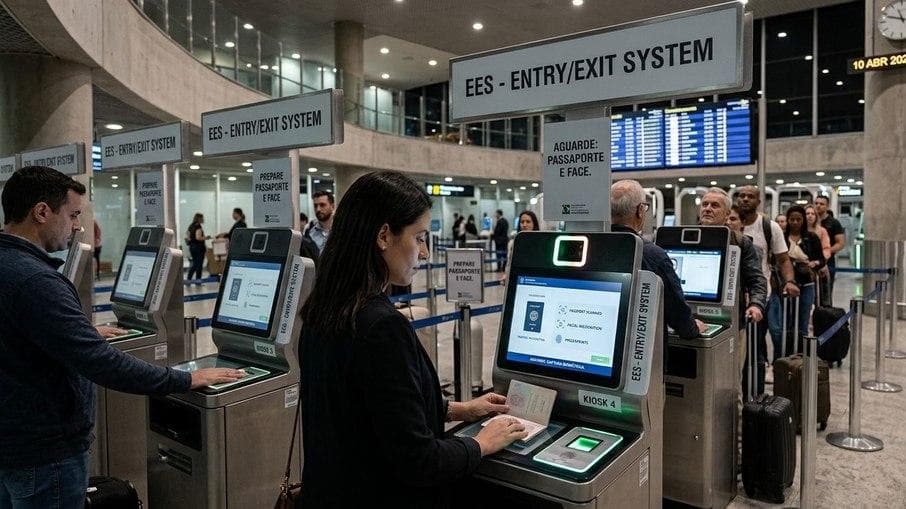
Málaga: Summer crowds pour through this Andalusian gateway, and the queues have grown since Europe switched on biometric border checks. The long-promised ETIAS travel permit was meant to follow this year, but officials now concede it will not arrive on the old timetable.
ETIAS, the European Travel Information and Authorisation System, will require visa-free visitors from outside the bloc to buy an online permit before they travel. The EU had pencilled in the last quarter of 2026, yet that date has slipped off official pages, and reporting through July points to 2027 as the realistic start.
The delay traces back to the Entry/Exit System, the biometric register that must run smoothly before ETIAS can layer on top of it. That system began a phased launch in October 2025 and reached full operation in April 2026, logging fingerprints and facial images at the external border. More than 45 million crossings have passed through it.
The rollout has been bumpy. Travellers have faced waits of two to five hours at peak times, and several airports paused the new checks to clear backlogs. Málaga, Madrid and other tourist hubs absorbed the strain as carriers warned of missed connections.
Officials argue that a shaky launch of ETIAS on top of an overloaded border would compound the chaos, so they prefer to wait. The permit will cost travellers a modest fee and, once granted, will cover multiple trips over several years. Authorities promise to announce a firm date months in advance.
For the travel industry, the uncertainty cuts both ways. Airlines and tour operators welcome extra time to brief passengers, yet they dislike planning around a moving target. Border agencies, meanwhile, keep investing in kiosks and staff to shorten the lines that biometric checks created.
Critics of the timetable say the Commission underestimated how much new hardware and training the border overhaul demanded. Supporters respond that a cautious sequence protects both security and the traveller experience, and that rushing ETIAS would repeat the mistakes now visible at busy terminals.
The Commission’s border pages still frame the two systems as a package that will tighten control over who enters the Schengen area. For now, though, visitors to Málaga need only a passport and patience, while the permit that will one day gate their trips waits in the wings.