Rotterdam: The Carbon Border Adjustment Mechanism, which moved from its transitional phase into full financial obligations on 1 January 2026, has cleared its first quarter of operation without the customs gridlock that some importers had warned about during the lobbying around its design. The taxation and customs directorate confirmed last month that the CBAM Registry, integrated with national customs import systems and the EU Customs Single Window, processed declarations smoothly across all twenty-seven Member States during the first reporting quarter.
The mechanism applies a carbon price at the EU border to imports of iron and steel, aluminium, cement, fertilisers, electricity and hydrogen, calibrated to the price of allowances under the Emissions Trading System. Authorised CBAM declarants are required to surrender certificates corresponding to the embedded emissions of imported goods, with verification handled by accredited third parties. A simplification omnibus adopted late last year excluded roughly ninety per cent of importers, mostly small operators, from the scope while preserving coverage of about ninety-nine per cent of emissions.
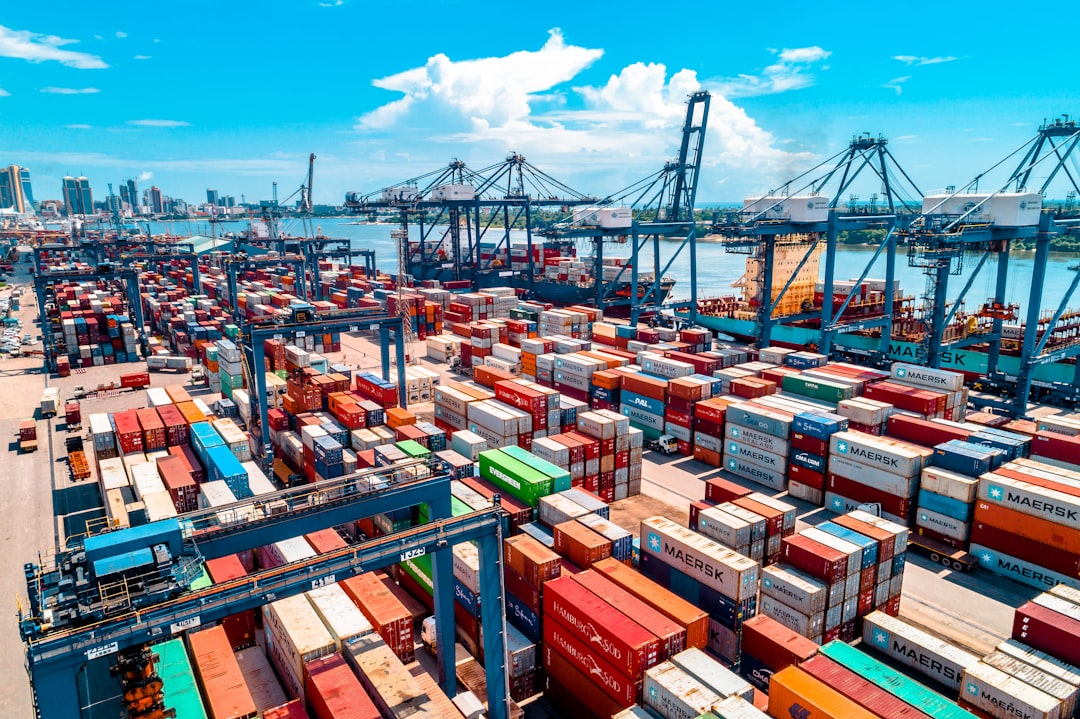
Rotterdam, Antwerp-Bruges and Hamburg, the three largest entry points for affected commodities, report that integration with the Single Window has worked as designed. Importers submit a single data set covering customs and CBAM, validated in real time against TARIC and the registry. Industry has flagged isolated issues with embedded-emissions verification for third-country suppliers, particularly in jurisdictions without an equivalent carbon pricing regime, but the Commission expects most teething problems to be resolved before the second quarterly cycle closes in July.
The broader customs union reform, agreed politically in early 2025 and now in the implementing phase, will fold CBAM reporting into the EU Customs Data Hub as it comes online for e-commerce in July 2028 and is extended progressively through to 2034. The Hub is intended to become the single channel through which traders submit customs information, with shared real-time data available to all relevant authorities, including environmental and product-safety regulators. Officials in the new EU Customs Authority, which will take over coordination tasks gradually from this year, see the integration with CBAM as the proof of concept for the wider data architecture.
Trading partners continue to challenge the mechanism, with several developing countries pressing for assistance to upgrade emissions measurement and verification capacity. The Commission has earmarked technical assistance funding for partner countries in Africa and Latin America that supply CBAM-covered goods, channelled through Global Gateway. India and South Africa have kept the WTO dispute settlement option on the table, although neither has formally requested consultations.
Within the bloc, attention is turning to the second wave of products that could be brought into the mechanism. Chemicals, polymers and downstream metal products feature in the next review, with a Commission report due before the end of 2026 assessing the case for extension. Industry associations in Frankfurt, Lyon and Genoa have signalled qualified support, provided that any extension is matched with measures to address carbon leakage in downstream processing.