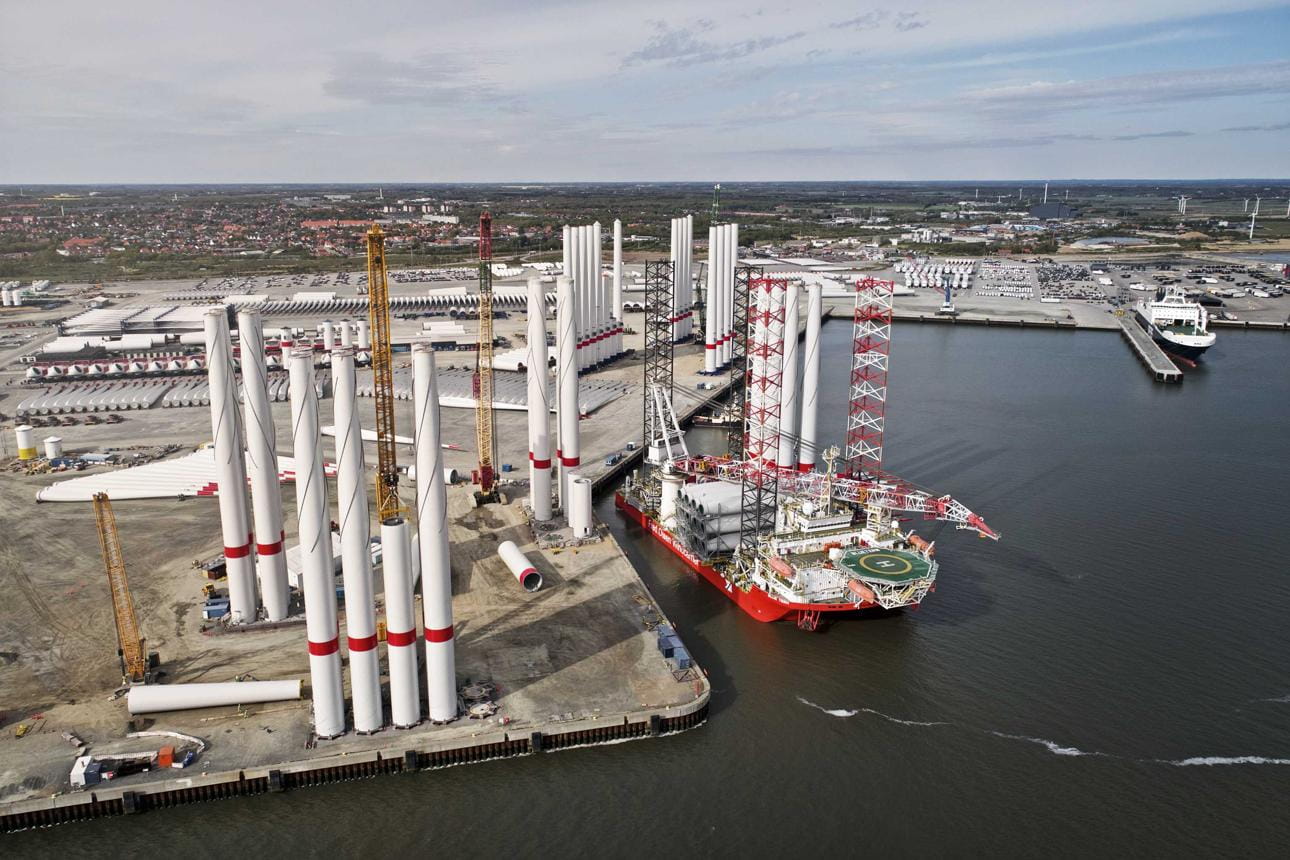
Aalborg: Danish manufacturers building components for offshore wind and heat pumps gained access to public money last month that would have failed a state aid test two years ago. On 10 August 2026 the Commission cleared an 84 million euro scheme, worth 629 million Danish kroner, supporting clean technology manufacturing capacity under the Clean Industrial Deal State Aid Framework.
The framework rewrote a long-standing bargain. Competition officials spent decades restraining national subsidies precisely because a bidding war between treasuries distorts the single market and favours whichever government has the deepest reserves. The framework adopted in June 2025 relaxes that restraint for a defined list of net-zero technologies and their key components, and it runs until the end of 2030.
The Danish clearance illustrates how the instrument works in practice. Aid arrives as direct grants, the scheme stays open to any company investing in qualifying manufacturing capacity, and awards must be made by 31 December 2026. That last condition deserves attention. A grant window closing within months of approval compresses the investment decision considerably, and firms weighing a factory expansion will find the compliance timetable driving the commercial one.
Denmark joins a growing list. France secured clearance for an 11 billion euro offshore wind scheme in August 2025 and a 1.1 billion euro cleantech manufacturing scheme afterwards, Germany received approval for a 3 billion euro programme, and Luxembourg cleared 500 million euros in March 2026. The pattern in those numbers is the concern that competition lawyers raised when the framework appeared. Large member states with fiscal room approve large schemes. Smaller and more indebted ones approve smaller ones or none at all.
The Commission’s answer is that the alternative was worse. Without a common framework, member states would have pursued national support through improvised legal routes, litigation would have followed, and investment decisions would have drifted to jurisdictions outside the Union that impose no such discipline. A structured framework with published criteria at least keeps subsidy competition inside rules that everyone can read.
Critics accept that logic and question the scale. The framework’s own annex defines which technologies qualify, and a company whose product sits just outside that list competes against subsidised rivals without recourse. Component suppliers face the sharpest version of this, because the boundary between a main specific component and an ordinary industrial input is a drafting choice rather than an engineering fact.
Cohesion policy specialists raise a different objection. Public money flowing toward manufacturing capacity concentrates where manufacturing capacity already exists, which in practice means the Union’s industrial core rather than its periphery. The framework contains no geographic balancing mechanism, and its interaction with regional aid rules remains one of the least examined parts of the design.
What happens after 2030 stays open. Officials describe the framework as transitional support during a decarbonisation push, and the sunset date supports that reading. Companies building factories on ten-year horizons will nonetheless assume the political conditions that produced this framework will produce its successor, and that expectation, more than any single clearance decision, is what changes investment behaviour.