August 9, 2026
LATEST
New EU Gas Market Rules Take Effect With Consumer SafeguardsDeforestation Regulation Holds Its December Deadline Despite CutsDigital Omnibus Delays Europe’s High-Risk AI Deadline to 2027Europe’s Schools Confront a Widening Basic Skills GapRule of Law Report Finds Progress but Trust Still LagsIRIS2 Gains 66 Satellites as Brussels Signs the Rollout DealNature Restoration Plans Come Due as Member States Race a DeadlineECB Rates Hold at 2.25 Percent as Frankfurt Waits on the DataEU Budget Talks Turn to Cohesion as Ireland Takes OverWildfire Response Stretches Europe’s Emergency Fleet ThinCan Europe’s Quantum Plan Match Its Big Ambitions?Armenia Edges West as Moscow’s Grip Slips AwayEurope Inherits the World’s Aid Bill It Cannot Fully PayAir Passenger Rights Get Their First Overhaul in Two DecadesErasmus Opens a 5 Billion Euro Round for Skills and MobilityCeuta Crisis Pushes the EU Toward Faster Migrant ReturnsBulky Parcels Face a Packaging Crackdown From August 12Can Europe Build Its Drone Wall Before 2030 Arrives?Indonesia’s Trade Deal With Europe Nears Its Final SignatureEurope Leans on Beijing to Keep Climate Talks Alive Before AntalyaNew EU Gas Market Rules Take Effect With Consumer SafeguardsDeforestation Regulation Holds Its December Deadline Despite CutsDigital Omnibus Delays Europe’s High-Risk AI Deadline to 2027Europe’s Schools Confront a Widening Basic Skills GapRule of Law Report Finds Progress but Trust Still LagsIRIS2 Gains 66 Satellites as Brussels Signs the Rollout DealNature Restoration Plans Come Due as Member States Race a DeadlineECB Rates Hold at 2.25 Percent as Frankfurt Waits on the DataEU Budget Talks Turn to Cohesion as Ireland Takes OverWildfire Response Stretches Europe’s Emergency Fleet ThinCan Europe’s Quantum Plan Match Its Big Ambitions?Armenia Edges West as Moscow’s Grip Slips AwayEurope Inherits the World’s Aid Bill It Cannot Fully PayAir Passenger Rights Get Their First Overhaul in Two DecadesErasmus Opens a 5 Billion Euro Round for Skills and MobilityCeuta Crisis Pushes the EU Toward Faster Migrant ReturnsBulky Parcels Face a Packaging Crackdown From August 12Can Europe Build Its Drone Wall Before 2030 Arrives?Indonesia’s Trade Deal With Europe Nears Its Final SignatureEurope Leans on Beijing to Keep Climate Talks Alive Before Antalya
August 9, 2026
LATEST
New EU Gas Market Rules Take Effect With Consumer SafeguardsDeforestation Regulation Holds Its December Deadline Despite CutsDigital Omnibus Delays Europe’s High-Risk AI Deadline to 2027Europe’s Schools Confront a Widening Basic Skills GapRule of Law Report Finds Progress but Trust Still LagsIRIS2 Gains 66 Satellites as Brussels Signs the Rollout DealNature Restoration Plans Come Due as Member States Race a DeadlineECB Rates Hold at 2.25 Percent as Frankfurt Waits on the DataEU Budget Talks Turn to Cohesion as Ireland Takes OverWildfire Response Stretches Europe’s Emergency Fleet ThinCan Europe’s Quantum Plan Match Its Big Ambitions?Armenia Edges West as Moscow’s Grip Slips AwayEurope Inherits the World’s Aid Bill It Cannot Fully PayAir Passenger Rights Get Their First Overhaul in Two DecadesErasmus Opens a 5 Billion Euro Round for Skills and MobilityCeuta Crisis Pushes the EU Toward Faster Migrant ReturnsBulky Parcels Face a Packaging Crackdown From August 12Can Europe Build Its Drone Wall Before 2030 Arrives?Indonesia’s Trade Deal With Europe Nears Its Final SignatureEurope Leans on Beijing to Keep Climate Talks Alive Before AntalyaNew EU Gas Market Rules Take Effect With Consumer SafeguardsDeforestation Regulation Holds Its December Deadline Despite CutsDigital Omnibus Delays Europe’s High-Risk AI Deadline to 2027Europe’s Schools Confront a Widening Basic Skills GapRule of Law Report Finds Progress but Trust Still LagsIRIS2 Gains 66 Satellites as Brussels Signs the Rollout DealNature Restoration Plans Come Due as Member States Race a DeadlineECB Rates Hold at 2.25 Percent as Frankfurt Waits on the DataEU Budget Talks Turn to Cohesion as Ireland Takes OverWildfire Response Stretches Europe’s Emergency Fleet ThinCan Europe’s Quantum Plan Match Its Big Ambitions?Armenia Edges West as Moscow’s Grip Slips AwayEurope Inherits the World’s Aid Bill It Cannot Fully PayAir Passenger Rights Get Their First Overhaul in Two DecadesErasmus Opens a 5 Billion Euro Round for Skills and MobilityCeuta Crisis Pushes the EU Toward Faster Migrant ReturnsBulky Parcels Face a Packaging Crackdown From August 12Can Europe Build Its Drone Wall Before 2030 Arrives?Indonesia’s Trade Deal With Europe Nears Its Final SignatureEurope Leans on Beijing to Keep Climate Talks Alive Before Antalya

Defence ministers weigh Ukraine support and EU readiness goals

Tallinn: EU defence ministers convened informally in mid-May 2026 to discuss the bloc’s continued military support to Ukraine, the implementation of the Readiness 2030 defence package and the security implications of the ongoing Middle East crisis. The meeting marked another step in the consolidation of defence at the centre of EU policy, a position the policy area has held since the Russian full-scale invasion of Ukraine in February 2022.

The Security Action for Europe instrument, the 150 billion euro loan facility adopted in May 2025, has now financed defence investment plans in eighteen Member States. The Council approved the second wave of national plans on 26 January 2026, covering 74 billion euros across Estonia, Greece, Italy, Latvia, Lithuania, Poland, Slovakia and Finland. Poland alone accounts for 43.7 billion euros of the approved envelope, the largest single national commitment under SAFE. First disbursements began in March 2026, marking the transition from political design to operational delivery.

Fifteen of the nineteen approved national defence investment plans include joint projects with Ukraine, formalising the integration of Kyiv into the European defence-industrial framework on equal terms with Member States. Canada’s accession to the SAFE framework, endorsed in December 2025, demonstrates the instrument’s centripetal pull beyond the Union. The United Kingdom’s withdrawal from negotiations over governance and content rules, combined with Turkey’s exclusion from formal participation, illustrates the political gating that defines the perimeter of the European defence-industrial consolidation.

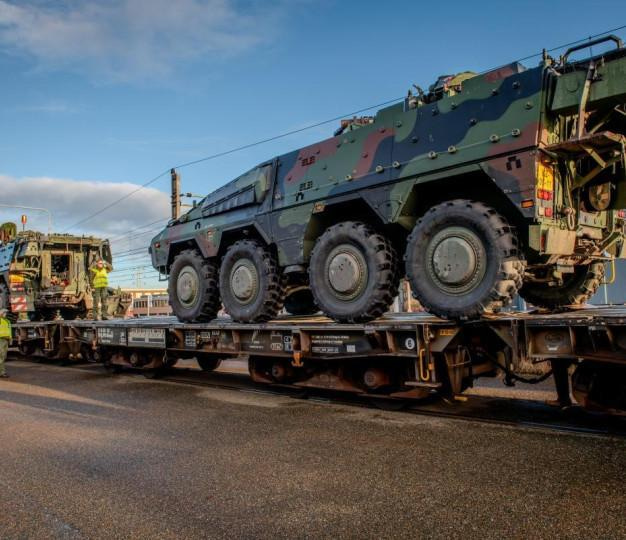
The defence readiness roadmap 2030, presented in October 2025, sets quantified targets that the Commission will track annually. Joint procurement targets reach 40 per cent by 2027, with contracts in place to close critical capability gaps by 2028 and full delivery through SAFE by 2030. Approximately 200,000 workers are expected to be reskilled for the defence sector by 2026, reflecting the substantial industrial capacity expansion that the readiness target requires. The European Defence Industry Programme and the Competitiveness Fund’s defence window are expected to be operational by the end of 2027, completing the financial architecture beneath the political ambition.

The Middle East crisis has added urgency to the readiness discussion. The closure of the Strait of Hormuz earlier in 2026 produced sharp energy price increases and exposed vulnerabilities in supply chains for critical defence components. The Commission’s economic security toolbox — including the revised Foreign Direct Investment Screening Regulation, the Critical Raw Materials Act and the Net-Zero Industry Act — provides the framework for managing the dependencies that the crisis has highlighted. Defence ministers discussed coordination with civilian instruments and the integration of defence considerations into broader economic security governance.

Ukrainian support remains the most operationally consequential dimension. The European Peace Facility continues to fund military equipment deliveries through pooled procurement and ad hoc contributions. Long-term commitments to Ukrainian reconstruction and to the integration of Ukrainian defence industry into the European framework have been built into SAFE financing and into the proposed Ukraine Plan under the next Multiannual Financial Framework. The Special Tribunal for the Crime of Aggression against Ukraine and the International Claims Commission, both of which the EU joined as a founding member in May 2026, complete the accountability architecture that the bloc has constructed in parallel with military support.

The activation of the national escape clause of the Stability and Growth Pact for seventeen Member States, with four-year fiscal flexibility for defence spending up to 1.5 per cent of GDP through 2028, has given Member States the budgetary space to make sustained investments. Combined with SAFE financing and EIB lending, the package mobilises up to 800 billion euros of additional defence spending by 2030. The political question for defence ministers is whether the financial commitments translate into the operational capability and industrial capacity that the Readiness 2030 target requires.