August 9, 2026
LATEST
New EU Gas Market Rules Take Effect With Consumer SafeguardsDeforestation Regulation Holds Its December Deadline Despite CutsDigital Omnibus Delays Europe’s High-Risk AI Deadline to 2027Europe’s Schools Confront a Widening Basic Skills GapRule of Law Report Finds Progress but Trust Still LagsIRIS2 Gains 66 Satellites as Brussels Signs the Rollout DealNature Restoration Plans Come Due as Member States Race a DeadlineECB Rates Hold at 2.25 Percent as Frankfurt Waits on the DataEU Budget Talks Turn to Cohesion as Ireland Takes OverWildfire Response Stretches Europe’s Emergency Fleet ThinCan Europe’s Quantum Plan Match Its Big Ambitions?Armenia Edges West as Moscow’s Grip Slips AwayEurope Inherits the World’s Aid Bill It Cannot Fully PayAir Passenger Rights Get Their First Overhaul in Two DecadesErasmus Opens a 5 Billion Euro Round for Skills and MobilityCeuta Crisis Pushes the EU Toward Faster Migrant ReturnsBulky Parcels Face a Packaging Crackdown From August 12Can Europe Build Its Drone Wall Before 2030 Arrives?Indonesia’s Trade Deal With Europe Nears Its Final SignatureEurope Leans on Beijing to Keep Climate Talks Alive Before AntalyaNew EU Gas Market Rules Take Effect With Consumer SafeguardsDeforestation Regulation Holds Its December Deadline Despite CutsDigital Omnibus Delays Europe’s High-Risk AI Deadline to 2027Europe’s Schools Confront a Widening Basic Skills GapRule of Law Report Finds Progress but Trust Still LagsIRIS2 Gains 66 Satellites as Brussels Signs the Rollout DealNature Restoration Plans Come Due as Member States Race a DeadlineECB Rates Hold at 2.25 Percent as Frankfurt Waits on the DataEU Budget Talks Turn to Cohesion as Ireland Takes OverWildfire Response Stretches Europe’s Emergency Fleet ThinCan Europe’s Quantum Plan Match Its Big Ambitions?Armenia Edges West as Moscow’s Grip Slips AwayEurope Inherits the World’s Aid Bill It Cannot Fully PayAir Passenger Rights Get Their First Overhaul in Two DecadesErasmus Opens a 5 Billion Euro Round for Skills and MobilityCeuta Crisis Pushes the EU Toward Faster Migrant ReturnsBulky Parcels Face a Packaging Crackdown From August 12Can Europe Build Its Drone Wall Before 2030 Arrives?Indonesia’s Trade Deal With Europe Nears Its Final SignatureEurope Leans on Beijing to Keep Climate Talks Alive Before Antalya
August 9, 2026
LATEST
New EU Gas Market Rules Take Effect With Consumer SafeguardsDeforestation Regulation Holds Its December Deadline Despite CutsDigital Omnibus Delays Europe’s High-Risk AI Deadline to 2027Europe’s Schools Confront a Widening Basic Skills GapRule of Law Report Finds Progress but Trust Still LagsIRIS2 Gains 66 Satellites as Brussels Signs the Rollout DealNature Restoration Plans Come Due as Member States Race a DeadlineECB Rates Hold at 2.25 Percent as Frankfurt Waits on the DataEU Budget Talks Turn to Cohesion as Ireland Takes OverWildfire Response Stretches Europe’s Emergency Fleet ThinCan Europe’s Quantum Plan Match Its Big Ambitions?Armenia Edges West as Moscow’s Grip Slips AwayEurope Inherits the World’s Aid Bill It Cannot Fully PayAir Passenger Rights Get Their First Overhaul in Two DecadesErasmus Opens a 5 Billion Euro Round for Skills and MobilityCeuta Crisis Pushes the EU Toward Faster Migrant ReturnsBulky Parcels Face a Packaging Crackdown From August 12Can Europe Build Its Drone Wall Before 2030 Arrives?Indonesia’s Trade Deal With Europe Nears Its Final SignatureEurope Leans on Beijing to Keep Climate Talks Alive Before AntalyaNew EU Gas Market Rules Take Effect With Consumer SafeguardsDeforestation Regulation Holds Its December Deadline Despite CutsDigital Omnibus Delays Europe’s High-Risk AI Deadline to 2027Europe’s Schools Confront a Widening Basic Skills GapRule of Law Report Finds Progress but Trust Still LagsIRIS2 Gains 66 Satellites as Brussels Signs the Rollout DealNature Restoration Plans Come Due as Member States Race a DeadlineECB Rates Hold at 2.25 Percent as Frankfurt Waits on the DataEU Budget Talks Turn to Cohesion as Ireland Takes OverWildfire Response Stretches Europe’s Emergency Fleet ThinCan Europe’s Quantum Plan Match Its Big Ambitions?Armenia Edges West as Moscow’s Grip Slips AwayEurope Inherits the World’s Aid Bill It Cannot Fully PayAir Passenger Rights Get Their First Overhaul in Two DecadesErasmus Opens a 5 Billion Euro Round for Skills and MobilityCeuta Crisis Pushes the EU Toward Faster Migrant ReturnsBulky Parcels Face a Packaging Crackdown From August 12Can Europe Build Its Drone Wall Before 2030 Arrives?Indonesia’s Trade Deal With Europe Nears Its Final SignatureEurope Leans on Beijing to Keep Climate Talks Alive Before Antalya

Governments Get A Secure Satellite Hub As Govsatcom Goes Live

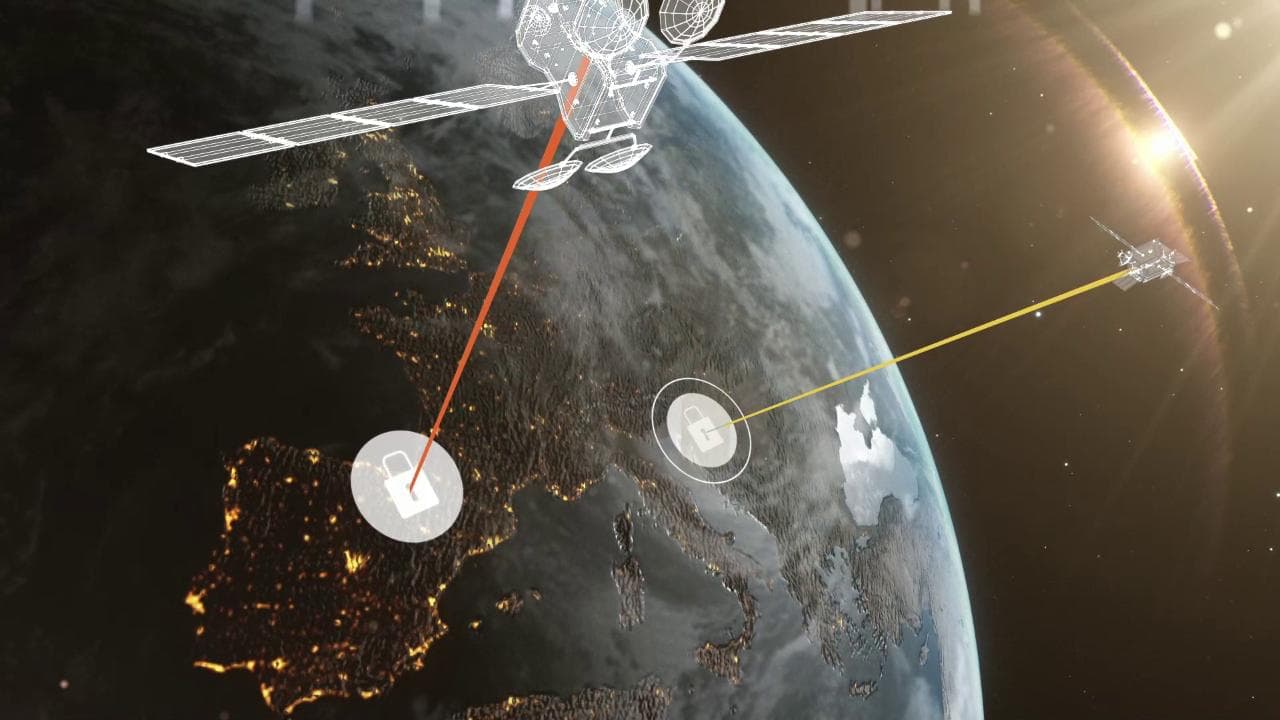
Prague: For years the European Union talked about sovereign space communications as an ambition perpetually one budget cycle away. This month the talk acquired hardware. A secure governmental satellite communications hub has come online, pooling capacity from national and commercial satellites so that public authorities can route sensitive traffic through European infrastructure rather than borrowing bandwidth wherever they can find it. The hub, operated under the leadership of a Spanish engineering group, is the first concrete layer of a system the bloc has been assembling piece by piece.

The logic is straightforward and slightly uncomfortable. Coast guards tracking smugglers, civil-protection teams coordinating across a disaster zone, and diplomatic missions in volatile regions all need communications that cannot be intercepted, throttled or switched off by a provider answering to another government. Until now much of that traffic has depended on satellite capacity controlled outside the Union, an arrangement tolerable in calm times and alarming in tense ones. The new hub is meant to give member states a shared, secured alternative they collectively own.

It also serves as a bridge to the bloc’s most ambitious orbital project, a multi-orbit constellation designed to weave secure connectivity and commercial broadband into a single network. That constellation is planned to carry more than two hundred and sixty satellites in low Earth orbit, supplemented by a smaller cluster in medium orbit, at a programme cost north of ten billion euro split between public funds and private partners. Deployment is scheduled toward the end of the decade, with full service expected in the years that follow. The governmental hub now coming online is the scaffolding on which that grander structure will be built.

Governing the effort is a quietly deliberate division of labour. The European Space Agency shoulders development and deployment, while the Union’s dedicated space programme agency, headquartered in the Czech capital, takes charge of delivering services to governments and managing the security that makes the system worth having. That split mirrors the arrangement already running the bloc’s satellite navigation and Earth-observation flagships, a model officials credit with keeping engineering ambition and operational accountability in separate, complementary hands.

Skeptics note that Europe is racing against constellations already in orbit and already earning revenue, and that a system reaching full strength only at the close of the decade risks arriving into a market others have defined. The counterargument is that sovereignty is not a commodity to be bought at the cheapest price. A network whose ground stations, encryption and governance sit within the Union answers a question that capacity leased from a private operator cannot: who can be trusted with the traffic that matters most when relations sour.

The hub’s activation will not, on its own, settle that debate. It is a node, not a constellation, and its capacity is modest beside the fleets it is meant to eventually complement. But it converts a slide-deck aspiration into something operators can switch on, configure and rely upon today. For a programme long accused of moving at the pace of intergovernmental committees, a working hub is a useful rebuttal, and a signal that Europe’s pursuit of its own secure orbit has finally left the drawing board.