August 9, 2026
LATEST
New EU Gas Market Rules Take Effect With Consumer SafeguardsDeforestation Regulation Holds Its December Deadline Despite CutsDigital Omnibus Delays Europe’s High-Risk AI Deadline to 2027Europe’s Schools Confront a Widening Basic Skills GapRule of Law Report Finds Progress but Trust Still LagsIRIS2 Gains 66 Satellites as Brussels Signs the Rollout DealNature Restoration Plans Come Due as Member States Race a DeadlineECB Rates Hold at 2.25 Percent as Frankfurt Waits on the DataEU Budget Talks Turn to Cohesion as Ireland Takes OverWildfire Response Stretches Europe’s Emergency Fleet ThinCan Europe’s Quantum Plan Match Its Big Ambitions?Armenia Edges West as Moscow’s Grip Slips AwayEurope Inherits the World’s Aid Bill It Cannot Fully PayAir Passenger Rights Get Their First Overhaul in Two DecadesErasmus Opens a 5 Billion Euro Round for Skills and MobilityCeuta Crisis Pushes the EU Toward Faster Migrant ReturnsBulky Parcels Face a Packaging Crackdown From August 12Can Europe Build Its Drone Wall Before 2030 Arrives?Indonesia’s Trade Deal With Europe Nears Its Final SignatureEurope Leans on Beijing to Keep Climate Talks Alive Before AntalyaNew EU Gas Market Rules Take Effect With Consumer SafeguardsDeforestation Regulation Holds Its December Deadline Despite CutsDigital Omnibus Delays Europe’s High-Risk AI Deadline to 2027Europe’s Schools Confront a Widening Basic Skills GapRule of Law Report Finds Progress but Trust Still LagsIRIS2 Gains 66 Satellites as Brussels Signs the Rollout DealNature Restoration Plans Come Due as Member States Race a DeadlineECB Rates Hold at 2.25 Percent as Frankfurt Waits on the DataEU Budget Talks Turn to Cohesion as Ireland Takes OverWildfire Response Stretches Europe’s Emergency Fleet ThinCan Europe’s Quantum Plan Match Its Big Ambitions?Armenia Edges West as Moscow’s Grip Slips AwayEurope Inherits the World’s Aid Bill It Cannot Fully PayAir Passenger Rights Get Their First Overhaul in Two DecadesErasmus Opens a 5 Billion Euro Round for Skills and MobilityCeuta Crisis Pushes the EU Toward Faster Migrant ReturnsBulky Parcels Face a Packaging Crackdown From August 12Can Europe Build Its Drone Wall Before 2030 Arrives?Indonesia’s Trade Deal With Europe Nears Its Final SignatureEurope Leans on Beijing to Keep Climate Talks Alive Before Antalya
August 9, 2026
LATEST
New EU Gas Market Rules Take Effect With Consumer SafeguardsDeforestation Regulation Holds Its December Deadline Despite CutsDigital Omnibus Delays Europe’s High-Risk AI Deadline to 2027Europe’s Schools Confront a Widening Basic Skills GapRule of Law Report Finds Progress but Trust Still LagsIRIS2 Gains 66 Satellites as Brussels Signs the Rollout DealNature Restoration Plans Come Due as Member States Race a DeadlineECB Rates Hold at 2.25 Percent as Frankfurt Waits on the DataEU Budget Talks Turn to Cohesion as Ireland Takes OverWildfire Response Stretches Europe’s Emergency Fleet ThinCan Europe’s Quantum Plan Match Its Big Ambitions?Armenia Edges West as Moscow’s Grip Slips AwayEurope Inherits the World’s Aid Bill It Cannot Fully PayAir Passenger Rights Get Their First Overhaul in Two DecadesErasmus Opens a 5 Billion Euro Round for Skills and MobilityCeuta Crisis Pushes the EU Toward Faster Migrant ReturnsBulky Parcels Face a Packaging Crackdown From August 12Can Europe Build Its Drone Wall Before 2030 Arrives?Indonesia’s Trade Deal With Europe Nears Its Final SignatureEurope Leans on Beijing to Keep Climate Talks Alive Before AntalyaNew EU Gas Market Rules Take Effect With Consumer SafeguardsDeforestation Regulation Holds Its December Deadline Despite CutsDigital Omnibus Delays Europe’s High-Risk AI Deadline to 2027Europe’s Schools Confront a Widening Basic Skills GapRule of Law Report Finds Progress but Trust Still LagsIRIS2 Gains 66 Satellites as Brussels Signs the Rollout DealNature Restoration Plans Come Due as Member States Race a DeadlineECB Rates Hold at 2.25 Percent as Frankfurt Waits on the DataEU Budget Talks Turn to Cohesion as Ireland Takes OverWildfire Response Stretches Europe’s Emergency Fleet ThinCan Europe’s Quantum Plan Match Its Big Ambitions?Armenia Edges West as Moscow’s Grip Slips AwayEurope Inherits the World’s Aid Bill It Cannot Fully PayAir Passenger Rights Get Their First Overhaul in Two DecadesErasmus Opens a 5 Billion Euro Round for Skills and MobilityCeuta Crisis Pushes the EU Toward Faster Migrant ReturnsBulky Parcels Face a Packaging Crackdown From August 12Can Europe Build Its Drone Wall Before 2030 Arrives?Indonesia’s Trade Deal With Europe Nears Its Final SignatureEurope Leans on Beijing to Keep Climate Talks Alive Before Antalya

MEPs Sign Off On 2024 EU Spending But Flag Rule-Of-Law Risks

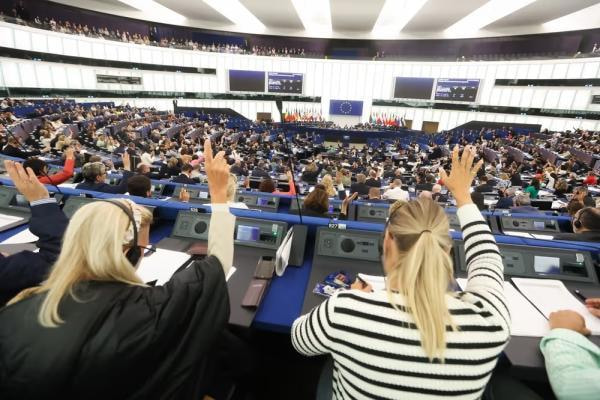
Vienna: It is one of the European Parliament’s least glamorous powers and among its most consequential. Each year the assembly decides whether to grant discharge, the formal sign-off confirming that the previous year’s EU budget was spent properly. This spring, after weeks of scrutiny in its budgetary control committee, Parliament approved the management of the 2024 budget, but it did so with the institutional equivalent of a raised eyebrow.

The headline decision was clear enough. MEPs signed off on the Commission’s handling of the budget, the body responsible for the lion’s share of EU spending, by 389 votes to 255 with three abstentions, and adopted the accompanying resolution by a wider margin. Discharge was granted to almost every EU body. The conspicuous exception was the Council, which Parliament once again declined to clear, citing the institution’s long-running refusal to cooperate fully with the assembly’s scrutiny, a standoff that has hardened into ritual.

What gives the vote its bite is the resolution that travels with it, the document where Parliament records its concerns. This year MEPs pointed bluntly at rule-of-law backsliding, systemic corruption and attacks on fundamental rights in several member states, warning that such conditions have a direct bearing on whether EU funds are spent soundly. The argument is not abstract. Money disbursed into a system where courts are compromised or oversight is weak is money exposed to misuse, and Parliament has grown increasingly willing to draw that connection explicitly.

The Recovery and Resilience Facility, the vast post-pandemic instrument that has channelled hundreds of billions to member states, drew particular fire. MEPs expressed deep concern about persistent shortcomings in how the facility is implemented and about what they called a significant accountability gap, stemming from incomplete information on who ultimately receives the funds. At the heart of the dispute is a technical-sounding but important disagreement over how the Commission defines a final recipient, a definition Parliament argues is at odds with existing legislation and which, in its view, obscures where the money actually lands.

Discharge is often dismissed as procedure, a backward-looking audit ritual with little practical effect. That underrates it. The annual exercise is one of the few moments when Parliament can hold the executive directly to account for the money it manages, and the conditions and criticisms attached to a clearance shape the following year’s behaviour. A discharge granted with caveats is a warning shot, and the Commission tends to respond to the specific failings the resolution names.

The episode also illustrates a broader shift in how the Union polices its own spending. The link between the rule of law and the budget, once a fringe argument, has become central, embedded in conditionality mechanisms that can freeze funds to governments that erode judicial independence. Parliament’s resolution is part of that architecture, a reminder issued in the dry language of budgetary control that money and governance cannot be cleanly separated.

For taxpayers across the bloc, the takeaway is modest but real. The 2024 accounts passed, but not without a documented list of where the Union believes its own house needs tidying, and a clear signal that next year’s sign-off will not be automatic.