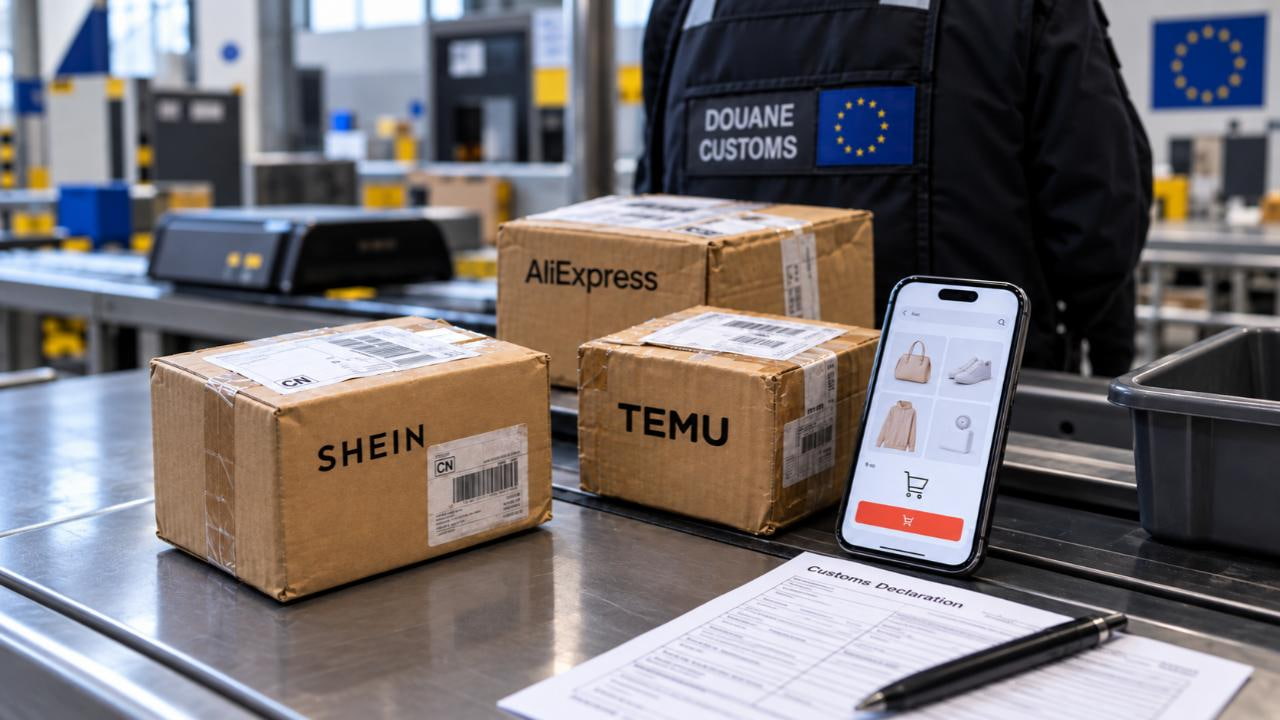
Warsaw: OLAF customs fraud investigations in the first half of 2026 show how a single smuggling route can cost EU and national budgets hundreds of millions of euros. The European Anti-Fraud Office reported on 28 April 2026 that a scheme at the Polish-Belarusian border evaded about 118 million euros in customs duties and about 79 million euros in value added tax, according to a summary of OLAF’s operational work from 15 January to 30 June 2026 published on 1 July.
The scheme worked through false transit confirmations. Goods imported from China were kept in Poland after documents claimed they had left, so importers avoided both duty and VAT. Belgium, Slovenia, Germany, Hungary and Poland were involved, and the European Public Prosecutor’s Office in Poland runs the criminal case while OLAF carries out complementary investigations.
A second case followed the same logic as the first OLAF customs fraud investigation. On 6 May 2026, Polish customs seized three containers holding almost 70,000 kilograms of textiles that had come from China and been declared as in transit to another country although they stayed in the EU. This kind of OLAF customs fraud relies on paperwork that says goods are elsewhere while they reach the shop shelf.
Textile waste drew attention in June. On 25 June, OLAF supported Italian and Turkish authorities in a case of textile waste shipped from Italy to Türkiye, allegedly to avoid EU recycling rules, and inspections found more waste in Turkish warehouses. The page does not give quantities beyond tons.
The office also reported results on products that harm consumers, and each OLAF customs fraud operation involved several countries. On 5 June it announced the seizure of 14,629 counterfeit truck parts made in Türkiye and shipped to Portugal, worth more than 600,000 euros. On 17 April it described the JCO VAPE operation, which seized more than 94 million e-cigarette and heated tobacco items between 14 November and 15 December 2025, with 23 member states and seven non-EU partners taking part.
Other cases cover waste and sanctions. In February, OLAF alerted authorities about hazardous steel by-product waste shipped from Albania to Thailand and declared as iron oxide. In January, it coordinated work on more than 760 used vehicles declared for Türkiye or other third countries that allegedly ended up in Russia, with criminal investigations in three member states.
The summary gives no total for investigations opened or closed and no figure for money recommended for recovery, so readers cannot yet compare the first half of 2026 with earlier years. What the cases do show is the pattern behind OLAF customs fraud: falsified transit records, mislabelled goods and cross-border chains that no single customs service can follow alone.
The next test is whether the customs reform and the planned EU data hub close those gaps. Until shared data lets officers see a consignment from the Chinese factory to the Polish warehouse, OLAF customs fraud will keep exploiting the space between national systems.