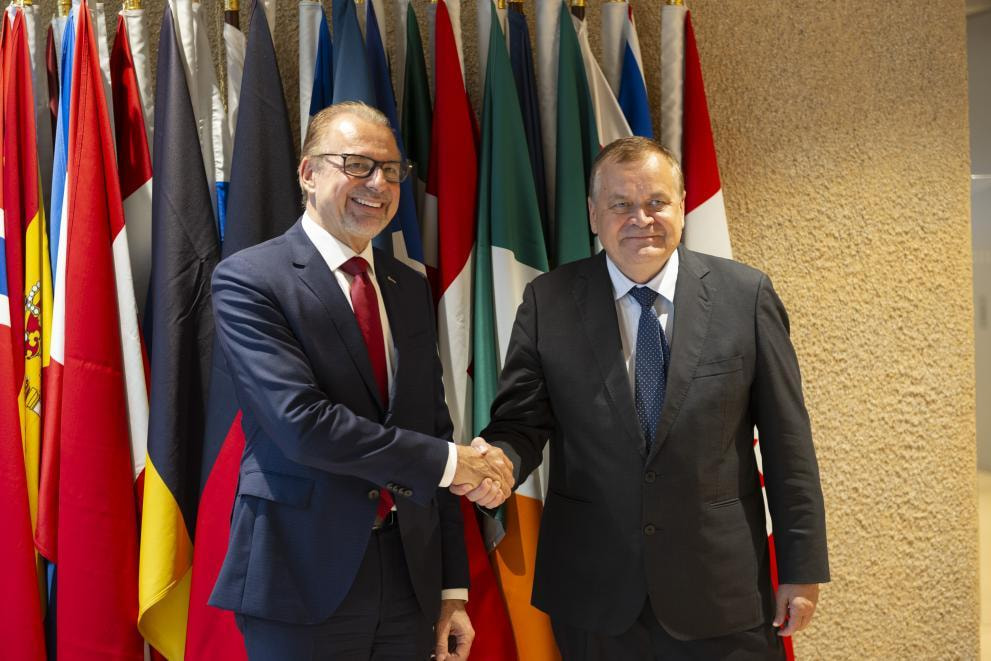
Toulouse: Europe’s aerospace capital is watching closely as the union pushes its answer to Starlink from blueprint into hardware. On 7 August 2026 the European Commission and the SpaceRISE consortium signed an implementation agreement to roll out IRIS2, the bloc’s flagship secure connectivity constellation, moving the project from planning into full-scale construction.
The deal enlarges the network sharply. Engineers will add 66 spacecraft to low Earth orbit, lifting the main constellation to 348 satellites, of which 330 will sit in higher low Earth orbit and 18 in medium Earth orbit. Launches will proceed in successive phases, and the Commission has stressed that the bigger fleet buys extra resilience and coverage rather than mere prestige.
Security drove much of the redesign. The reinforced system folds in a stronger encryption layer intended to guard government communications against interception, and it reserves capacity for defence, border surveillance and crisis response alongside commercial broadband. Planners want a network that keeps working when terrestrial cables are cut or jammed, a concern sharpened by recent sabotage scares around undersea infrastructure.
The ambition carries a heavier bill. Earlier estimates pencilled in roughly 290 satellites for about 10.55 billion euros, but the expanded design now points to at least 348 spacecraft and a cost near 15.6 billion euros. Officials insist that public and private money will share the load, and that the constellation will pay its way through services sold to companies and public users once it flies.
Timelines remain tight. The first launch is targeted for 2029, with full operational capability expected in 2030, leaving little slack if suppliers stumble or launch slots slip. The programme depends on a healthy European launcher industry to loft hundreds of satellites within a few short years.
The EU Agency for the Space Programme will shape how governments actually use the system. Its remit covers service delivery for public users, security accreditation and the collection of user needs, and it will manage those services once the network is live. That role builds on the agency’s experience running Galileo and Copernicus, two programmes that turned European space policy from aspiration into daily utility.
Critics question whether the bloc can hold costs and schedules in check on a project of this scale, and whether demand will match the vast capacity being built. Supporters counter that strategic autonomy in orbit is no longer optional. The Commission has laid out the accelerated plan in its defence and space briefing, and for Toulouse the message is plain: the work is now real.