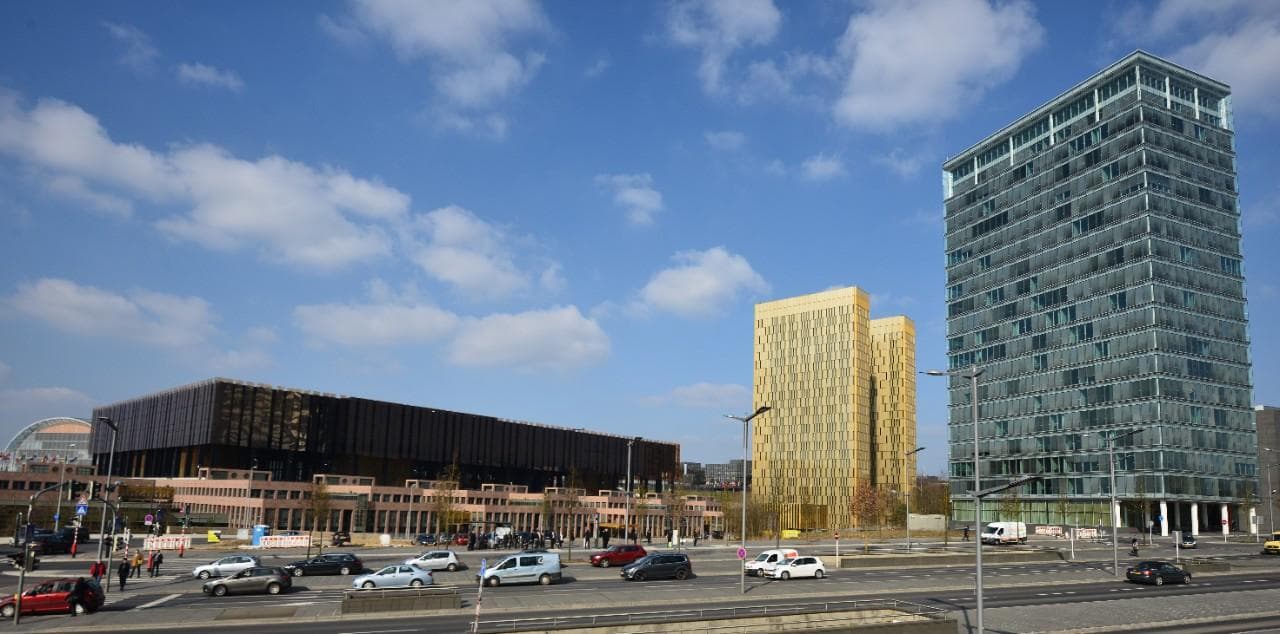
Luxembourg: From the glass towers that house Eurostat, the European Union’s statisticians have just delivered a portrait of a continent that is, on paper, growing richer while its engine sputters. Two releases issued within days of each other in early June capture the paradox. The bloc’s gross domestic product per head climbed to 41,650 euros at current prices in 2025, up from 39,980 euros the year before, even as the quarterly national accounts showed the economy losing rather than gaining momentum at the start of 2026.
The headline number is flattering, and deceptively so. Output per capita expressed in current prices folds together two very different things, how much more the bloc actually produced, and how much prices rose. Strip inflation away and the underlying picture is far more sober. Eurostat’s volume measures show the EU economy barely treading water, with growth registering a fraction of a percentage point in the better quarters and slipping into mild contraction in others. A nominal gain of more than four percent in income per head can coexist, in other words, with an economy that is producing almost exactly what it did a year ago.
The labour market is what keeps the story from turning grim. Roughly 221 million people were employed across the Union in the first quarter of 2026, a record that has held remarkably firm through a period of stagnant demand and elevated borrowing costs. Employment has, unusually, outpaced output, which is another way of saying that productivity, the amount each worker generates per hour, is going nowhere. That is the quiet anxiety beneath the cheerful per-capita figure. A rich society that stops becoming more productive eventually stops becoming richer.
Why this matters extends well beyond the statisticians’ spreadsheets. The per-capita figure is the denominator in dozens of consequential calculations. It determines which regions qualify for cohesion transfers, how national contributions to the EU budget are weighted, and where the bloc sits in the global league tables it watches nervously against the United States and China. When the gap between nominal wealth and real output widens, every one of those judgments rests on shakier ground.
The divergence across member states compounds the problem. The single average masks economies that have pulled sharply apart since the pandemic, with parts of the south and east still closing the distance to a wealthy core that is itself slowing. A bloc-wide mean of 41,650 euros tells a citizen in a lagging region very little about their own prospects.
What comes next is a test of interpretation as much as policy. The Commission will lean on these numbers to argue for its competitiveness agenda, for deeper capital markets and for the productivity-boosting investment it says Europe has deferred for too long. Sceptics will note that rising income per head, however thin its real basis, makes the case for urgent reform harder to sell to electorates who feel reasonably comfortable. The figures, in the end, are neutral. The argument over what they mean is anything but, and it is only beginning.