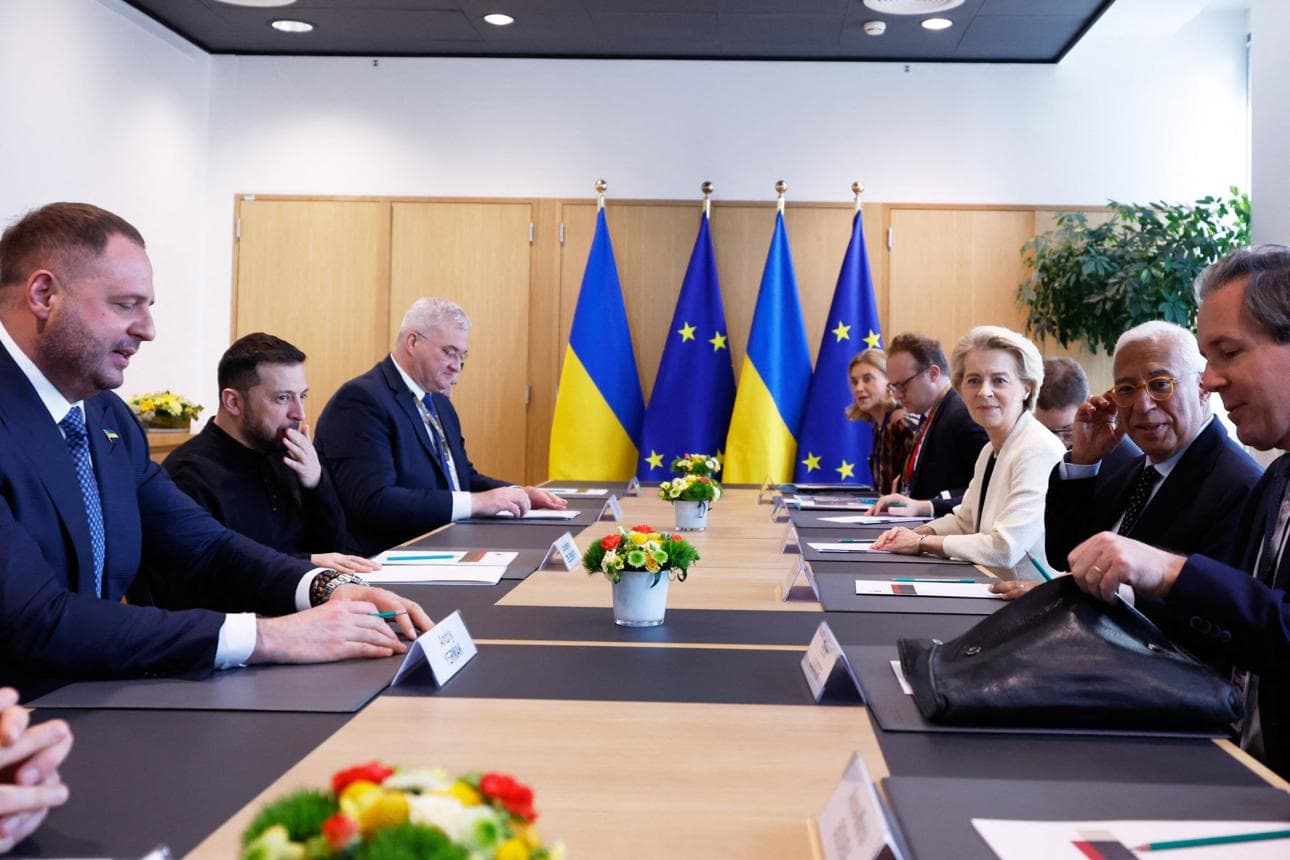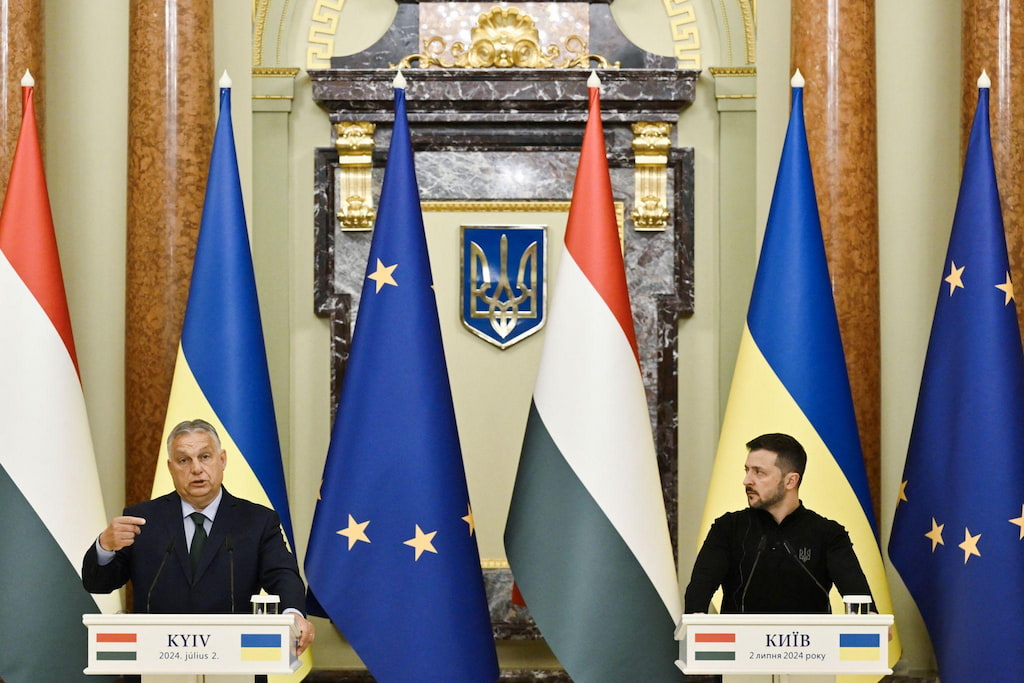
Budapest: For nearly two years the road to European Union membership for Ukraine and Moldova ran through a single capital, and that capital said no. Hungary’s veto kept the formal opening and closing of accession chapters frozen even after both countries completed the technical screening of their laws against the Union’s rulebook in September 2025. The change of government in Budapest, with Peter Magyar replacing Viktor Orban as prime minister in early May, has revived a hope in Brussels that had become almost theological: that enlargement might finally move from rhetoric to procedure. The hope is real. It is also fragile.
The mechanics explain why. Accession negotiations are organised into clusters of policy chapters, and opening each one requires the unanimous consent of all member states. Orban’s objection, framed around the rights of the Hungarian minority in western Ukraine, was enough to hold the entire process hostage despite overwhelming support among the other twenty-six governments. To work around the blockage, the Union resorted in March to an informal opening of all chapters, a diplomatic improvisation that let technical work continue while the legal acts remained unsigned. That workaround kept momentum alive but produced nothing binding. Only a lifting of the veto converts it into genuine progress.
Whether Magyar provides that lifting is the question Brussels cannot yet answer. The new prime minister rode to power on domestic discontent rather than on a pro-enlargement platform, and officials who have watched him closely note that he has been as forceful as his predecessor on the treatment of Hungarian minorities abroad, including in Slovakia. A government can change its leader without changing its national interest, and the minority question that Orban weaponised remains a live grievance that any Hungarian premier can invoke. The optimistic reading is that Magyar lacks Orban’s strategic investment in obstructing the Union and may trade his consent for concessions elsewhere. The cautious reading is that he has simply inherited a useful lever and will not surrender it cheaply.
The stakes extend well beyond two applicant countries. Ukraine and Moldova have set themselves the target of concluding negotiations by 2028 and joining by 2030, dates that are ambitious even with a cooperative Hungary and impossible without one. Kyiv’s accession, in particular, has become inseparable from the wider Western strategy of anchoring Ukraine inside European institutions as a guarantee of its post-war future. Every month the chapters stay formally closed is a month in which that anchor fails to set, and in which sceptics across the Union can argue that enlargement is a promise Europe makes but does not keep.
There is a structural lesson in the episode that will outlast the personalities involved. The unanimity rule gives every member state a veto over enlargement, which means the Union’s most consequential foreign-policy instrument can be paralysed by the narrowest of national interests. Reform proposals to move parts of the process to qualified-majority voting have circulated for years, but they founder on the same obstacle they aim to fix: changing the rule requires the unanimity it seeks to dilute. Until that knot is cut, the credibility of European enlargement will depend less on the merits of candidate countries than on the domestic politics of whichever capital chooses to object.
For Ukraine and Moldova, the immediate task is to keep delivering on the reforms the screening identified, so that when the political window opens the technical case is unanswerable. Both have made measurable progress on the rule of law, anti-corruption institutions and judicial independence, the chapters that matter most to wary member states. That work is not wasted even while the chapters remain formally shut, because it narrows the space for any government to claim the candidates are unready. The harder variable is Budapest. A new prime minister has reopened a door that a previous one bolted, but reopening is not the same as walking through. Brussels has learned to distinguish between the two, and it is watching to see which this turns out to be.