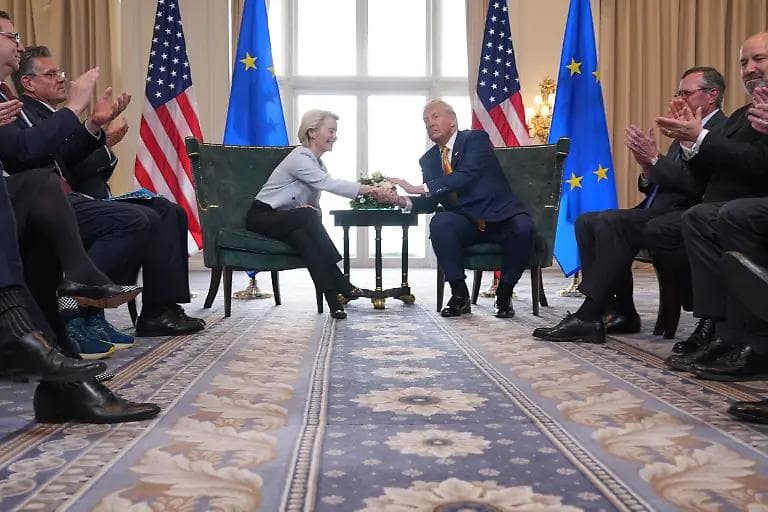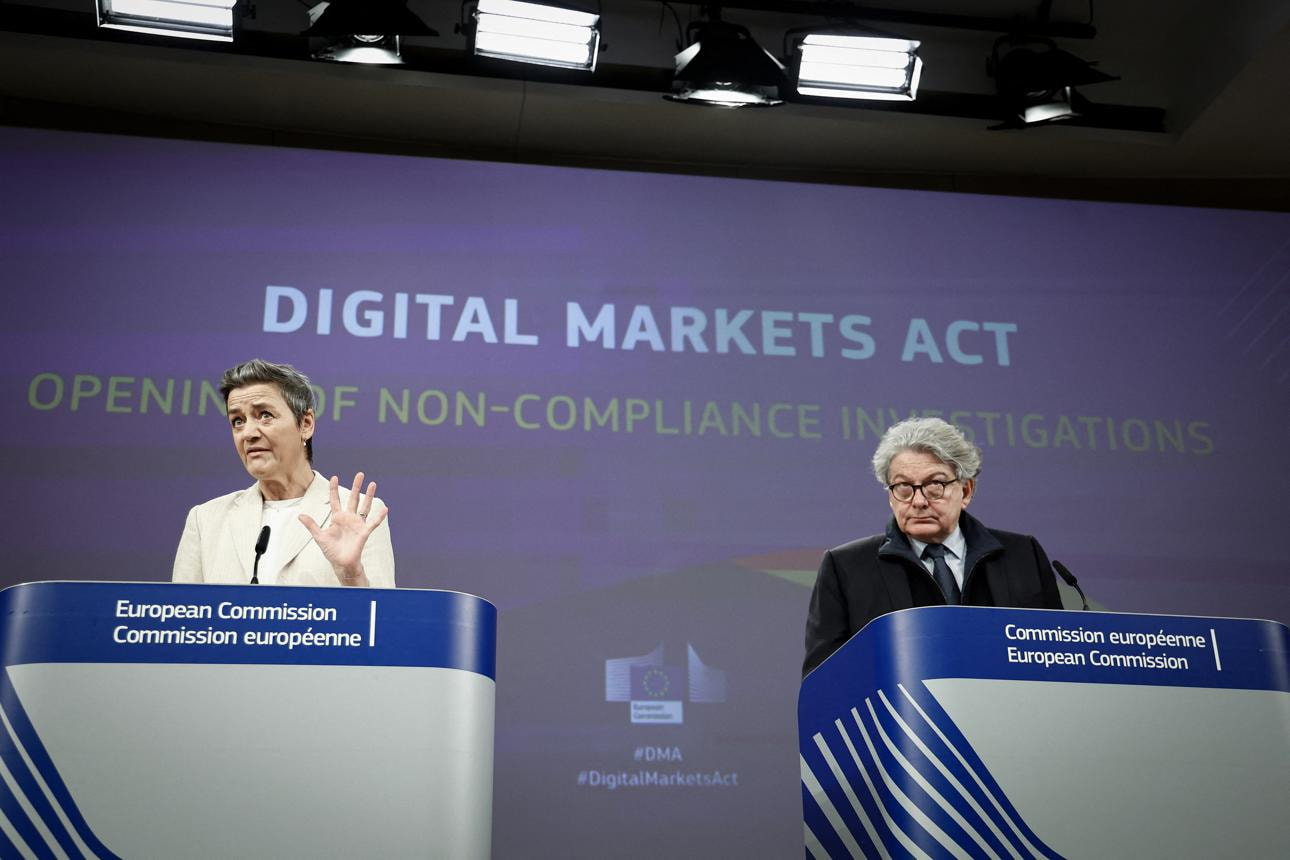
Brussels: The European Union has now completed the legislative work needed to honour its side of the transatlantic tariff bargain, and the conditions it attached say as much about Brussels’ confidence in the deal as the concessions themselves. On 25 June 2026 the Council gave final approval to two regulations implementing the tariff commitments set out in the EU-US Joint Statement of August 2025, following Parliament’s approval of the trilogue agreement on 16 June. The headline is liberalisation. The fine print is insurance.
The main regulation eliminates remaining EU customs duties on US industrial goods and grants preferential access for selected US products, including tariff-rate quotas and reduced tariffs on certain seafood and non-sensitive agricultural goods. A second, narrower regulation extends a duty suspension on lobster imports, including processed lobster, on a most-favoured-nation basis. On their face these are textbook trade-opening measures, the kind the EU has historically championed. What makes the package distinctive is the architecture the co-legislators bolted on around it.
Parliament and Council strengthened the main regulation with a reinforced safeguard mechanism, tougher suspension-clause provisions and a sunset clause that ends the regulation at the close of 2029. Read together, these are not the instincts of a partner that expects smooth sailing. They are the hedges of one preparing for the possibility that the other side does not keep its word. The suspension clause empowers the Commission to roll back the concessions if Washington fails to deliver on its own commitments, converting what could have been a static giveaway into a conditional, revocable one.
This conditionality is the analytically interesting part. Trade liberalisation usually aspires to permanence, because predictability is precisely what gives tariff cuts their economic value. Investors and exporters plan around stability. By writing in a 2029 expiry and an explicit reversal trigger, the EU has deliberately traded some of that predictability for leverage. The message to Washington is that European market access is contingent on reciprocity and time-limited by default, requiring renewal rather than continuing automatically. It is a defensive posture embedded in an ostensibly cooperative instrument.
The design reflects hard lessons. Transatlantic trade relations have been turbulent, with tariff threats deployed as routine bargaining tools and framework agreements proving only as durable as the political will behind them. A sunset clause forces a future review at which the EU can reassess whether the bargain still serves its interests, rather than being locked into terms negotiated under different conditions. The safeguard mechanism, meanwhile, gives the Commission a faster route to act if import surges harm European producers, addressing the domestic constituencies, particularly in agriculture and fisheries, most wary of opening to US competition.
There are costs to this hedged approach. Conditionality can dampen the very investment and trade flows the agreement is meant to unlock, because firms discount benefits that might expire or reverse. US negotiators may read the safeguards as evidence of bad faith, complicating future rounds. And a sunset clause guarantees the issue returns to a crowded legislative agenda in a few years, with no certainty the political constellation will favour renewal. The EU has bought flexibility at the price of finality.
Yet the calculus is defensible given the counterparty and the climate. The EU is liberalising in a relationship where it cannot assume durable reciprocity, and where the alternative to a conditional deal might have been a worse unconditional one or no deal at all. Structuring the concessions as revocable and time-bound lets Brussels demonstrate good faith on tariffs while retaining tools to respond if cooperation falters. It is a characteristically European compromise, combining openness in principle with caution in execution.
The lobster provision, modest as it is, captures the spirit neatly. Extending the suspension on a most-favoured-nation basis means the benefit is not exclusive to the United States, diluting any impression that the EU is granting bespoke favours. The broader package follows the same logic of measured generosity. Brussels has opened the door to US goods, but it has kept a hand on the latch, and it has put a date on the lease.