The European Research Council has handed €838 million to 319 senior scientists in its latest Advanced Grants round, and the figures underneath that headline say more about the continent’s anxieties than its confidence. The competition drew 3,329 proposals, a 31 percent jump on the previous cycle, while the success rate fell to 9.6 percent. When demand for a fixed pot of money surges by nearly a third in a single year, the pressure valve is not generosity but rejection. More than nine in ten of Europe’s most established researchers asked for backing and were turned away.
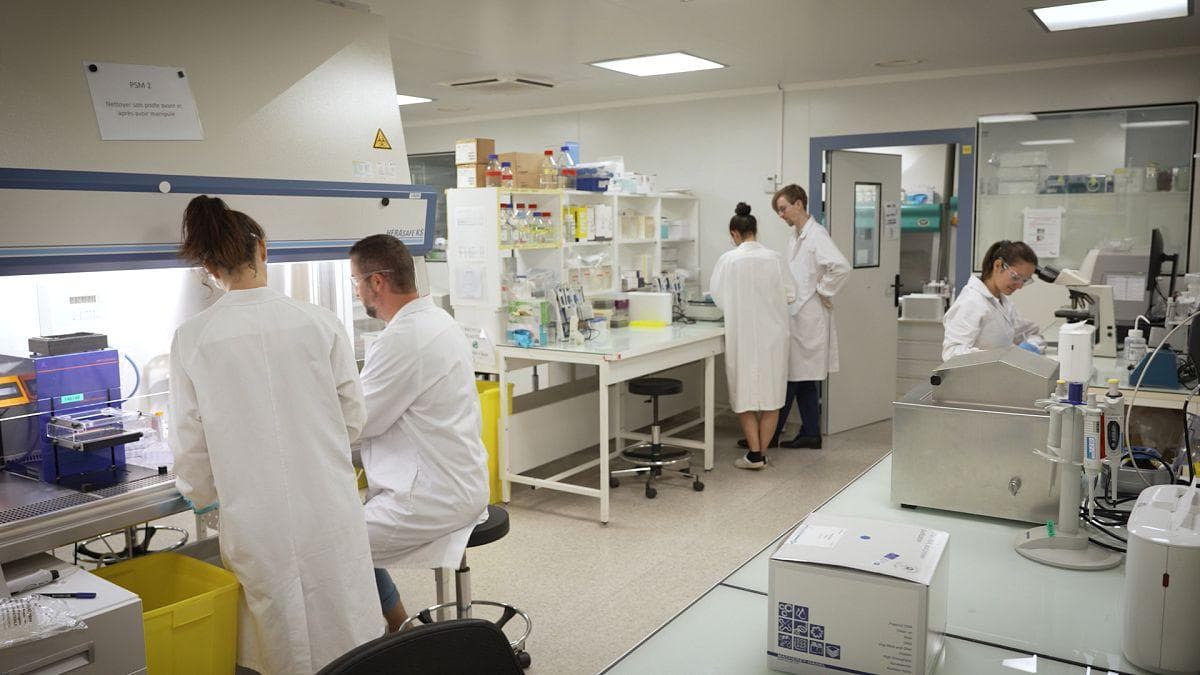
The Advanced Grants are the upper tier of the ERC ladder, reserved for principal investigators with a decade or more of high-impact work behind them. They sit within Horizon Europe and exist to fund the kind of curiosity-driven, high-risk inquiry that national agencies, with their tighter accountability cultures, tend to avoid. A single award can reach €2.5 million over five years, enough to staff a laboratory and chase a question for the better part of a research generation. That is why the scheme functions as a barometer. When senior scientists crowd the door, it signals that other funding channels are tightening underneath them.
The geographic breakdown is where the politics becomes visible. The United Kingdom led with 62 awards, ahead of Germany with 46, Switzerland with 32, Spain with 29 and France with 26. Two of those three leaders, the UK and Switzerland, are not EU member states but associated countries paying in for access. Their dominance is a quiet rebuke to the idea that membership and scientific weight move together. It also complicates the Union’s habit of treating research excellence as a federal achievement, when much of the measured output is being produced just outside the federal perimeter.
The most telling detail concerns mobility. Thirteen grantees are currently based outside Europe, including nine in the United States, and seven of them are using the Commission’s Choose Europe initiative to relocate their laboratories onto European soil. The programme was built to capitalise on turbulence in American science funding, and a single cohort of returnees is too small to call it a reversal of the long brain drain across the Atlantic. But it is a measurable beginning, and it reframes the €838 million as something more strategic than a prize fund. Brussels is using research money as an instrument of talent geopolitics, betting that disruption elsewhere can be converted into permanent capacity at home.
The harder question is whether the supply of money can keep pace with the demand it is now attracting. A 31 percent rise in applications against a roughly flat budget mechanically depresses success rates, and low success rates carry their own costs. Each rejected proposal represents weeks of senior researcher time and, more corrosively, a growing perception that the lottery odds no longer justify the effort. Funding bodies that fall below ten percent acceptance risk discouraging exactly the ambitious, unconventional applications they were designed to reward, because cautious incremental projects start to look like the safer bet.
There is also the matter of concentration. Awards clustering in a handful of wealthy research systems reinforces an existing divide between Europe’s scientific core and its periphery. The ERC defends this as pure merit selection, and on its own terms that is correct. But a Union that funds excellence wherever it already exists, without parallel investment in the places that lack it, will keep widening the gap it periodically promises to close.
For now the announcement reads as a success, and by the narrow metric of attracting talent it is one. The deeper signal is that European science is being asked to do more with a budget that is not growing in step. The €838 million buys 319 laboratories and a handful of high-profile returns from across the Atlantic. Whether it buys a durable answer to the continent’s research-funding squeeze is a question this round leaves firmly open.