August 9, 2026
LATEST
New EU Gas Market Rules Take Effect With Consumer SafeguardsDeforestation Regulation Holds Its December Deadline Despite CutsDigital Omnibus Delays Europe’s High-Risk AI Deadline to 2027Europe’s Schools Confront a Widening Basic Skills GapRule of Law Report Finds Progress but Trust Still LagsIRIS2 Gains 66 Satellites as Brussels Signs the Rollout DealNature Restoration Plans Come Due as Member States Race a DeadlineECB Rates Hold at 2.25 Percent as Frankfurt Waits on the DataEU Budget Talks Turn to Cohesion as Ireland Takes OverWildfire Response Stretches Europe’s Emergency Fleet ThinCan Europe’s Quantum Plan Match Its Big Ambitions?Armenia Edges West as Moscow’s Grip Slips AwayEurope Inherits the World’s Aid Bill It Cannot Fully PayAir Passenger Rights Get Their First Overhaul in Two DecadesErasmus Opens a 5 Billion Euro Round for Skills and MobilityCeuta Crisis Pushes the EU Toward Faster Migrant ReturnsBulky Parcels Face a Packaging Crackdown From August 12Can Europe Build Its Drone Wall Before 2030 Arrives?Indonesia’s Trade Deal With Europe Nears Its Final SignatureEurope Leans on Beijing to Keep Climate Talks Alive Before AntalyaNew EU Gas Market Rules Take Effect With Consumer SafeguardsDeforestation Regulation Holds Its December Deadline Despite CutsDigital Omnibus Delays Europe’s High-Risk AI Deadline to 2027Europe’s Schools Confront a Widening Basic Skills GapRule of Law Report Finds Progress but Trust Still LagsIRIS2 Gains 66 Satellites as Brussels Signs the Rollout DealNature Restoration Plans Come Due as Member States Race a DeadlineECB Rates Hold at 2.25 Percent as Frankfurt Waits on the DataEU Budget Talks Turn to Cohesion as Ireland Takes OverWildfire Response Stretches Europe’s Emergency Fleet ThinCan Europe’s Quantum Plan Match Its Big Ambitions?Armenia Edges West as Moscow’s Grip Slips AwayEurope Inherits the World’s Aid Bill It Cannot Fully PayAir Passenger Rights Get Their First Overhaul in Two DecadesErasmus Opens a 5 Billion Euro Round for Skills and MobilityCeuta Crisis Pushes the EU Toward Faster Migrant ReturnsBulky Parcels Face a Packaging Crackdown From August 12Can Europe Build Its Drone Wall Before 2030 Arrives?Indonesia’s Trade Deal With Europe Nears Its Final SignatureEurope Leans on Beijing to Keep Climate Talks Alive Before Antalya
August 9, 2026
LATEST
New EU Gas Market Rules Take Effect With Consumer SafeguardsDeforestation Regulation Holds Its December Deadline Despite CutsDigital Omnibus Delays Europe’s High-Risk AI Deadline to 2027Europe’s Schools Confront a Widening Basic Skills GapRule of Law Report Finds Progress but Trust Still LagsIRIS2 Gains 66 Satellites as Brussels Signs the Rollout DealNature Restoration Plans Come Due as Member States Race a DeadlineECB Rates Hold at 2.25 Percent as Frankfurt Waits on the DataEU Budget Talks Turn to Cohesion as Ireland Takes OverWildfire Response Stretches Europe’s Emergency Fleet ThinCan Europe’s Quantum Plan Match Its Big Ambitions?Armenia Edges West as Moscow’s Grip Slips AwayEurope Inherits the World’s Aid Bill It Cannot Fully PayAir Passenger Rights Get Their First Overhaul in Two DecadesErasmus Opens a 5 Billion Euro Round for Skills and MobilityCeuta Crisis Pushes the EU Toward Faster Migrant ReturnsBulky Parcels Face a Packaging Crackdown From August 12Can Europe Build Its Drone Wall Before 2030 Arrives?Indonesia’s Trade Deal With Europe Nears Its Final SignatureEurope Leans on Beijing to Keep Climate Talks Alive Before AntalyaNew EU Gas Market Rules Take Effect With Consumer SafeguardsDeforestation Regulation Holds Its December Deadline Despite CutsDigital Omnibus Delays Europe’s High-Risk AI Deadline to 2027Europe’s Schools Confront a Widening Basic Skills GapRule of Law Report Finds Progress but Trust Still LagsIRIS2 Gains 66 Satellites as Brussels Signs the Rollout DealNature Restoration Plans Come Due as Member States Race a DeadlineECB Rates Hold at 2.25 Percent as Frankfurt Waits on the DataEU Budget Talks Turn to Cohesion as Ireland Takes OverWildfire Response Stretches Europe’s Emergency Fleet ThinCan Europe’s Quantum Plan Match Its Big Ambitions?Armenia Edges West as Moscow’s Grip Slips AwayEurope Inherits the World’s Aid Bill It Cannot Fully PayAir Passenger Rights Get Their First Overhaul in Two DecadesErasmus Opens a 5 Billion Euro Round for Skills and MobilityCeuta Crisis Pushes the EU Toward Faster Migrant ReturnsBulky Parcels Face a Packaging Crackdown From August 12Can Europe Build Its Drone Wall Before 2030 Arrives?Indonesia’s Trade Deal With Europe Nears Its Final SignatureEurope Leans on Beijing to Keep Climate Talks Alive Before Antalya

Europe Widens Its Carbon Border Tax to 400 Metal Goods

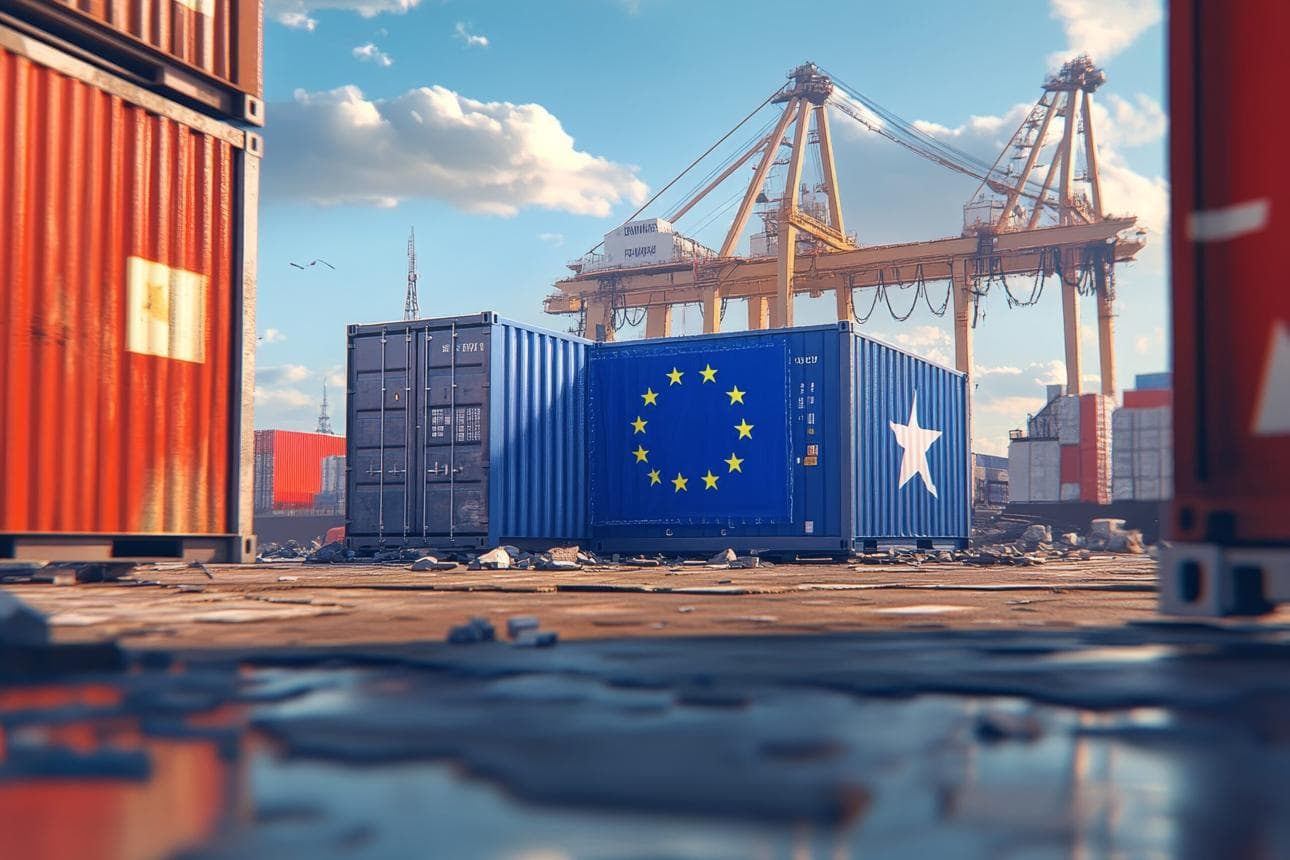
Brussels: The European Parliament’s environment committee has pushed the European Union’s carbon border levy far beyond the raw materials it was built to police, voting on 6 July to extend the Carbon Border Adjustment Mechanism to more than 400 downstream product codes. Lawmakers backed the expansion by 56 votes to 11, with 12 abstentions, and endorsed a Temporary Decarbonisation Fund to cushion the industries caught in the transition.

The original mechanism, which began collecting charges in 2026, targets carbon-heavy imports such as steel, aluminium, cement, fertilisers and hydrogen. Importers of finished goods, however, sat outside its reach. A European buyer paid the carbon price on imported steel but not on the imported bolts, screws, springs, wire and household articles fashioned from that same steel. Manufacturers warned that the gap invited a quiet migration of production abroad, where the carbon bill vanished.

Closing the downstream loophole

The committee’s answer widens the net to fasteners, tubes, wire and a long list of everyday metal goods. MEPs also tightened the anti-circumvention language, clarifying that a ban on “slightly modifying” products should also capture “slight processing” – a phrase aimed at exporters who add a trivial finishing step to dodge the tariff. The details matter because a finished component embeds far more processing than a slab of raw metal, and the carbon accounting grows correspondingly harder.

Lawmakers rejected the Commission’s idea of pulling products out of scope during price shocks. They proposed instead that revenue raised from an affected sector could flow temporarily back to it, preserving the levy’s coverage while offering relief when markets spike. That redirection sits alongside the Temporary Decarbonisation Fund, which the committee wants running from 2027 to 2029 rather than 2028, channelling CBAM revenue into decarbonisation investment for energy-intensive plants.

The politics ahead

Industry reaction splits along predictable lines. Steelmakers welcome protection that follows their products down the value chain, while carmakers and other assemblers fear rising input costs and a thicket of compliance paperwork. The European carmakers’ association has already flagged the administrative load, arguing that the mechanism’s complexity risks outrunning its climate benefit.

Parliament expects to adopt its full negotiating position at the September plenary, after which talks with member states begin in earnest. The stakes reach past metals. The carbon border levy is the enforcement arm of Europe’s climate ambition, the tool that stops domestic carbon pricing from simply exporting emissions and jobs. If the downstream extension holds, the levy evolves from a narrow border charge into a structural feature of European industrial policy. Readers can follow the file through the Commission’s CBAM portal and the Parliament’s environment committee.

The unresolved question is whether Europe can price carbon at its border without pricing its manufacturers out of their own supply chains. Widening the scope answers the leakage problem but multiplies the burden on thousands of importers who have never touched a carbon form. The autumn negotiations will test whether the Parliament’s ambition survives contact with the member states that must collect the money. Analysts note that the design also reshapes trade incentives well beyond the bloc, since exporters in Turkey, India and China now weigh whether to green their own production or surrender margin at the European border.