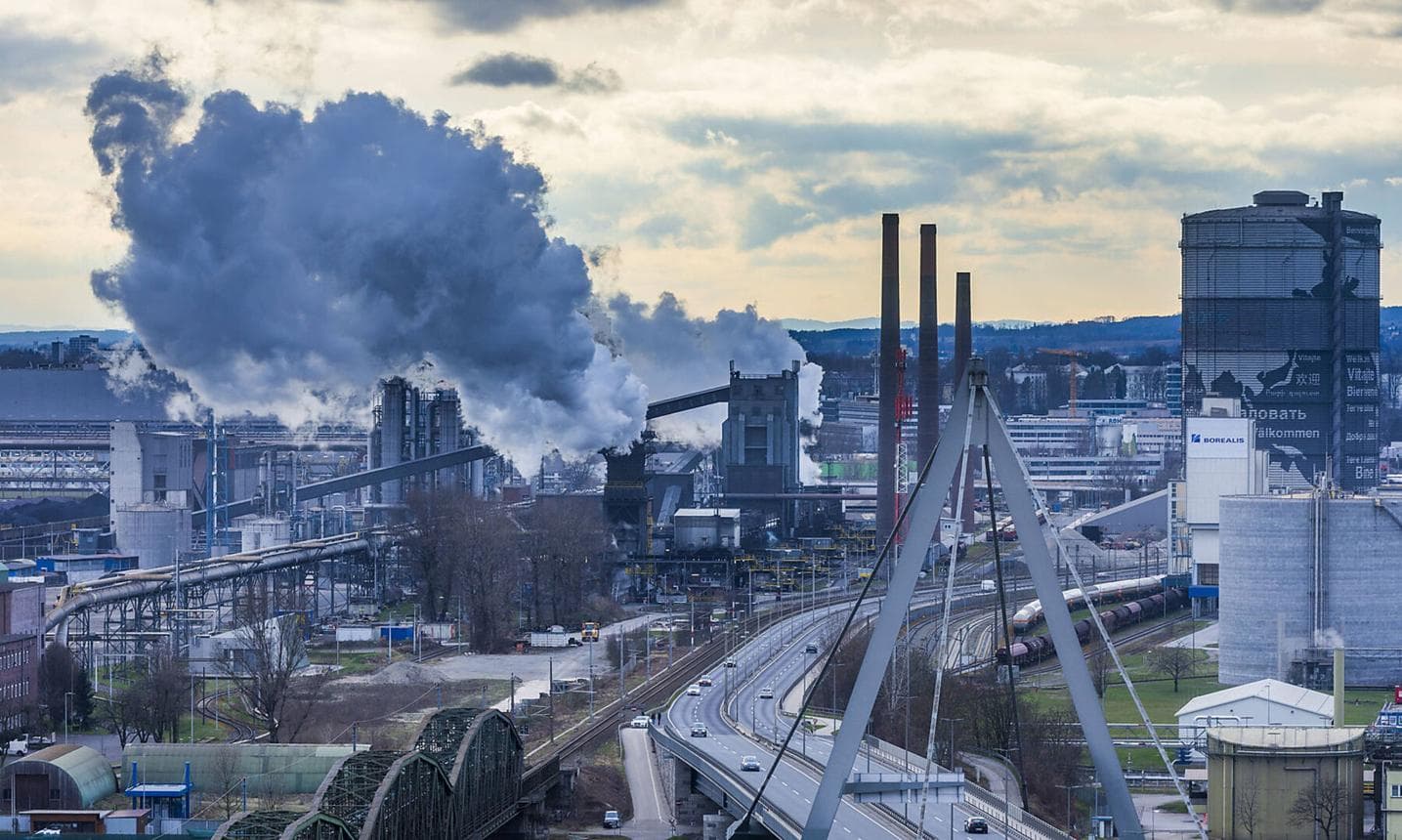
Linz: The steelworks on the Danube here has spent a decade preparing for a rule that only now acquires a price. Europe’s carbon border adjustment mechanism entered its definitive phase on 1 January 2026 under Regulation 2023/956, yet no importer has paid a cent under it. That changes in February 2027, when the European Commission begins selling CBAM certificates, and again on 30 September 2027, when the first annual declaration falls due for goods brought in during 2026.
The mechanism covers cement, iron and steel, aluminium, fertilisers, electricity and hydrogen. Anyone importing those goods into the customs territory must already hold the status of authorised CBAM declarant. The certificate price tracks the weekly average auction price of EU emissions allowances, so the bill arriving next year reflects what European producers paid throughout 2026, not what the carbon market does when the invoice lands.
The threshold that reshaped who pays
The most consequential design choice in the whole file is a number rather than a principle. A single mass-based de minimis threshold exempts any importer bringing in less than 50 tonnes of covered goods a year. The Commission calculates that this releases roughly 90 percent of importers from the regime while preserving coverage of about 99 percent of the embedded emissions the mechanism was built to price. The definitive regime rules set out the compliance architecture that follows from it.
That ratio deserves more attention than it has received. It tells us that carbon-intensive imports into the Union are extraordinarily concentrated. A handful of large traders, integrated steel buyers and fertiliser distributors account for almost the entire environmental footprint of the covered trade. The long tail of small importers, workshops ordering aluminium profiles, builders buying a pallet of cement, contributes a rounding error in tonnes of carbon and a mountain of paperwork.
Policymakers who spent 2023 and 2024 arguing about administrative burden effectively discovered that they could drop most of the burden without dropping the policy. That is an unusually clean result. It also carries a warning. If 10 percent of importers carry 99 percent of the emissions, then the compliance capacity of a very small number of firms determines whether the mechanism works at all.
What the design still leaves open
Cash flow rules soften the first years. Authorised declarants must hold certificates covering at least 50 percent of their emissions to date at the close of each quarter, a figure trimmed from the 80 percent originally planned. Firms therefore carry a lighter working-capital charge than the early drafts implied, and treasurers gain room to buy certificates when the allowance price suits them rather than on a fixed schedule.
Three questions remain unresolved. The first concerns downstream products. A rolled steel coil crossing the border pays; a finished machine containing the same steel does not. Every month that gap stays open invites importers to move one step along the value chain and buy the assembled good instead. The Commission has signalled it will extend scope, but extension means new emissions accounting for products with many components and many origins.
The second question concerns exports. European producers selling outside the Union still buy allowances for their own emissions and meet competitors who do not. The mechanism protects the domestic market and does nothing for the export market, which for Austrian, Slovak and Spanish steel is a substantial share of output.
The third question is arithmetical and political at once. Free allocation of allowances to the covered sectors phases out as the border charge phases in. The two curves must meet cleanly or European producers face double protection in one year and none in the next. Industry associations have asked for the transition to be modelled openly; so far the modelling sits mostly inside the Commission.
None of this makes the mechanism unworkable. It makes 2027 the year Europe finds out whether a carbon price at the border behaves like a tariff, a tax or an accounting exercise. The answer will show up first in the certificate sales that open in February, and then in whether the 10 percent of importers who matter file on time in September.