August 9, 2026
LATEST
New EU Gas Market Rules Take Effect With Consumer SafeguardsDeforestation Regulation Holds Its December Deadline Despite CutsDigital Omnibus Delays Europe’s High-Risk AI Deadline to 2027Europe’s Schools Confront a Widening Basic Skills GapRule of Law Report Finds Progress but Trust Still LagsIRIS2 Gains 66 Satellites as Brussels Signs the Rollout DealNature Restoration Plans Come Due as Member States Race a DeadlineECB Rates Hold at 2.25 Percent as Frankfurt Waits on the DataEU Budget Talks Turn to Cohesion as Ireland Takes OverWildfire Response Stretches Europe’s Emergency Fleet ThinCan Europe’s Quantum Plan Match Its Big Ambitions?Armenia Edges West as Moscow’s Grip Slips AwayEurope Inherits the World’s Aid Bill It Cannot Fully PayAir Passenger Rights Get Their First Overhaul in Two DecadesErasmus Opens a 5 Billion Euro Round for Skills and MobilityCeuta Crisis Pushes the EU Toward Faster Migrant ReturnsBulky Parcels Face a Packaging Crackdown From August 12Can Europe Build Its Drone Wall Before 2030 Arrives?Indonesia’s Trade Deal With Europe Nears Its Final SignatureEurope Leans on Beijing to Keep Climate Talks Alive Before AntalyaNew EU Gas Market Rules Take Effect With Consumer SafeguardsDeforestation Regulation Holds Its December Deadline Despite CutsDigital Omnibus Delays Europe’s High-Risk AI Deadline to 2027Europe’s Schools Confront a Widening Basic Skills GapRule of Law Report Finds Progress but Trust Still LagsIRIS2 Gains 66 Satellites as Brussels Signs the Rollout DealNature Restoration Plans Come Due as Member States Race a DeadlineECB Rates Hold at 2.25 Percent as Frankfurt Waits on the DataEU Budget Talks Turn to Cohesion as Ireland Takes OverWildfire Response Stretches Europe’s Emergency Fleet ThinCan Europe’s Quantum Plan Match Its Big Ambitions?Armenia Edges West as Moscow’s Grip Slips AwayEurope Inherits the World’s Aid Bill It Cannot Fully PayAir Passenger Rights Get Their First Overhaul in Two DecadesErasmus Opens a 5 Billion Euro Round for Skills and MobilityCeuta Crisis Pushes the EU Toward Faster Migrant ReturnsBulky Parcels Face a Packaging Crackdown From August 12Can Europe Build Its Drone Wall Before 2030 Arrives?Indonesia’s Trade Deal With Europe Nears Its Final SignatureEurope Leans on Beijing to Keep Climate Talks Alive Before Antalya
August 9, 2026
LATEST
New EU Gas Market Rules Take Effect With Consumer SafeguardsDeforestation Regulation Holds Its December Deadline Despite CutsDigital Omnibus Delays Europe’s High-Risk AI Deadline to 2027Europe’s Schools Confront a Widening Basic Skills GapRule of Law Report Finds Progress but Trust Still LagsIRIS2 Gains 66 Satellites as Brussels Signs the Rollout DealNature Restoration Plans Come Due as Member States Race a DeadlineECB Rates Hold at 2.25 Percent as Frankfurt Waits on the DataEU Budget Talks Turn to Cohesion as Ireland Takes OverWildfire Response Stretches Europe’s Emergency Fleet ThinCan Europe’s Quantum Plan Match Its Big Ambitions?Armenia Edges West as Moscow’s Grip Slips AwayEurope Inherits the World’s Aid Bill It Cannot Fully PayAir Passenger Rights Get Their First Overhaul in Two DecadesErasmus Opens a 5 Billion Euro Round for Skills and MobilityCeuta Crisis Pushes the EU Toward Faster Migrant ReturnsBulky Parcels Face a Packaging Crackdown From August 12Can Europe Build Its Drone Wall Before 2030 Arrives?Indonesia’s Trade Deal With Europe Nears Its Final SignatureEurope Leans on Beijing to Keep Climate Talks Alive Before AntalyaNew EU Gas Market Rules Take Effect With Consumer SafeguardsDeforestation Regulation Holds Its December Deadline Despite CutsDigital Omnibus Delays Europe’s High-Risk AI Deadline to 2027Europe’s Schools Confront a Widening Basic Skills GapRule of Law Report Finds Progress but Trust Still LagsIRIS2 Gains 66 Satellites as Brussels Signs the Rollout DealNature Restoration Plans Come Due as Member States Race a DeadlineECB Rates Hold at 2.25 Percent as Frankfurt Waits on the DataEU Budget Talks Turn to Cohesion as Ireland Takes OverWildfire Response Stretches Europe’s Emergency Fleet ThinCan Europe’s Quantum Plan Match Its Big Ambitions?Armenia Edges West as Moscow’s Grip Slips AwayEurope Inherits the World’s Aid Bill It Cannot Fully PayAir Passenger Rights Get Their First Overhaul in Two DecadesErasmus Opens a 5 Billion Euro Round for Skills and MobilityCeuta Crisis Pushes the EU Toward Faster Migrant ReturnsBulky Parcels Face a Packaging Crackdown From August 12Can Europe Build Its Drone Wall Before 2030 Arrives?Indonesia’s Trade Deal With Europe Nears Its Final SignatureEurope Leans on Beijing to Keep Climate Talks Alive Before Antalya

Europe’s Open-Source AI Gamble Against the Hyperscalers

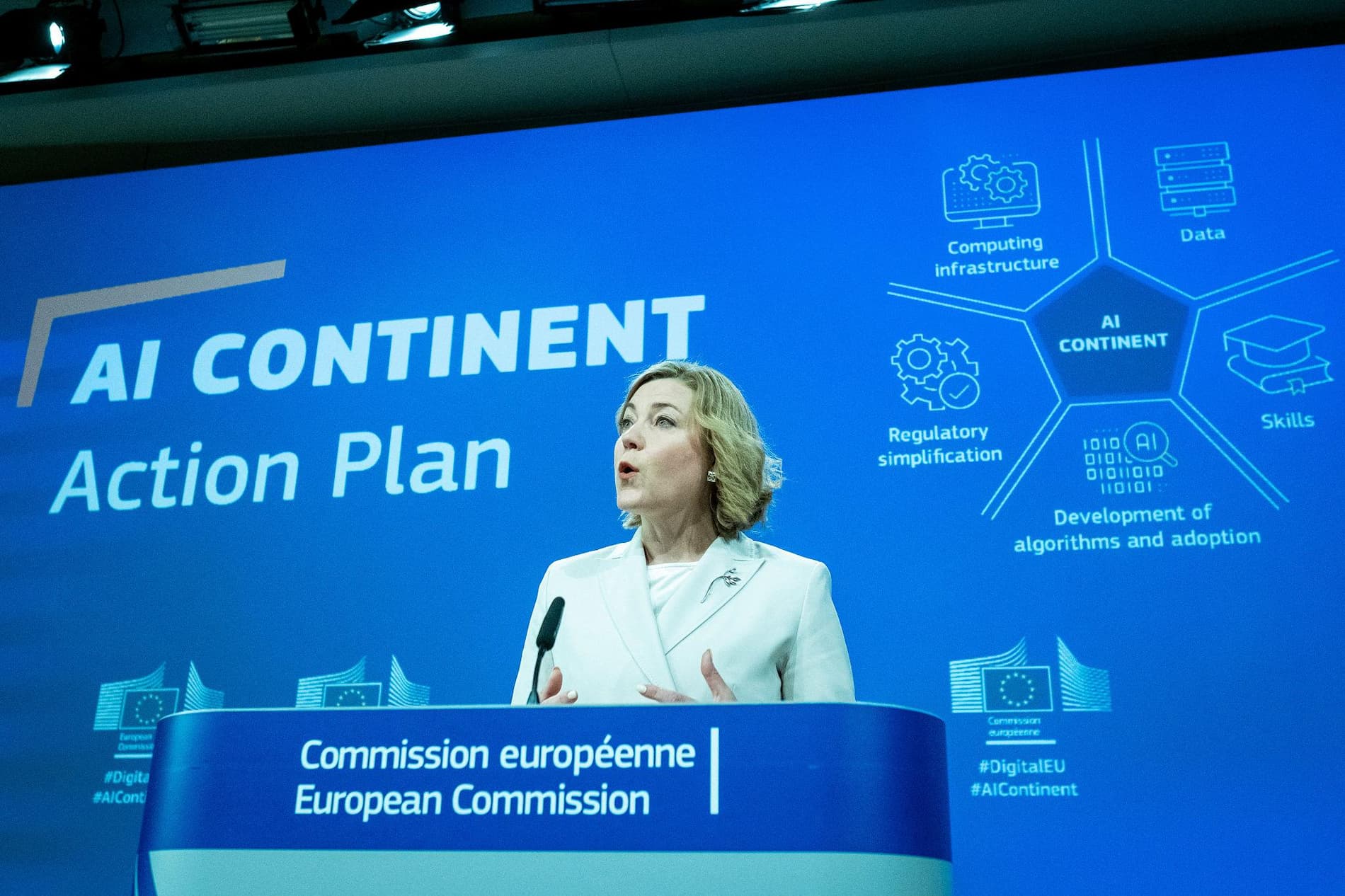
The European Commission’s choice of the EUROPA consortium to build an open-source frontier model covering all 24 official languages is a small line in a busy policy week, but it captures a strategic bet the bloc is making with growing conviction. Rather than try to outspend American and Chinese laboratories at their own game, Europe is wagering that openness, linguistic breadth and public ownership can carve out a defensible position in a field otherwise dominated by a handful of proprietary giants. It is an elegant theory of the case. It is also far from certain to work.

The reasoning behind openness is sound on several levels. A frontier model whose weights and training methods are published can be inspected, audited and adapted, qualities that matter to regulators enforcing the AI Act and to public bodies wary of embedding opaque foreign systems in sensitive functions. Open models lower the barrier for smaller European firms, universities and governments that could never license a closed system on favourable terms. And they offer a hedge against the dependency the Commission has spent the month warning about, the fear that critical infrastructure could one day be governed by a switch in another jurisdiction.

The multilingual mandate is the most distinctively European element. Commercial models are trained overwhelmingly on English and a few high-resource languages, leaving Maltese, Estonian, Latvian and others as afterthoughts that perform poorly. A model built deliberately to serve all 24 official languages treats linguistic diversity as a design requirement rather than a rounding error. That is a genuine public good the market is unlikely to supply on its own, since the commercial incentive to serve a few million speakers of a smaller language is thin. Here state intervention has a clear justification.

Yet the gap between commissioning a model and competing at the frontier is wide, and it is mostly made of compute and capital. The leading systems are trained on vast clusters of advanced accelerators that Europe neither manufactures at scale nor possesses in comparable quantity, which is precisely why the same policy package leans on a second chips act and a drive to triple data centre capacity. A sovereign model that must run on imported hardware in facilities dependent on foreign supply chains is sovereign in name more than in substance. The open-source ambition and the infrastructure ambition are bound together; neither succeeds alone.

There is also the durability problem. Frontier capability is not a destination but a moving target, advancing every few months as private labs pour in resources. A publicly backed model can match the state of the art at the moment of release and fall behind within a year if sustained funding, talent and compute do not follow. Europe’s record on long-horizon industrial commitments is uneven, and an open model that is impressive at launch but starved thereafter would entrench a new kind of dependency, this time on the very systems it was meant to displace. The announcement is a beginning, not an achievement.

The deeper question is what success would even look like. If the aim is to dethrone the dominant commercial models, the odds are long and the resources mismatched. But if the aim is more modest and more achievable, to guarantee that European institutions always have a credible, inspectable, locally governed alternative that keeps the proprietary giants honest and preserves a floor of capability the continent controls, then the gamble looks shrewder. A viable public option does not need to win the race; it needs to ensure Europe is never left with no option but to rent.

That is the most coherent reading of the strategy. Europe is not betting it can beat the hyperscalers at scale. It is betting that openness, public stewardship and linguistic inclusion can buy a measure of autonomy that pure market competition would never deliver. The wager is reasonable, the rationale is strong, and the execution risk is enormous. Whether the EUROPA consortium becomes a cornerstone of digital sovereignty or a well-meaning footnote will depend less on the cleverness of the launch than on whether the money and the machines keep arriving long after the press release has been forgotten.