August 9, 2026
LATEST
New EU Gas Market Rules Take Effect With Consumer SafeguardsDeforestation Regulation Holds Its December Deadline Despite CutsDigital Omnibus Delays Europe’s High-Risk AI Deadline to 2027Europe’s Schools Confront a Widening Basic Skills GapRule of Law Report Finds Progress but Trust Still LagsIRIS2 Gains 66 Satellites as Brussels Signs the Rollout DealNature Restoration Plans Come Due as Member States Race a DeadlineECB Rates Hold at 2.25 Percent as Frankfurt Waits on the DataEU Budget Talks Turn to Cohesion as Ireland Takes OverWildfire Response Stretches Europe’s Emergency Fleet ThinCan Europe’s Quantum Plan Match Its Big Ambitions?Armenia Edges West as Moscow’s Grip Slips AwayEurope Inherits the World’s Aid Bill It Cannot Fully PayAir Passenger Rights Get Their First Overhaul in Two DecadesErasmus Opens a 5 Billion Euro Round for Skills and MobilityCeuta Crisis Pushes the EU Toward Faster Migrant ReturnsBulky Parcels Face a Packaging Crackdown From August 12Can Europe Build Its Drone Wall Before 2030 Arrives?Indonesia’s Trade Deal With Europe Nears Its Final SignatureEurope Leans on Beijing to Keep Climate Talks Alive Before AntalyaNew EU Gas Market Rules Take Effect With Consumer SafeguardsDeforestation Regulation Holds Its December Deadline Despite CutsDigital Omnibus Delays Europe’s High-Risk AI Deadline to 2027Europe’s Schools Confront a Widening Basic Skills GapRule of Law Report Finds Progress but Trust Still LagsIRIS2 Gains 66 Satellites as Brussels Signs the Rollout DealNature Restoration Plans Come Due as Member States Race a DeadlineECB Rates Hold at 2.25 Percent as Frankfurt Waits on the DataEU Budget Talks Turn to Cohesion as Ireland Takes OverWildfire Response Stretches Europe’s Emergency Fleet ThinCan Europe’s Quantum Plan Match Its Big Ambitions?Armenia Edges West as Moscow’s Grip Slips AwayEurope Inherits the World’s Aid Bill It Cannot Fully PayAir Passenger Rights Get Their First Overhaul in Two DecadesErasmus Opens a 5 Billion Euro Round for Skills and MobilityCeuta Crisis Pushes the EU Toward Faster Migrant ReturnsBulky Parcels Face a Packaging Crackdown From August 12Can Europe Build Its Drone Wall Before 2030 Arrives?Indonesia’s Trade Deal With Europe Nears Its Final SignatureEurope Leans on Beijing to Keep Climate Talks Alive Before Antalya
August 9, 2026
LATEST
New EU Gas Market Rules Take Effect With Consumer SafeguardsDeforestation Regulation Holds Its December Deadline Despite CutsDigital Omnibus Delays Europe’s High-Risk AI Deadline to 2027Europe’s Schools Confront a Widening Basic Skills GapRule of Law Report Finds Progress but Trust Still LagsIRIS2 Gains 66 Satellites as Brussels Signs the Rollout DealNature Restoration Plans Come Due as Member States Race a DeadlineECB Rates Hold at 2.25 Percent as Frankfurt Waits on the DataEU Budget Talks Turn to Cohesion as Ireland Takes OverWildfire Response Stretches Europe’s Emergency Fleet ThinCan Europe’s Quantum Plan Match Its Big Ambitions?Armenia Edges West as Moscow’s Grip Slips AwayEurope Inherits the World’s Aid Bill It Cannot Fully PayAir Passenger Rights Get Their First Overhaul in Two DecadesErasmus Opens a 5 Billion Euro Round for Skills and MobilityCeuta Crisis Pushes the EU Toward Faster Migrant ReturnsBulky Parcels Face a Packaging Crackdown From August 12Can Europe Build Its Drone Wall Before 2030 Arrives?Indonesia’s Trade Deal With Europe Nears Its Final SignatureEurope Leans on Beijing to Keep Climate Talks Alive Before AntalyaNew EU Gas Market Rules Take Effect With Consumer SafeguardsDeforestation Regulation Holds Its December Deadline Despite CutsDigital Omnibus Delays Europe’s High-Risk AI Deadline to 2027Europe’s Schools Confront a Widening Basic Skills GapRule of Law Report Finds Progress but Trust Still LagsIRIS2 Gains 66 Satellites as Brussels Signs the Rollout DealNature Restoration Plans Come Due as Member States Race a DeadlineECB Rates Hold at 2.25 Percent as Frankfurt Waits on the DataEU Budget Talks Turn to Cohesion as Ireland Takes OverWildfire Response Stretches Europe’s Emergency Fleet ThinCan Europe’s Quantum Plan Match Its Big Ambitions?Armenia Edges West as Moscow’s Grip Slips AwayEurope Inherits the World’s Aid Bill It Cannot Fully PayAir Passenger Rights Get Their First Overhaul in Two DecadesErasmus Opens a 5 Billion Euro Round for Skills and MobilityCeuta Crisis Pushes the EU Toward Faster Migrant ReturnsBulky Parcels Face a Packaging Crackdown From August 12Can Europe Build Its Drone Wall Before 2030 Arrives?Indonesia’s Trade Deal With Europe Nears Its Final SignatureEurope Leans on Beijing to Keep Climate Talks Alive Before Antalya

Germany’s Deficit Report Tests the EU’s New Fiscal Rules

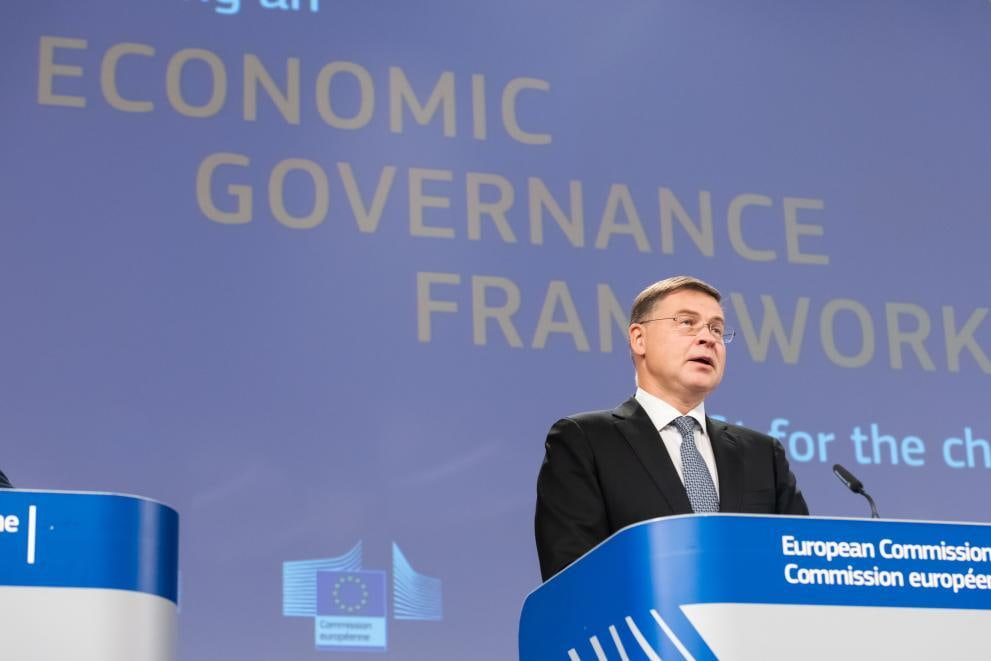
On 6 June 2026, the European Commission adopted a report under Article 126(3) of the Treaty on the Functioning of the European Union examining the budgetary positions of five member states: Bulgaria, Germany, Estonia, Latvia and Slovenia. All five either breached, or are projected to breach, the Treaty’s 3% of GDP deficit reference value in 2025 or 2026. The report is a procedural document, the first formal step that can lead to an excessive deficit procedure, but its contents say a great deal about how the EU’s reformed economic governance framework is actually working now that it faces its first real test against a major member state.

The framework itself dates from the 2024 overhaul of the Stability and Growth Pact, which replaced the old one-size-fits-all deficit and debt rules with country-specific net expenditure paths negotiated between each capital and the Commission. The promise of that reform was that it would be both more realistic, since paths are tailored to each country’s debt dynamics, and more durable, since governments would have ownership over the trajectory they themselves proposed. The June report is the first occasion on which that promise has had to confront the reality of a German government running deficits driven substantially by defence and infrastructure spending that Berlin itself has framed as both necessary and, implicitly, non-negotiable.

The Commission’s assessment draws a distinction that is likely to matter well beyond this single report. For Bulgaria, the Commission found that the conditions were met for opening an excessive deficit procedure outright. For Germany and Slovenia, the analysis turned on whether their debt-to-GDP ratios, which exceed the Treaty reference value, could benefit from the “relevant factors” clause that allows the Commission to look past a breach if it is judged close to the threshold and temporary. The Commission’s finding that this double condition, closeness and temporariness, was not met for Germany is the more consequential signal, because it suggests that even a member state with Germany’s fiscal credibility and borrowing costs is not automatically shielded from procedural scrutiny once its debt trajectory crosses the line.

For Estonia and Latvia, both Baltic states whose deficits have widened amid increased defence outlays linked to their proximity to Russia, the report adds a regional dimension to the debate. Several member states bordering Russia and Belarus have argued, with varying degrees of explicitness, that defence spending necessitated by the security environment should be treated differently from ordinary discretionary spending when fiscal compliance is assessed. The Commission has so far resisted formalising such an exemption, preferring to handle defence-related pressures within the existing net expenditure path framework rather than carving out a separate category that could become difficult to bound.

The deeper question raised by the June report is whether the reformed fiscal framework can hold its credibility when it is applied to large, economically central member states rather than the smaller economies that have more often found themselves under excessive deficit procedures in the past. The 2024 reform was partly designed to avoid the politically charged confrontations of the previous decade, when procedures against larger states were sometimes quietly allowed to lapse. If the Commission follows through on opening procedures, or at minimum issuing country-specific recommendations, for Germany on the same basis it would apply to a smaller economy, that consistency would strengthen the framework’s claim to even-handedness. If political negotiation produces a markedly softer outcome for Berlin than for Sofia, the framework’s credibility with smaller member states, several of which are still adjusting to tighter expenditure paths of their own, would take a corresponding hit.

The formal next steps, recommendations from the Council on any countries placed under a procedure, are expected over the coming weeks. What those recommendations require of Germany in practice, and how much room they leave for defence spending to sit outside the constraint, will be the clearest indicator yet of whether the post-2024 fiscal rules represent a genuine recalibration or simply a more elaborately worded version of the flexibility that characterised their predecessor.