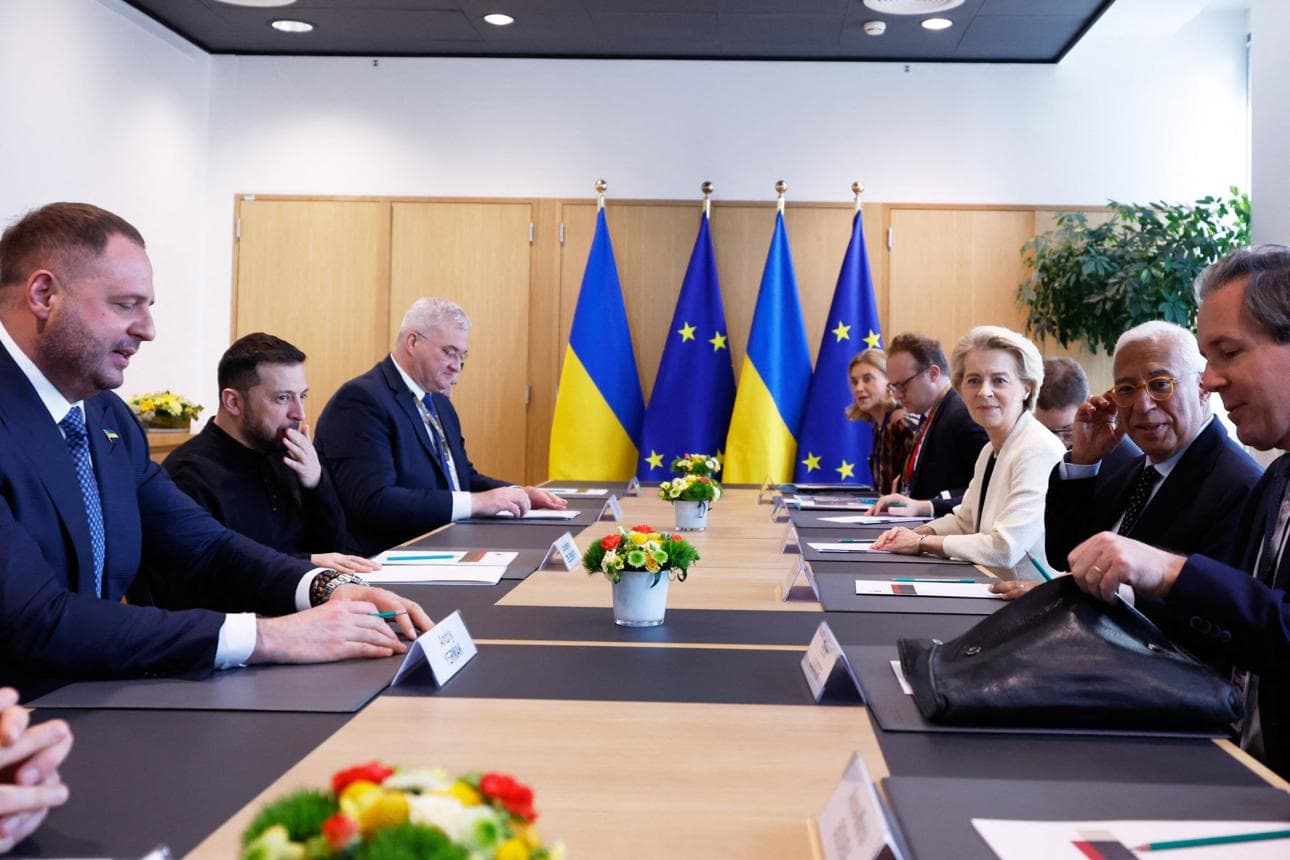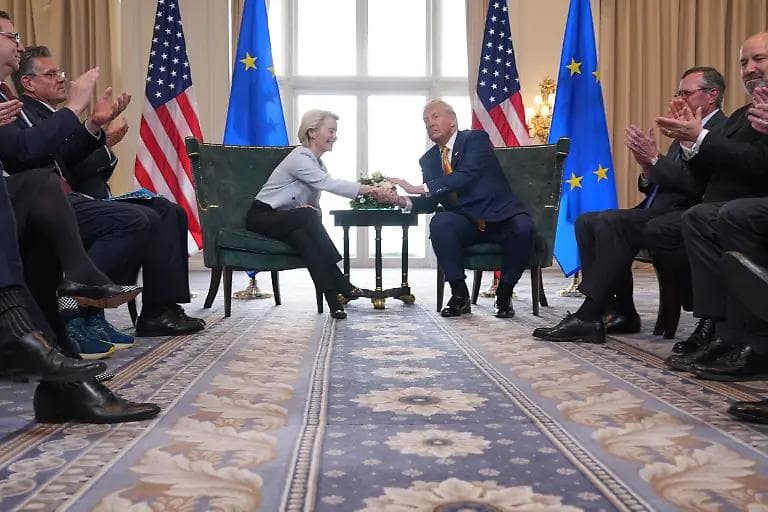
Budapest: For nearly two years, Brussels has watched the European Union’s most consequential enlargement file in a generation freeze beneath a single Hungarian veto. Screening of Ukraine concluded on 25 September 2025; Moldova’s followed days later. The Commission’s reports recommended opening Cluster 1 covering fundamentals of democracy, the rule of law and judicial reform as the natural first step. Each General Affairs Council since November 2024 was supposed to do so. None did. With Péter Magyar’s Tisza party forming a government in Budapest and the new Prime Minister taking office on 9 May, the calculus is changing. The question is no longer whether the Hungarian objection can be removed, but how quickly the Council can move once it is.
The numbers tell the story. Ukraine submitted negotiating positions on all 35 chapters of the acquis before its screening even closed. Moldova’s compliance scores in the latest screening rounds outperformed Albania’s at the equivalent stage, and Chişinău’s adoption record on the acquis stands at roughly 64 percent, comparable to Montenegro after seven years of negotiation. Each capital has built a procedural backlog with no parallel in modern accession practice, because the legal architecture demands unanimity for cluster openings and the Hungarian veto signal kept that unanimity unreachable.
What changes structurally with Magyar is the disappearance of that veto signal. His incoming foreign minister told the Hungarian parliament on 11 May that Budapest would stop using its veto as political theatre. Days earlier, Magyar opened technical consultations with Kyiv on minority-language rights in Transcarpathia and confirmed the work in a phone call with Council President António Costa. The Commission’s legal service has already prepared a parallel monitoring mechanism that can be bolted onto Cluster 1 conclusions without reopening the negotiating framework. If sequencing holds, Cluster 1 could be opened during the next General Affairs Council, with Clusters 2 and 6 to follow in autumn.
A more sober reading is required. Removing one veto exposes a different bottleneck, namely the unanimity rule itself. Slovakia’s coalition has hinted it may inherit the conditionality role, especially on Cluster 5, where Polish and Romanian producers have already requested transitional safeguards on cereals and oilseeds. The Netherlands and Sweden retain reservations on rule-of-law backsliding within the candidate countries themselves; The Hague has refused to endorse closures it considers premature. Each of these positions can be reconciled, but each requires its own bilateral political investment. Council secretariat planners privately concede that the Commission’s 2028 conclusion target may slip to 2029 even under optimistic assumptions.
The fiscal architecture is the second pressure point. Pre-accession spending under the Ukraine Facility and the Reform and Growth Facility has disbursed roughly €19.4 billion across the two files since 2024. Internal Commission modelling indicates that full Ukrainian accession would shift the EU’s net-contributor map dramatically. Every current net beneficiary other than Bulgaria would move into the contributor column. Ukrainian receipts under cohesion policy and the Common Agricultural Policy would peak between €18 and €23 billion annually under current rules. That figure is politically inert today. It will not remain inert once the closure of Cluster 5 forces a real Multiannual Financial Framework conversation.
Moldova’s case is quantitatively smaller and qualitatively cleaner. The risk in Chişinău is not technical but political, and specifically the prospect of Russian-financed contestation during the autumn parliamentary cycle. A weakened pro-European government majority would force Brussels to choose between rewarding alignment achieved under the outgoing administration and rebuilding consensus with a less reliable interlocutor. The Commission’s standing offer to decouple Moldova’s track from Ukraine’s, briefly discussed last summer and shelved by Berlin, is again on the table at working-party level.
For the agenda-setters in Brussels, the takeaway is that the attractive narrative of unblocking enlargement obscures three distinct workstreams. Ending the Hungarian veto solves one. Reaching unanimity on cluster openings solves the second. Building the budget consensus required to absorb Ukraine in particular solves the third. None can be skipped, and none can be sequenced backwards. The post-Magyar window is real, but it is also smaller than its proponents suggest, and the planning horizon that matters now is the autumn 2026 General Affairs Council, not the 2028 finish line.