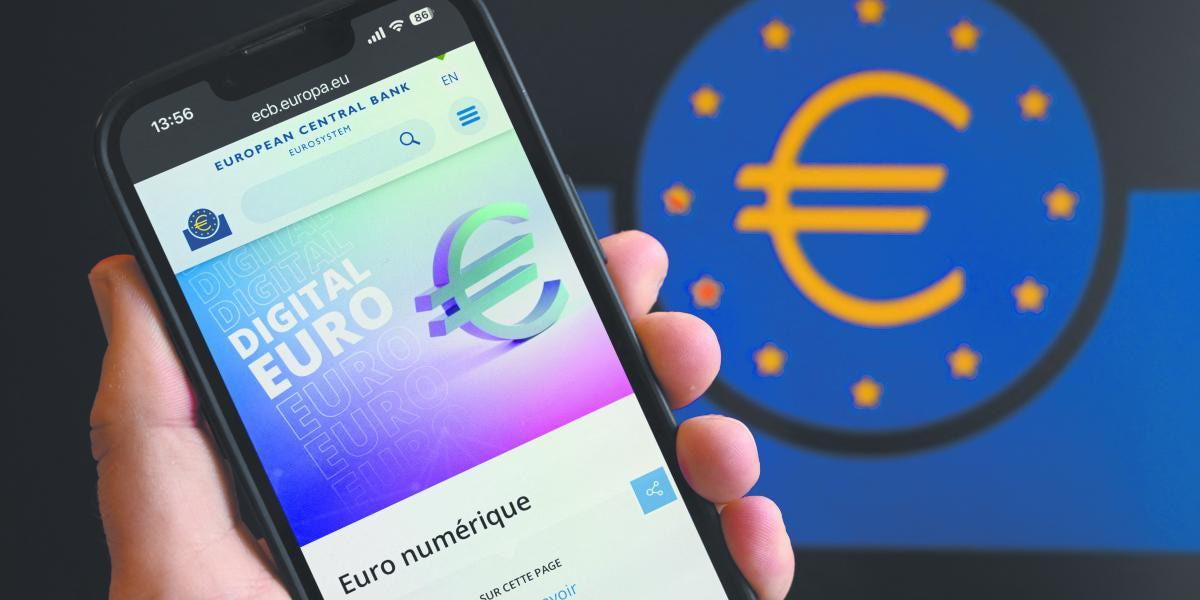
Brussels: The digital euro has cleared one of its highest political hurdles, yet the project still has more sceptics than settled answers. On 23 June the European Parliament’s economic affairs committee adopted its position on the single-currency package, backing the file that would establish a central bank digital currency by 43 votes to 14 with one abstention. The vote unblocks negotiations that EU leaders, meeting in March, agreed should conclude with legislation approved by the end of 2026. After years of technical preparation, the European Central Bank finally has a legislative runway in sight.
The case the ECB makes is strategic rather than consumer-facing. A public digital currency, its advocates argue, would shore up European monetary sovereignty, reduce the continent’s dependence on a handful of non-European card networks and payment apps, and give the single market a settlement layer that does not rely on infrastructure headquartered in Washington or Silicon Valley. In an era when payment rails have become instruments of geopolitical leverage, the prospect of a purely European, central-bank-issued digital cash carries an appeal that goes well beyond convenience at the checkout.
The doubts are equally structural. Commercial banks fear disintermediation: if households can park money directly at the central bank, deposits that fund lending could drain away in a crisis, accelerating rather than calming a panic. The compromise so far has been holding limits that cap how many digital euros any individual can keep, but setting that ceiling is a delicate exercise. Too low and the currency is a novelty few bother to use; too high and the banking system’s funding base wobbles. Privacy is the other recurring objection. Citizens wary of state-issued money want assurances that a digital euro will not become a ledger of their spending, and the legislation’s offline functionality and data safeguards will be scrutinised closely by parliamentarians and civil-liberties groups alike.
Then there is the simplest question of all: demand. Europeans are already served by fast, cheap and ubiquitous private payment options, from contactless cards to instant bank transfers. A state alternative that offers little visible improvement risks becoming an expensive answer to a problem most consumers do not feel they have. The ECB’s own timeline acknowledges the long road ahead. Even assuming legislation passes this year, development with selected payment providers is slated to begin only in the third quarter of 2026, testing from mid-2027, and a first possible issuance no earlier than 2029. That is a generous window for enthusiasm to cool or for private and crypto-based alternatives to entrench themselves further.
The committee vote matters because it converts a long-running thought experiment into a live legislative bargain, but the hard trade-offs have merely moved from the seminar room to the negotiating table. Lawmakers must now reconcile the ECB’s sovereignty ambitions with banks’ funding anxieties and the public’s privacy expectations, all under a self-imposed year-end deadline that leaves little room for the kind of careful design such a foundational instrument deserves. Rushing risks baking in flaws that are hard to unwind once a currency is in circulation; dawdling risks ceding the digital-payments future to others. The digital euro has won its parliamentary committee. Winning the argument with the people meant to use it is the contest that has barely begun.