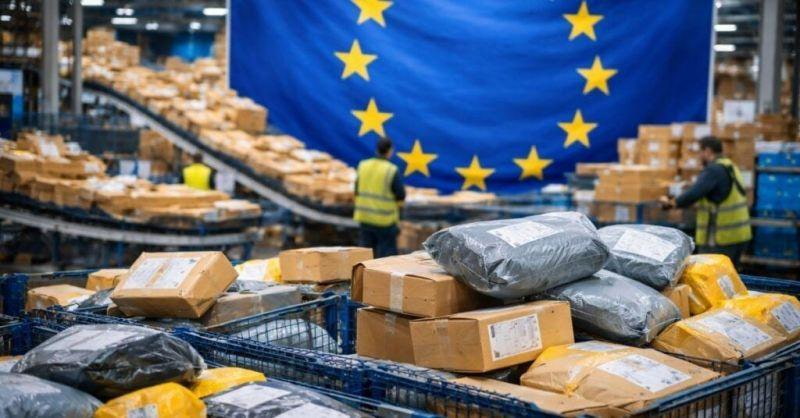
Brussels: On 1 July 2026 the European Union scrapped one of the oldest quiet subsidies in its trade system. The bloc abolished the rule that let parcels worth less than 150 euros enter duty-free, and replaced it with a flat parcel duty that lands on the sheer volume of small packages now flooding European doorsteps.
The new customs rules impose an interim flat duty of three euros on each category of goods inside a low-value parcel. The charge runs from July 2026 to July 2028, and the Council may extend it. Member states will apply the levy through the Import One-Stop Shop, the VAT registration scheme that already captures roughly 93 percent of e-commerce flows into the Union.
The numbers that forced the change
The scale explains the timing. The Commission counted 4.6 billion low-value packages entering the EU in 2024, and it reports that the volume has doubled every year since 2022. Around 91 percent of those shipments start in China, funnelled through platforms that built entire business models around the duty-free threshold.
That threshold created an odd distortion. A European retailer importing a bulk shipment paid tariffs, while a competitor shipping the identical item one parcel at a time paid nothing. Customs officers, meanwhile, waved through billions of declarations they had no realistic way to inspect. The three-euro duty attacks both problems at once, taxing the volume and giving authorities a financial reason to log every package.
What the flat fee does and does not fix
The duty is deliberately crude. A single flat rate is easy to collect and hard to game, which matters when the alternative is classifying billions of items under the EU tariff schedule. Sellers registered in the IOSS pay the charge; the platform, not the customs officer, does the paperwork.
Yet the fee is a bridge, not a destination. Officials describe it as a placeholder until the EU customs data hub becomes operational later this decade, at which point standard tariffs will replace the flat rate. Until then, the three-euro figure sits awkwardly between deterrence and revenue. It is small enough that a five-euro phone case still clears cheaply, but large enough to erase the margin on the cheapest goods that arrive in the greatest numbers.
Critics raise two objections. Consumer groups warn that platforms will simply pass the charge to shoppers, nudging up the price of everyday online purchases across the single market. Logistics firms counter that the added declarations will slow delivery and strain postal operators already buckling under parcel growth. Both concerns are real, and both understate the counterfactual: the untaxed flood was never sustainable for either customs capacity or European sellers.
The deeper test is enforcement. A duty only works if the goods it targets actually pass through the IOSS rather than slipping in through undervalued declarations or split shipments. The Commission has bet that the VAT system plus the coming data hub will close those gaps. If that bet holds, the three-euro charge will be remembered as the moment Europe stopped treating billions of parcels as beneath its notice. If it fails, it will have taxed the honest and missed the rest.
For now, the policy marks a genuine shift. The Union has decided that the price of frictionless micro-imports outweighs their convenience, and it has put a number on that judgment.