August 9, 2026
LATEST
New EU Gas Market Rules Take Effect With Consumer SafeguardsDeforestation Regulation Holds Its December Deadline Despite CutsDigital Omnibus Delays Europe’s High-Risk AI Deadline to 2027Europe’s Schools Confront a Widening Basic Skills GapRule of Law Report Finds Progress but Trust Still LagsIRIS2 Gains 66 Satellites as Brussels Signs the Rollout DealNature Restoration Plans Come Due as Member States Race a DeadlineECB Rates Hold at 2.25 Percent as Frankfurt Waits on the DataEU Budget Talks Turn to Cohesion as Ireland Takes OverWildfire Response Stretches Europe’s Emergency Fleet ThinCan Europe’s Quantum Plan Match Its Big Ambitions?Armenia Edges West as Moscow’s Grip Slips AwayEurope Inherits the World’s Aid Bill It Cannot Fully PayAir Passenger Rights Get Their First Overhaul in Two DecadesErasmus Opens a 5 Billion Euro Round for Skills and MobilityCeuta Crisis Pushes the EU Toward Faster Migrant ReturnsBulky Parcels Face a Packaging Crackdown From August 12Can Europe Build Its Drone Wall Before 2030 Arrives?Indonesia’s Trade Deal With Europe Nears Its Final SignatureEurope Leans on Beijing to Keep Climate Talks Alive Before AntalyaNew EU Gas Market Rules Take Effect With Consumer SafeguardsDeforestation Regulation Holds Its December Deadline Despite CutsDigital Omnibus Delays Europe’s High-Risk AI Deadline to 2027Europe’s Schools Confront a Widening Basic Skills GapRule of Law Report Finds Progress but Trust Still LagsIRIS2 Gains 66 Satellites as Brussels Signs the Rollout DealNature Restoration Plans Come Due as Member States Race a DeadlineECB Rates Hold at 2.25 Percent as Frankfurt Waits on the DataEU Budget Talks Turn to Cohesion as Ireland Takes OverWildfire Response Stretches Europe’s Emergency Fleet ThinCan Europe’s Quantum Plan Match Its Big Ambitions?Armenia Edges West as Moscow’s Grip Slips AwayEurope Inherits the World’s Aid Bill It Cannot Fully PayAir Passenger Rights Get Their First Overhaul in Two DecadesErasmus Opens a 5 Billion Euro Round for Skills and MobilityCeuta Crisis Pushes the EU Toward Faster Migrant ReturnsBulky Parcels Face a Packaging Crackdown From August 12Can Europe Build Its Drone Wall Before 2030 Arrives?Indonesia’s Trade Deal With Europe Nears Its Final SignatureEurope Leans on Beijing to Keep Climate Talks Alive Before Antalya
August 9, 2026
LATEST
New EU Gas Market Rules Take Effect With Consumer SafeguardsDeforestation Regulation Holds Its December Deadline Despite CutsDigital Omnibus Delays Europe’s High-Risk AI Deadline to 2027Europe’s Schools Confront a Widening Basic Skills GapRule of Law Report Finds Progress but Trust Still LagsIRIS2 Gains 66 Satellites as Brussels Signs the Rollout DealNature Restoration Plans Come Due as Member States Race a DeadlineECB Rates Hold at 2.25 Percent as Frankfurt Waits on the DataEU Budget Talks Turn to Cohesion as Ireland Takes OverWildfire Response Stretches Europe’s Emergency Fleet ThinCan Europe’s Quantum Plan Match Its Big Ambitions?Armenia Edges West as Moscow’s Grip Slips AwayEurope Inherits the World’s Aid Bill It Cannot Fully PayAir Passenger Rights Get Their First Overhaul in Two DecadesErasmus Opens a 5 Billion Euro Round for Skills and MobilityCeuta Crisis Pushes the EU Toward Faster Migrant ReturnsBulky Parcels Face a Packaging Crackdown From August 12Can Europe Build Its Drone Wall Before 2030 Arrives?Indonesia’s Trade Deal With Europe Nears Its Final SignatureEurope Leans on Beijing to Keep Climate Talks Alive Before AntalyaNew EU Gas Market Rules Take Effect With Consumer SafeguardsDeforestation Regulation Holds Its December Deadline Despite CutsDigital Omnibus Delays Europe’s High-Risk AI Deadline to 2027Europe’s Schools Confront a Widening Basic Skills GapRule of Law Report Finds Progress but Trust Still LagsIRIS2 Gains 66 Satellites as Brussels Signs the Rollout DealNature Restoration Plans Come Due as Member States Race a DeadlineECB Rates Hold at 2.25 Percent as Frankfurt Waits on the DataEU Budget Talks Turn to Cohesion as Ireland Takes OverWildfire Response Stretches Europe’s Emergency Fleet ThinCan Europe’s Quantum Plan Match Its Big Ambitions?Armenia Edges West as Moscow’s Grip Slips AwayEurope Inherits the World’s Aid Bill It Cannot Fully PayAir Passenger Rights Get Their First Overhaul in Two DecadesErasmus Opens a 5 Billion Euro Round for Skills and MobilityCeuta Crisis Pushes the EU Toward Faster Migrant ReturnsBulky Parcels Face a Packaging Crackdown From August 12Can Europe Build Its Drone Wall Before 2030 Arrives?Indonesia’s Trade Deal With Europe Nears Its Final SignatureEurope Leans on Beijing to Keep Climate Talks Alive Before Antalya

What Venezuela’s Quake Reveals About Europe’s Reach

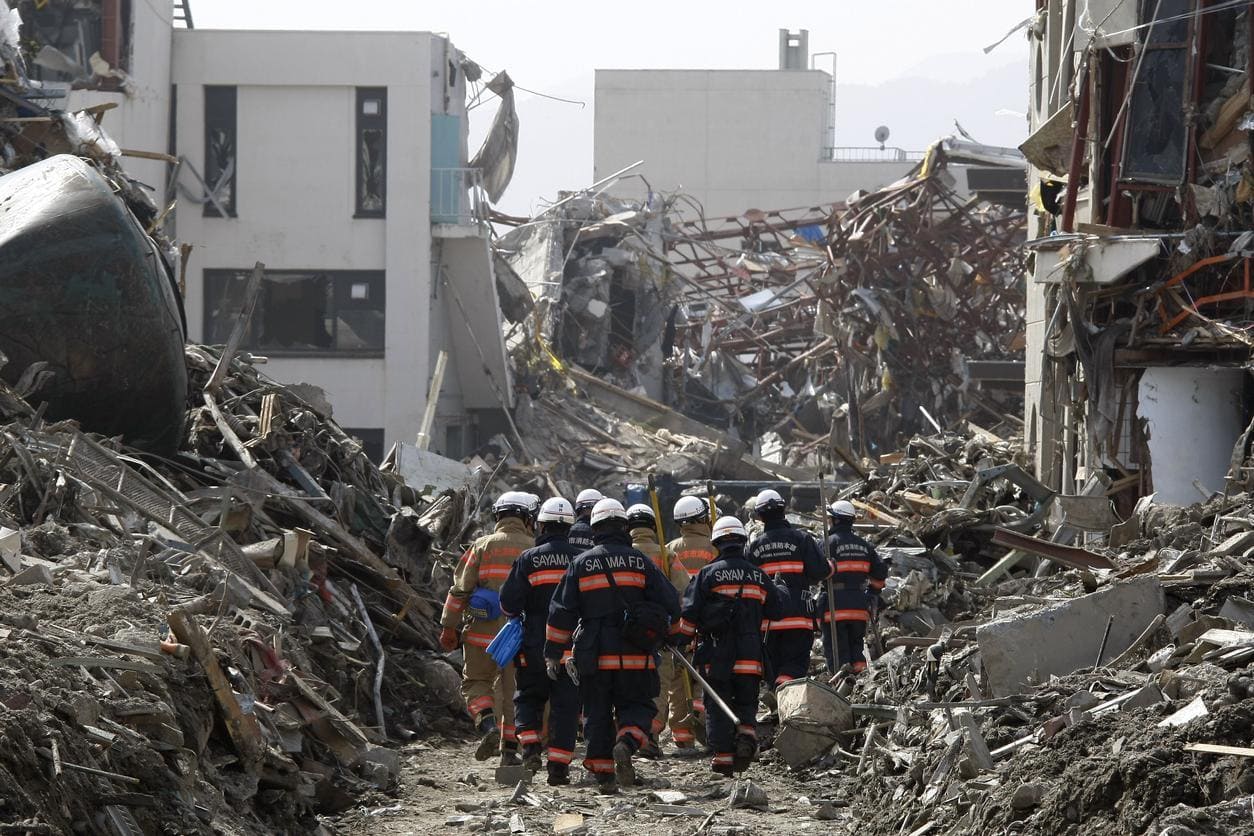
When two earthquakes of magnitude 7.2 and 7.5 struck Venezuela on 24 June, the European Union’s response arrived faster than its political relationship with Caracas might have predicted. Within days more than 520 responders from eight member states were on the ground, and the episode offers a revealing look at how Europe projects help, and where the limits of that reach lie.

The mechanics are worth setting out. Czechia, Spain, Italy, France, Luxembourg, Germany, Portugal and the Netherlands channelled assistance through the EU Civil Protection Mechanism, the coordination system established in 2001 that lets any stricken country request help and then matches offers from member states. Firefighters, rescue dogs and medical teams went south; Italy sent a medical unit, Luxembourg supplied telecommunications, shelter and energy equipment. In parallel the Union switched its Copernicus satellite service to emergency mapping mode, giving responders free imagery to locate damage and direct effort. With the death toll above 1,400 and the UN reporting tens of thousands missing, the speed mattered.

What the deployment reveals first is that the Mechanism works as designed, and that its design is its strength. Brussels does not maintain a standing European rescue army. It runs a switchboard, pooling national assets that would otherwise respond piecemeal or not at all, and absorbing transport and operational costs that might deter a single country acting alone. The result is a soft-power instrument that lets the Union show up coherently in a crisis without the machinery of a federal state. For a bloc whose foreign policy is so often hostage to internal disagreement, disaster response is one of the few areas where it acts with visible unity.

The second revelation is more uncomfortable. The Mechanism is built for surge, not endurance. It excels at the opening days of a catastrophe, when search and rescue saves lives, but the heavy demands of Venezuela come later, in the months of shelter, sanitation, reconstruction and care for a displaced population. That phase falls to humanitarian funding and development aid, lines of spending under chronic pressure as European budgets tilt toward defence and domestic security. A fortnight of headlines about rescue dogs can obscure the quieter question of who pays for the year that follows.

There is a political dimension too. Europe extended a hand to a government with which several of its members have frosty relations, a reminder that the Mechanism is meant to be needs-driven rather than a tool of diplomacy. In practice the gesture carries diplomatic weight whether Brussels intends it or not, and recipient governments can use foreign rescue teams to project competence even as their own response draws domestic anger. Aid is never quite as apolitical as its principles insist, and Europe should be clear-eyed about how its help is received and represented on the ground.

The optimistic reading is that the Venezuela operation shows a Union capable of acting quickly, generously and across ideological lines, exactly the kind of cooperation the Mechanism was created to enable. The cautious reading is that frequency is rising. As a warming climate makes extreme events more common and more severe, a system designed for occasional surges will be asked to surge more often, straining the very member-state generosity it depends on.

The lesson Brussels should draw is to invest in the unglamorous middle of the disaster cycle, the recovery phase that no satellite captures, and to treat the Mechanism as core infrastructure rather than a goodwill extra. Venezuela’s tragedy has shown what Europe can do in the first week. The harder test, in Caracas and in the next disaster after it, is what Europe is still willing to do in the fiftieth.