August 12, 2026
LATEST
Temu Faces EU Penalty Threat Over Blocked Subsidy ChecksBanks Set for Simpler ESG Disclosure Under New EBA PlanMinimum Wages Climb Fastest in Eastern Europe, Data ShowsEurope’s Electrification Plan Aims to Slash Fossil Fuel BillsCouncil Clears Fertiliser Aid to Shield Struggling EU FarmersCan Europe Court Beijing and Contain It at the Same Time?Korean Tanks Fill the Gaps Europe Cannot Arm Fast EnoughAustralia Becomes Europe’s Answer to China’s Mineral GripEurope and Japan Bet on Shared Labs to Outpace ChinaWhy Europe and South Korea Rewrote the Rules of Digital TradeNew Zealand Helps Europe Anchor Its Ambitions Across the PacificCompetitiveness Fund Faces Its First Real Test of DeliveryHorizon Europe Rolls Out Its 14 Billion Research PushCERV Programme Grants Target Civic Space Under StrainEurope’s Firefighting Fleet Faces Its Worst Season on RecordAI Gigafactories Draw a 30 Billion Euro Bid to Rival the USRail Passengers Win Full Rights on Multi-Leg TripsEuropean Universities Face a Budget and Reform TestTobacco Rules Face a Sweeping Reset as Vaping SurgesRiyadh Summit Tests Europe’s New Bet on the GulfTemu Faces EU Penalty Threat Over Blocked Subsidy ChecksBanks Set for Simpler ESG Disclosure Under New EBA PlanMinimum Wages Climb Fastest in Eastern Europe, Data ShowsEurope’s Electrification Plan Aims to Slash Fossil Fuel BillsCouncil Clears Fertiliser Aid to Shield Struggling EU FarmersCan Europe Court Beijing and Contain It at the Same Time?Korean Tanks Fill the Gaps Europe Cannot Arm Fast EnoughAustralia Becomes Europe’s Answer to China’s Mineral GripEurope and Japan Bet on Shared Labs to Outpace ChinaWhy Europe and South Korea Rewrote the Rules of Digital TradeNew Zealand Helps Europe Anchor Its Ambitions Across the PacificCompetitiveness Fund Faces Its First Real Test of DeliveryHorizon Europe Rolls Out Its 14 Billion Research PushCERV Programme Grants Target Civic Space Under StrainEurope’s Firefighting Fleet Faces Its Worst Season on RecordAI Gigafactories Draw a 30 Billion Euro Bid to Rival the USRail Passengers Win Full Rights on Multi-Leg TripsEuropean Universities Face a Budget and Reform TestTobacco Rules Face a Sweeping Reset as Vaping SurgesRiyadh Summit Tests Europe’s New Bet on the Gulf
August 12, 2026
LATEST
Temu Faces EU Penalty Threat Over Blocked Subsidy ChecksBanks Set for Simpler ESG Disclosure Under New EBA PlanMinimum Wages Climb Fastest in Eastern Europe, Data ShowsEurope’s Electrification Plan Aims to Slash Fossil Fuel BillsCouncil Clears Fertiliser Aid to Shield Struggling EU FarmersCan Europe Court Beijing and Contain It at the Same Time?Korean Tanks Fill the Gaps Europe Cannot Arm Fast EnoughAustralia Becomes Europe’s Answer to China’s Mineral GripEurope and Japan Bet on Shared Labs to Outpace ChinaWhy Europe and South Korea Rewrote the Rules of Digital TradeNew Zealand Helps Europe Anchor Its Ambitions Across the PacificCompetitiveness Fund Faces Its First Real Test of DeliveryHorizon Europe Rolls Out Its 14 Billion Research PushCERV Programme Grants Target Civic Space Under StrainEurope’s Firefighting Fleet Faces Its Worst Season on RecordAI Gigafactories Draw a 30 Billion Euro Bid to Rival the USRail Passengers Win Full Rights on Multi-Leg TripsEuropean Universities Face a Budget and Reform TestTobacco Rules Face a Sweeping Reset as Vaping SurgesRiyadh Summit Tests Europe’s New Bet on the GulfTemu Faces EU Penalty Threat Over Blocked Subsidy ChecksBanks Set for Simpler ESG Disclosure Under New EBA PlanMinimum Wages Climb Fastest in Eastern Europe, Data ShowsEurope’s Electrification Plan Aims to Slash Fossil Fuel BillsCouncil Clears Fertiliser Aid to Shield Struggling EU FarmersCan Europe Court Beijing and Contain It at the Same Time?Korean Tanks Fill the Gaps Europe Cannot Arm Fast EnoughAustralia Becomes Europe’s Answer to China’s Mineral GripEurope and Japan Bet on Shared Labs to Outpace ChinaWhy Europe and South Korea Rewrote the Rules of Digital TradeNew Zealand Helps Europe Anchor Its Ambitions Across the PacificCompetitiveness Fund Faces Its First Real Test of DeliveryHorizon Europe Rolls Out Its 14 Billion Research PushCERV Programme Grants Target Civic Space Under StrainEurope’s Firefighting Fleet Faces Its Worst Season on RecordAI Gigafactories Draw a 30 Billion Euro Bid to Rival the USRail Passengers Win Full Rights on Multi-Leg TripsEuropean Universities Face a Budget and Reform TestTobacco Rules Face a Sweeping Reset as Vaping SurgesRiyadh Summit Tests Europe’s New Bet on the Gulf

Why Europe’s Drone Deal With Ukraine Matters

Brussels: Europe has quietly crossed a line it long hesitated to approach, binding its own defence industry to a war still being fought on its eastern flank.

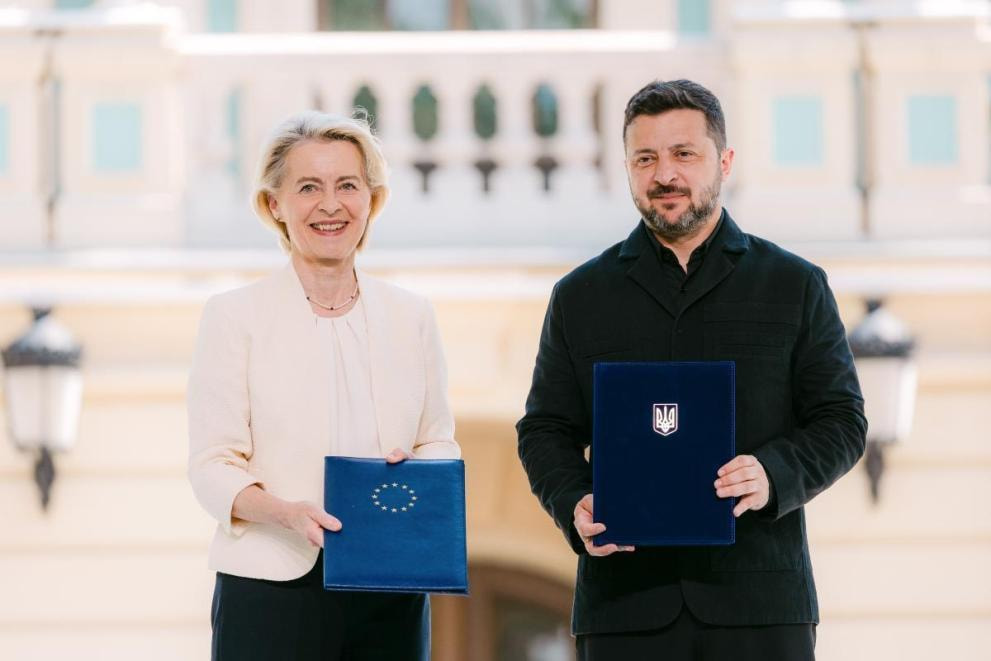
On 15 July the European Commission and Ukraine signed a defence industrial partnership and launched what both sides call the EU-Ukraine Drone Deal, an agreement to jointly produce drones and counter-drone systems by the end of 2026. Brussels paired the announcement with a fresh 1 billion euro disbursement for Ukrainian drone capabilities, drawn from the 90 billion euro Ukraine Support Loan.

The move reframes a familiar relationship. For three years the EU sent Ukraine money and weapons; now it proposes to build weapons with Ukraine, treating Kyiv’s battlefield as a laboratory whose lessons flow back into European factories.

Battle-tested technology becomes the currency

The logic is blunt. Ukraine fields the most combat-proven drone and counter-drone systems in the world, refined weekly against Russian tactics. European manufacturers, by contrast, hold the capital, scale and component supply chains that Ukraine’s wartime economy cannot match. The partnership tries to marry the two.

That match promises more than solidarity. Cheap, mass-produced drones have upended the economics of modern war, letting a defender destroy a multimillion-euro tank with a device costing a few hundred euros. Any European army that ignores this shift risks buying gold-plated platforms for a fight that has moved on.

The agreement also targets a specific gap. Officials want to protect against low- and mid-range drones and missiles, deploy proven systems that units can stockpile outside Ukraine, and give both industrial bases the predictability they need to invest. A later phase, pencilled in for 2028, would extend the work to anti-ballistic missiles.

The risks Brussels is choosing to accept

None of this comes without exposure. Tying EU procurement to a country at war means accepting supply that a single Russian strike on a Ukrainian plant could disrupt. It also blurs the line between supporting Ukraine and depending on it, a dependence that would complicate any future peace settlement.

A political cost follows close behind. Joint production commits member states to sustained spending at a moment when several governments face voters weary of open-ended war funding. Hungary has already signalled it will resist deeper entanglement, and unanimity rules hand it leverage.

Yet the strategic case is hard to dismiss. Europe has spent two years discovering that its defence industrial base struggles to produce shells, let alone drones, at the pace modern conflict demands. Partnering with the one European state that has solved that problem under fire is, for all its hazards, a rational bet.

The wider signal matters as much as the hardware. By committing money and factories rather than statements, the Commission tells both Moscow and Washington that Europe intends to sustain Ukraine even if American support wavers. That message underpins the Union’s push to rearm and to build a defence market that no longer leans so heavily on suppliers outside the continent.

The drone deal will be judged on delivery, not communiqués. If joint lines are running by the end of 2026 and stockpiles start to build outside Ukraine, Brussels will have turned a wartime necessity into a lasting industrial asset. If the timelines slip, it will look like another announcement outrunning Europe’s capacity to act.